Frozen Salmon in Air Fryer: Juicy From Frozen

Frozen salmon can go straight from the freezer to the air fryer. You do not need to thaw it first.
A practical starting point is 400°F for about 12 to 16 minutes, depending on the thickness of the fillets. The trick is to cook the salmon plain for the first few minutes, then add oil and seasoning once the frozen surface has softened.
That two-stage method helps the seasoning stick instead of sliding off with melting ice. It also gives you more control over the center, which is useful when you want flaky salmon without drying it out.
If you are cooking fresh or already-thawed fish, use our salmon air fryer time and temperature guide instead. This recipe is specifically for salmon cooked directly from frozen.
This post contains affiliate links.
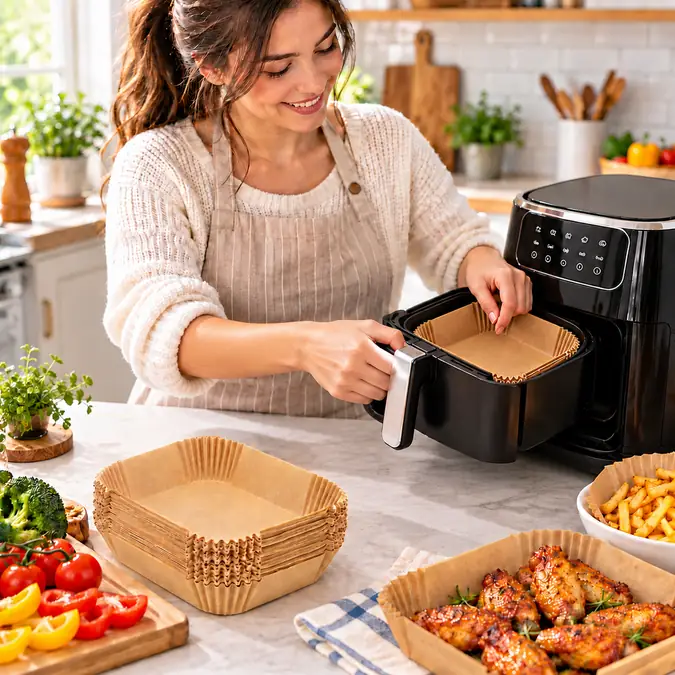
Ninja DZ201 Foodi 8-Quart Dual Basket Air Fryer
- Two independent baskets: cook a main and a side at once
- Fits a family-size meal in one go
- Easy-clean, dishwasher-safe baskets
As an Amazon Associate I earn from qualifying purchases.
How Long to Cook Frozen Salmon in the Air Fryer
Cook frozen salmon at 400°F for about 12 to 16 minutes total. Thin fillets may finish sooner, while thick center-cut portions can need a few extra minutes.
Start with about 5 minutes of cooking before seasoning. Then brush the softened surface with oil and seasonings and continue air frying until the thickest part reaches 145°F.
Use the time as a starting point, not a guarantee. Air fryer size, heating power, salmon thickness, and the amount of ice on the fillet can all change the final cooking time.
Frozen Salmon Air Fryer Time Chart
| Frozen Salmon | Temperature | Approximate Total Time |
|---|---|---|
| Thin fillet, under 1 inch | 400°F | 10–13 minutes |
| Standard fillet, about 1 inch | 400°F | 12–15 minutes |
| Thick center-cut fillet | 400°F | 14–17 minutes |
| Skin-on frozen salmon | 400°F | 12–16 minutes |
| Skinless frozen salmon | 400°F | 12–16 minutes |
Begin checking before the end of the suggested range. If you frequently find that air fryer recipes finish earlier or later than expected, our guide to why air fryer cooking times vary explains the main reasons.
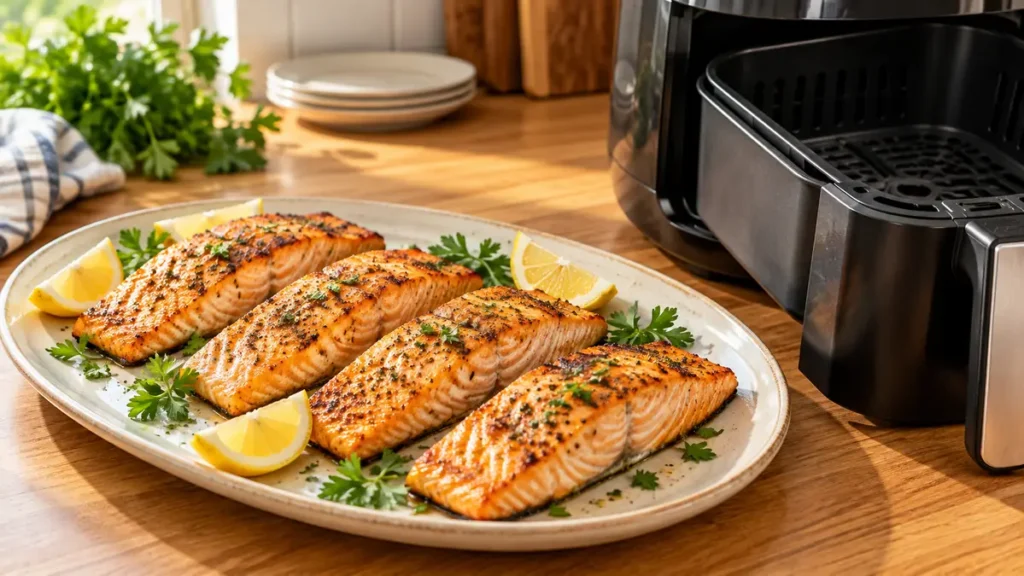
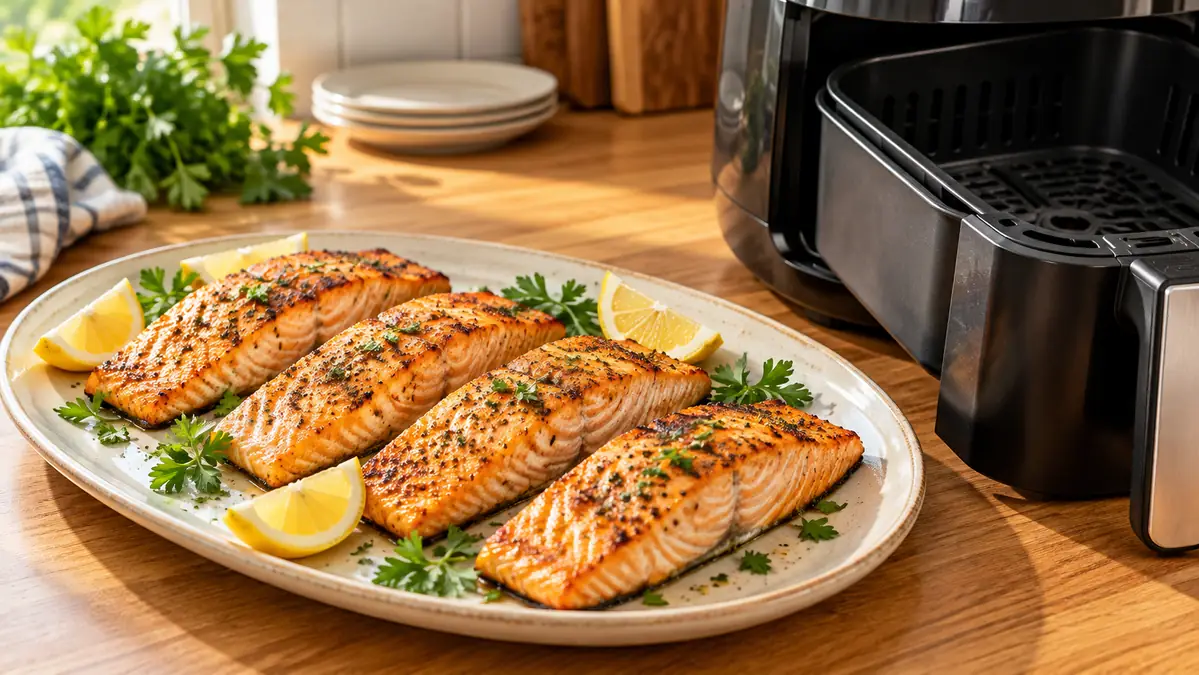
Frozen Salmon in Air Fryer
Ingredients
Method
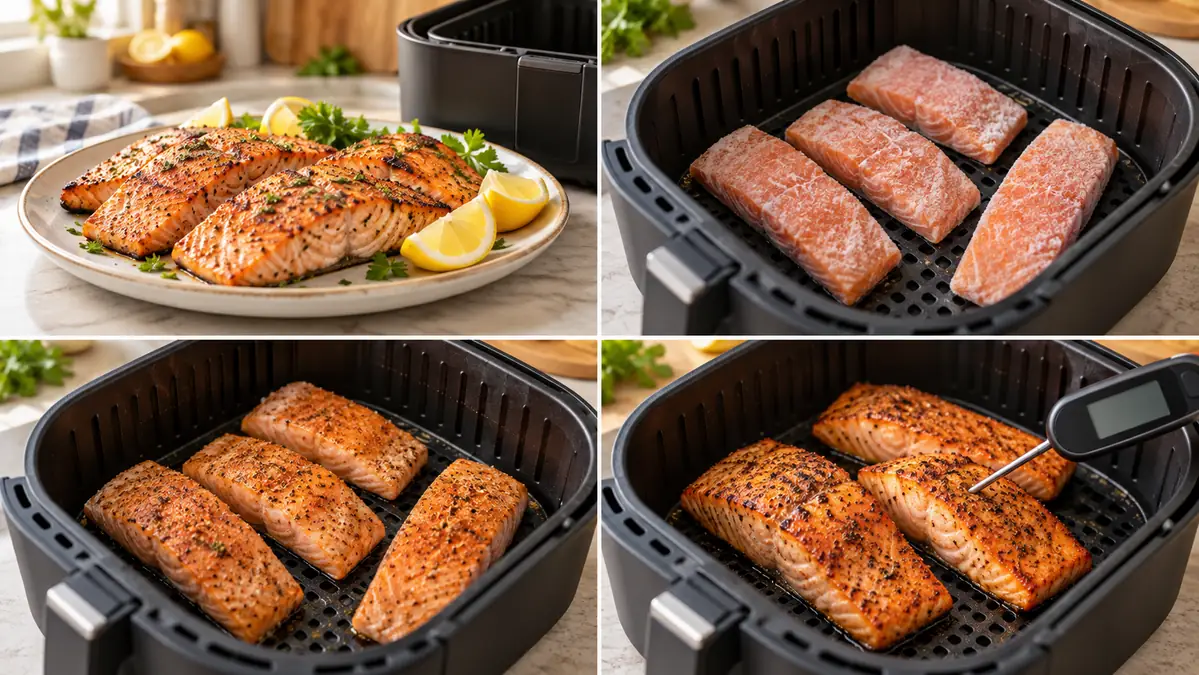
- Place the frozen salmon fillets in a single layer in the air fryer basket, skin-side down when applicable. Remove any loose surface ice first.
- Air fry at 400°F for 5 minutes to soften the frozen exterior.
- Open the basket. Blot away excess surface moisture if needed, brush the salmon with oil, and season with garlic powder, paprika, salt, and black pepper.
- Continue air frying at 400°F for 7 to 11 minutes, checking thinner fillets early.
- Check the thickest part with an instant-read thermometer. Continue cooking in 1 to 2 minute intervals as needed until the salmon reaches 145°F.
- Serve immediately with fresh lemon wedges.
Notes
The recipe card gives you the measured ingredients, exact method, and timing for four standard frozen salmon fillets.
What You Need for Frozen Air Fryer Salmon
This recipe works best with individually frozen salmon fillets that are close to the same size.
You will need frozen salmon fillets, olive or avocado oil, garlic powder, paprika, salt, black pepper, and fresh lemon. The oil helps the seasonings coat the salmon after the icy exterior begins to soften.
Lemon is best added after cooking or close to the end. It gives the salmon fresh flavor without adding extra liquid during the first stage.
What Type of Frozen Salmon Works Best?
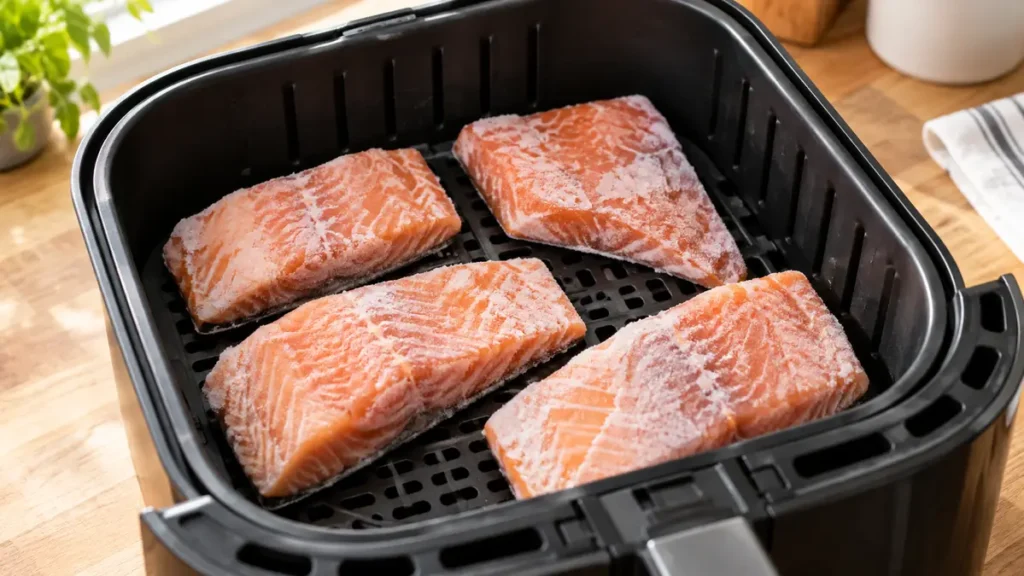
Individually frozen fillets are the easiest option because you can place them directly into the basket.
Try to cook pieces with similar thickness together. One very thin tail piece and one thick center-cut fillet are unlikely to finish at exactly the same time.
Both skin-on and skinless salmon work. If several fillets are frozen together, do not force them apart with a knife. Air fry them for a few minutes until they loosen enough to separate safely, then arrange them in a single layer and continue cooking.
How to Cook Frozen Salmon in the Air Fryer
The easiest method is to divide the cooking into two stages.
1. Put the Frozen Salmon in the Basket
Remove all packaging from the salmon. If you see loose ice crystals on the outside, gently wipe them away with a paper towel. There is no need to thaw the fish.
Place the frozen fillets in the air fryer basket in a single layer. For skin-on salmon, position the fillets skin-side down. Leave some space between the pieces so hot air can circulate around them.
2. Air Fry for the First 5 Minutes
Set the air fryer to 400°F and cook the salmon for about 5 minutes.
This first stage begins thawing the outside while the center remains frozen. You are not trying to finish cooking the salmon yet. You only want the surface soft enough to hold the oil and seasoning.
3. Oil and Season the Salmon
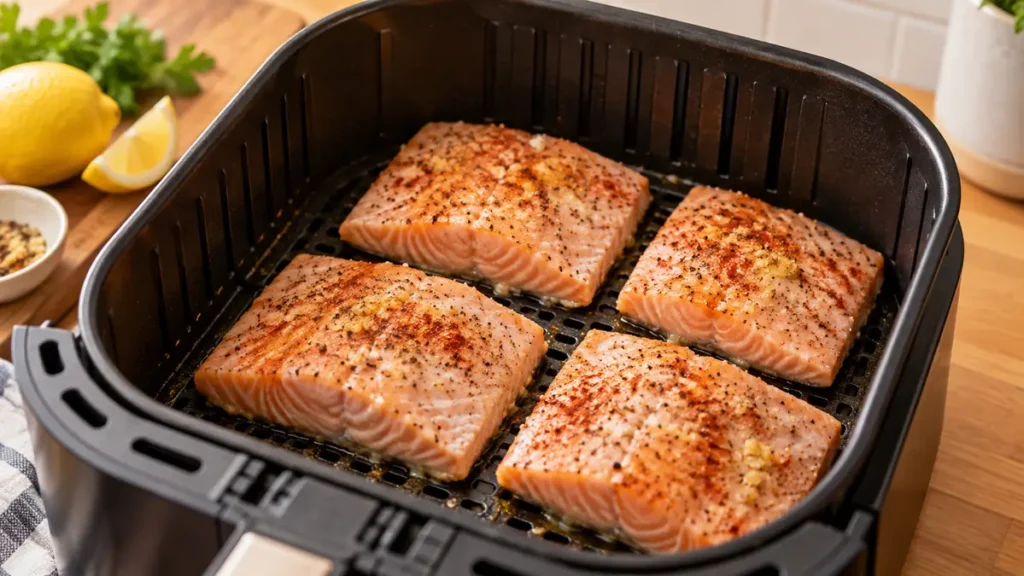
Open the basket after the first cooking stage. If melted ice has left excess moisture on top, carefully blot it with a paper towel.
Brush the exposed surface lightly with oil. Add the garlic powder, paprika, salt, and black pepper. Because the surface is no longer completely frozen, the seasonings should stick much more evenly.
4. Finish Air Frying
Return the basket to the air fryer. Continue cooking at 400°F for another 7 to 11 minutes, depending on the thickness of your salmon.
You usually do not need to flip the fillets. Start checking thin pieces earlier. A thick center-cut piece can need several minutes longer than a thin fillet.
5. Check the Thickest Part
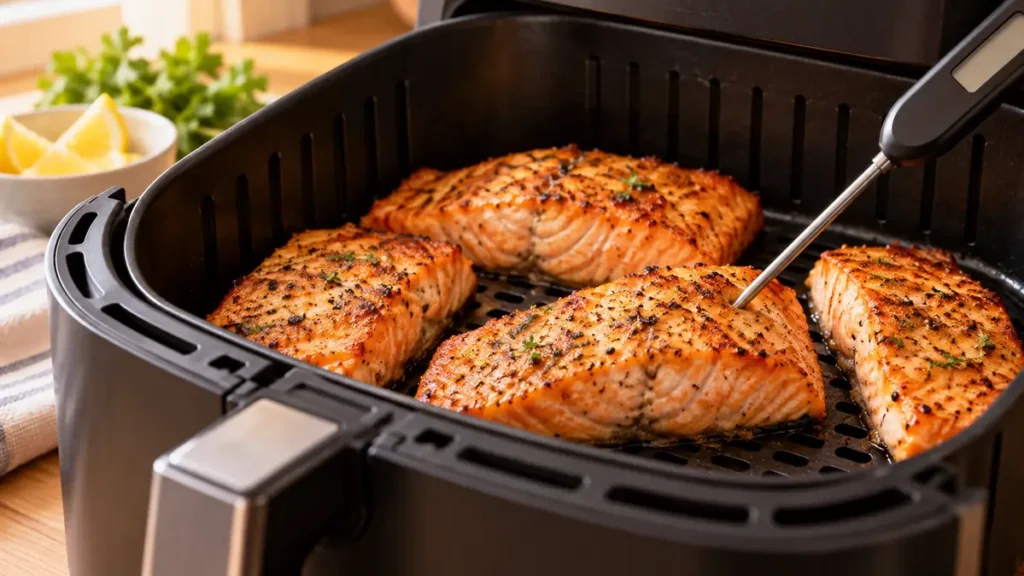
Use an instant-read food thermometer near the center of the thickest portion. The salmon should reach 145°F.
If it is not there yet, return it to the air fryer for another 1 to 2 minutes and check again. Small time adjustments are better than automatically adding another five minutes. Salmon can dry out quickly once it is almost finished.
Why Cook Frozen Salmon in Two Stages?
Seasoning a hard, icy salmon fillet sounds convenient, but it can create a frustrating result. As the surface ice melts, some of the oil and seasoning can slide off into the bottom of the basket.
Cooking the fillet briefly before seasoning solves that problem.
- Softens the frozen exterior
- Releases some surface ice
- Gives oil and seasoning something to cling to
- Lets you inspect the thickness before finishing the cook
It is especially helpful when using a sauce or glaze. Sweet ingredients can brown quickly in an air fryer, so adding them later also reduces the chance of scorching before the center is ready.
Do You Need to Thaw Salmon Before Air Frying?
No, you can air fry salmon directly from frozen.
That is what makes this recipe useful on nights when you forgot to move dinner from the freezer to the refrigerator. Frozen salmon simply needs more cooking time than thawed salmon.
If you have already thawed your fish, do not automatically follow the frozen timing. Fresh and thawed salmon usually cook considerably faster. Our air fryer salmon cooking time guide covers fresh fillets in more detail.
Thawing can still make sense when a recipe needs a long marinade or when you want to season all sides of the fish before cooking. For a simple weeknight salmon dinner, though, cooking from frozen saves an extra step.
Skin-On vs Skinless Frozen Salmon
Skin-On Frozen Salmon
Place skin-on salmon skin-side down. The skin gives the flesh a little protection from the hot basket and makes the cooked fillet easier to lift. There is usually no reason to flip it.
Skinless Frozen Salmon
Skinless salmon is slightly more delicate. A light coating of oil on the basket can help prevent sticking. An appropriate air fryer liner can also help with cleanup, but it should not interfere with airflow.
If you use liners regularly, our air fryer liners guide explains when parchment and silicone liners make sense.
How to Keep Frozen Salmon Juicy
Cook Similar-Sized Fillets Together
Thickness affects cooking time more than almost anything else. If one piece is much thinner, check it first and remove it when it is ready instead of waiting for every fillet to finish.
Do Not Crowd the Basket
Give the hot air room to move around each piece. Four fillets packed tightly into a small basket may cook differently from two fillets with plenty of space around them. Cook in batches when necessary.
Start Checking Early
The timer tells you when to start checking. It does not tell you exactly when every piece will be finished. Once salmon gets close to done, another few minutes can make the difference between moist and dry.
Use a Food Thermometer
Color can give you clues, but thickness can hide an undercooked center. Checking the thickest part gives you much more confidence than judging only by the surface.
Add Sweet Glazes Later
Honey, maple syrup, teriyaki sauce, and other sugary coatings can darken quickly. Let the salmon cook through the first stage, then brush on the glaze during the remaining cooking time.
Common Frozen Salmon Problems and Easy Fixes
Why Is My Salmon Cooked Outside but Cold in the Center?
Your fillet is probably thick enough that the outside is heating much faster than the middle. Continue cooking in short 1 to 2 minute intervals and check the thickest part again. Do not dramatically increase the temperature because higher heat can dry the outside before the frozen center catches up.
Why Won’t the Seasoning Stick to Frozen Salmon?
The surface is probably still covered with ice. Cook the salmon plain for the first few minutes. Once the exterior softens, lightly oil and season it. That is one of the main reasons this recipe uses two cooking stages.
Why Is My Frozen Salmon Watery?
Some moisture is normal because ice on and inside the fillet begins melting during cooking. Heavy surface ice, overcrowding, or blocked airflow can make the problem more noticeable. Remove loose ice before cooking and give the fillets some space.
Why Is My Air Fryer Salmon Dry?
The most common reason is simply too much cooking time. Thin salmon can finish several minutes earlier than a thick center-cut fillet. Start checking early and stop cooking when the thickest part reaches the proper internal temperature.
What Is the White Stuff on My Salmon?
The white material you sometimes see on cooked salmon is albumin, a natural protein in the fish. It becomes visible as the salmon cooks. Seeing a little is normal.
Cooking salmon aggressively or for longer than necessary can make more albumin appear, so careful timing and early temperature checks can help keep the surface looking better.
Easy Frozen Salmon Flavor Variations
Lemon Garlic Salmon
Use garlic powder, black pepper, salt, and a little oil. Finish with fresh lemon juice and chopped parsley.
Cajun Salmon
Replace the basic seasoning with your favorite Cajun blend. Check the salt level in the seasoning first because many prepared blends already contain salt.
Honey Mustard Salmon
Mix a small amount of honey with Dijon mustard and brush it onto the salmon after the initial cooking stage. Keep an eye on the surface near the end because honey can brown quickly.
Teriyaki Salmon
Brush teriyaki sauce over the salmon during the final few minutes. Adding it later lets the sauce thicken and brown without sitting in the air fryer for the entire cooking time.
If you like salmon with stronger sauces and crisp edges, you can also try these air fryer bang bang salmon bites.
What to Serve With Frozen Air Fryer Salmon
One of the easiest ways to turn frozen salmon into dinner is to keep the sides simple. Try it with rice, quinoa, roasted potatoes, green beans, salad, or lemon wedges.
You can pair it with crispy-tender air fryer asparagus for a quick vegetable side. If you are already cooking straight from the freezer, frozen broccoli in the air fryer keeps the meal especially convenient.
Just remember that your side dish and salmon may require different cooking times. A dual-basket air fryer makes that easy, but you can also cook the side first and keep it warm while the salmon finishes.
How to Store and Reheat Leftover Salmon
Refrigerate leftover salmon promptly in an airtight container. Cooked leftovers can be kept in the refrigerator for 3 to 4 days.
Salmon dries out easily when reheated, so use moderate heat and check it frequently. In the air fryer, start around 325°F and heat in short intervals rather than running a long cooking cycle.
For food safety, reheated leftovers should reach 165°F. You can also use properly stored leftover salmon cold in salads, grain bowls, or wraps.
Frequently Asked Questions
Can I put frozen salmon straight into the air fryer?
Yes. Frozen salmon can go directly into the air fryer without thawing. Cook it for the first few minutes plain, then season the softened surface and continue until the thickest part reaches 145°F.
How long does frozen salmon take at 400°F?
Most frozen salmon fillets take about 12 to 16 minutes at 400°F. Thin pieces may finish earlier, while thick center-cut fillets can need additional time.
Do I need to flip frozen salmon in the air fryer?
Usually not. Skin-on salmon can stay skin-side down for the entire cooking time. Leaving the fillet undisturbed also reduces the chance of it breaking apart.
Can I air fry frozen salmon with the skin on?
Yes. Place frozen skin-on salmon with the skin facing down. The skin can help protect the flesh and makes the fillet easier to lift from the basket.
Should I preheat the air fryer for frozen salmon?
Preheating is optional unless your air fryer manufacturer recommends it. If you do preheat, remember that your salmon may cook a little faster than it does when starting in a cold basket.
Can I season salmon while it is still frozen?
You can, but seasoning usually sticks better after the salmon has cooked for several minutes and the icy exterior has softened. That is why the two-stage method works well for frozen fillets.
Can I cook several frozen salmon fillets at once?
Yes, as long as they fit in a single layer with some space between them. If the basket becomes crowded, cook the salmon in batches so air can circulate properly.
What if my salmon fillets are frozen together?
Do not force frozen fillets apart. Air fry them for a few minutes until they loosen enough to separate safely, then arrange the pieces in one layer, season them, and finish cooking.
Frozen Salmon Makes Weeknight Dinner Easier
Cooking frozen salmon in the air fryer is useful when dinner needs to happen but nothing has been thawed.
Start the frozen fillets at 400°F, give them about five minutes to soften on the surface, then add your oil and seasonings. Continue cooking until the thickest part reaches 145°F, checking early so thin pieces do not dry out.
Once you know that simple two-stage method, you can keep frozen salmon on hand for a quick dinner without planning a thawing step the night before.