Why Does My Air Fryer Take So Long? Fix Cooking Times

If your air fryer is taking longer than a recipe says, check the basket load, preheating instructions, and thickness or starting temperature of the food first. A crowded basket, frozen ingredients, or an appliance that runs cooler than another model can all add cooking time.
The fix usually isn’t to crank up the temperature. Instead, make space for airflow, check food near the suggested finish time, and add time in small increments. For meat, poultry, and fish, use a food thermometer—not browning or the timer—to decide when it’s done.
If slow cooking persists with a normal load and correct settings, consult our air fryer troubleshooting guide for airflow and heating checks. Stop using the appliance if you suspect a fault.
How long does an air fryer take to cook food? It depends on what you’re making. Thin asparagus may take around 4–6 minutes at 400°F, standard fully cooked refrigerated hot dogs about 5–7 minutes at 400°F, and individually frozen boneless chicken breasts around 20–30 minutes or longer at 360–375°F. Allow additional preheating time when your model requires it. Use the cooking-time chart below as a starting point, not a guaranteed finish time. Confirm safe internal temperatures for meat and poultry.
How Long Does an Air Fryer Take to Cook Food?
The following are starting ranges for the specific food sizes and conditions shown, not universal times for every brand or air fryer. The examples draw on the linked Fryer Bites recipes and Instant Pot’s asparagus instructions. These are cooking-time estimates, excluding any separate preheating cycle. Follow package and appliance instructions, and confirm safe internal temperatures for raw meat and poultry.
| Food and starting condition | Air-fryer setting | Approximate cooking time | What confirms it’s ready? |
|---|---|---|---|
| Fresh thin asparagus spears | 400°F | 4–6 min | Tender stems, lightly crisp tips |
| Fresh, husked corn on the cob | 390°F | 12–14 min | Tender kernels |
| Standard fully cooked refrigerated hot dogs | 400°F | 5–7 min | Heated through; buns need 1–2 min more |
| Standard frozen corn dogs, separated | 380°F | 8–10 min | Follow package directions and any required internal temperature; do not rely on coating color. |
| 1-inch-thick raw bone-in pork chops | 400°F | 12–16 min | 145°F internally before removal, then rest at least 3 min |
| Average raw boneless chicken breasts, frozen individually | 360–375°F | 20–30 min | 165°F internally |
| Raw chicken wings, frozen | Start 360°F, finish 400°F | About 22–30 min total | 165°F internally |
Food thickness, portion size, basket load, and appliance design can change these times. Use the linked methods for each food’s preparation and doneness checks, especially when cooking from frozen. Want a reference beside you while you cook? Jump to the free printable cooking times cheat sheet below.
Why Is My Air Fryer Taking Longer Than the Recipe Says?
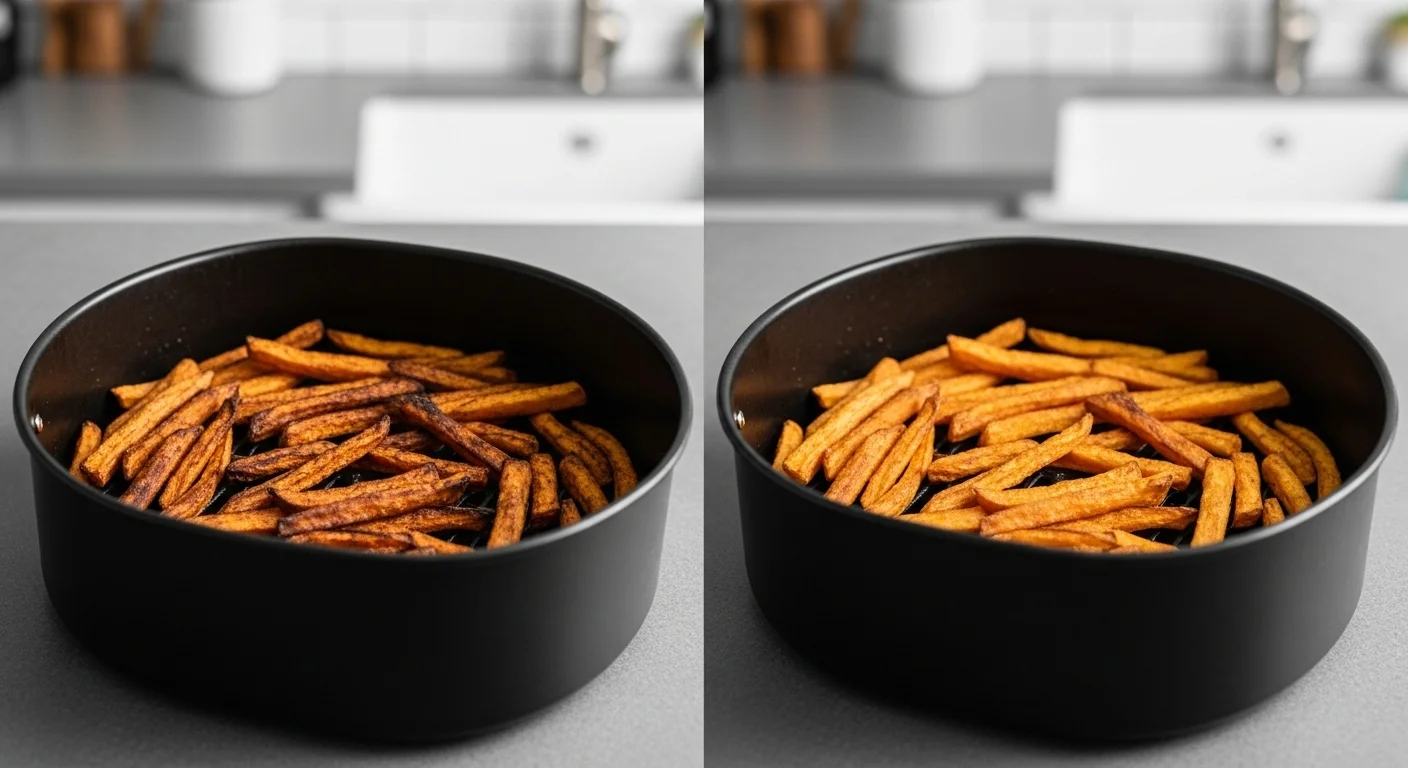
An air fryer’s timer is an estimate, not a guarantee. Two machines set to 400°F can cook the same food at different speeds because their capacity, heating element, fan, and basket design differ.
Here are the causes to check first:
| What is happening? | Why cooking takes longer | What to try |
|---|---|---|
| Basket is packed or stacked | Food blocks the circulating hot air | Cook smaller batches in a single layer |
| Food is frozen or unusually thick | The center starts colder or takes longer to heat | Follow frozen-food instructions and check the center |
| Recipe assumes preheating | The food spends its first minutes in a warming basket | Follow your model’s preheat instructions |
| Liner or pan covers the basket | Airflow is reduced around the food | Use properly sized accessories and leave airflow space |
| Pieces are different sizes | Smaller pieces finish first | Cut vegetables evenly; check large pieces separately |
| The appliance heats differently | Wattage, fan strength, and design vary | Record the timing that works in your machine |
A smaller air fryer isn’t automatically faster. For example, a small basket packed to its limit may cook less evenly than a larger basket with plenty of space. The right load matters more than a size label alone. Our air fryer size guide can help explain the differences.
How to Fix Slow Air Fryer Cooking Step by Step
Use this checklist before changing a recipe’s temperature. Fixing one obvious problem at a time makes it easier to see what helped.
First, Check Whether the Problem Is the Batch or the Machine
Here is a practical way to narrow it down without guessing at a new cooking temperature:
- Only a full basket runs late: cook a smaller, spaced-out batch of the same food next time. If it cooks more evenly, crowding was likely part of the problem.
- Only frozen or thick foods run late: compare the recipe’s starting condition and thickness with your food; check the center rather than relying on browned edges.
- Several different foods suddenly take much longer: confirm the mode, temperature, drawer seating, and ventilation. If the appliance still does not heat as expected, stop using it and consult the manufacturer’s troubleshooting instructions.
- Check the appliance setting. Confirm you’re using air-fry mode and the temperature in the recipe, not a lower preset or an incorrect °F/°C setting.
- Follow the preheating instructions. Some models recommend a preheat cycle while others do not require manual preheating. If a recipe assumes a preheated basket, a cold start may take longer. See how to preheat an air fryer for a practical explanation.
- Reduce the basket load. Spread pieces out with room for moving air. Cook a second batch instead of stacking everything tightly.
- Prepare food consistently. Pat wet surfaces dry when crispness matters. Cut vegetables to similar sizes, and use oil only when the food or recipe calls for it.
- Check early, then adjust gradually. Shake or turn food when appropriate. Add a short amount of time if needed, instead of automatically adding a large temperature increase.
- Write down what worked. For a recipe you cook often, record your appliance setting, amount of food, and actual cooking time.
Avoid opening the basket every minute. Each check releases some heat, and frequent interruptions can make the timing harder to judge.
Why Is Food Still Raw or Cold in the Middle?
A browned exterior does not mean the center has reached a safe temperature. This happens especially with thick chicken breasts, bone-in meat, and frozen food.
If the outside looks ready but the center isn’t:
- Check the thickest part with an instant-read thermometer, keeping the probe away from bone.
- Continue cooking at a suitable temperature in short intervals, checking again until the food is safe.
- Consider a slightly lower cooking temperature next time if the exterior consistently gets too dark before the middle is done.
- Separate pieces and avoid tightly packed frozen clumps when the product instructions allow it.
Don’t judge meat by color alone. Safe minimum internal temperatures are 165°F for poultry, including ground poultry, 160°F for ground beef or pork, 145°F for fish, and 145°F before removing whole cuts of beef and pork from the heat, followed by at least a 3-minute rest. Reheat leftovers to 165°F. These numbers are internal food temperatures, not air-fryer dial settings.
Use the official safe minimum internal temperature chart and USDA air-fryer food-safety guidance for more detail. Frozen breaded foods may contain raw meat or poultry even if the coating looks cooked. Check the label, follow the product’s approved cooking method, and use a thermometer where required. If air frying is not an approved preparation method for that product, follow the specified method instead.
An instant-read food thermometer is useful when thick or frozen meat looks cooked on the outside but may still be underdone in the center. Choose one with a readable display and a probe suited to the food you cook, and follow its cleaning instructions. If you already own a dependable thermometer, you do not need another just for air-fryer cooking.
As an Amazon Associate I earn from qualifying purchases.
How Much Extra Cooking Time Should You Add?
Start with the recipe’s lower-end time and check what the food actually needs.
For small vegetables or fries, another 1–3 minutes can be a reasonable checking interval when they’re nearly done. Shake or turn if needed, and stop when the texture is right.
For chicken or other raw meat, the thermometer makes the decision. If the food is below its safe internal temperature, continue cooking and recheck after a short interval. Don’t use a fixed number of extra minutes as a substitute for checking the center.
Example: If an air-fried chicken breast looks golden but measures below 165°F in its thickest part, put it back in and continue cooking until it reaches 165°F. Raising the dial sharply may darken the outside without helping the center cook evenly.
Also keep preheat time separate from food cooking time. A recipe that says 12 minutes at 400°F may refer to time after the air fryer has heated up.
Free Printable: Air Fryer Cooking Times Cheat Sheet
Want the cooking-time examples beside you while you cook? Download our free two-page printable PDF. It includes a quick troubleshooting checklist, food-specific time and temperature starting points, a safe internal temperature reminder, and a blank cooking log for recording what works in your air fryer.
Print a copy for your kitchen or save it on your phone. Times are estimates; use the food’s actual doneness and a thermometer for meat or poultry rather than treating any chart as a guaranteed finish time.
When Is Slow Cooking a Sign Your Air Fryer Has a Problem?
A few extra minutes can be normal. But if the air fryer stays cool, never heats food despite the correct setting, repeatedly shows an error, shuts off unexpectedly, or smells like burning electrical parts, stop cooking and check the manual.
Try the safe basics first: confirm the drawer is fully seated, that the correct cooking mode is selected, and that the basket and vents are clean and unobstructed. Leave the manufacturer’s required space around the appliance rather than relying on one universal clearance measurement.
If the heater appears not to work, turn it off, unplug it only if safe to do so, and let it cool. If the plug or outlet is sparking, smoking, damaged, or unusually hot, do not touch it or keep restarting the appliance. Contact the manufacturer’s support or a qualified electrician as appropriate. Do not open the electrical housing or attempt to repair a heating element yourself.
Our air fryer not heating up guide explains the safe checks in more detail. If the appliance repeatedly stops mid-cook, follow our unexpected air fryer shutdown troubleshooting guide instead of repeatedly extending the timer.
How to Get More Consistent Air Fryer Cooking Times
Once your air fryer is working correctly, consistency is mostly about repeating the conditions that worked:
- Use similar piece sizes and a predictable basket load.
- Follow the same preheating approach each time.
- Dry the surface of foods that need to crisp.
- Shake or flip when the recipe needs it, but avoid constant checking.
- Measure the center temperature of meat and poultry.
- Keep the basket and airflow openings clean according to the manual.
If food is cooked inside but still soggy outside, the problem may be moisture or crowding rather than insufficient time. These tips for crispy air fryer results can help you troubleshoot texture separately.
Frequently Asked Questions
Do all air fryers take the same amount of time?
No. Size, heating power, fan speed, basket design, and how much food you add all affect how quickly food cooks. Use recipe times as a starting point and verify doneness.
How do I convert an oven recipe for an air fryer?
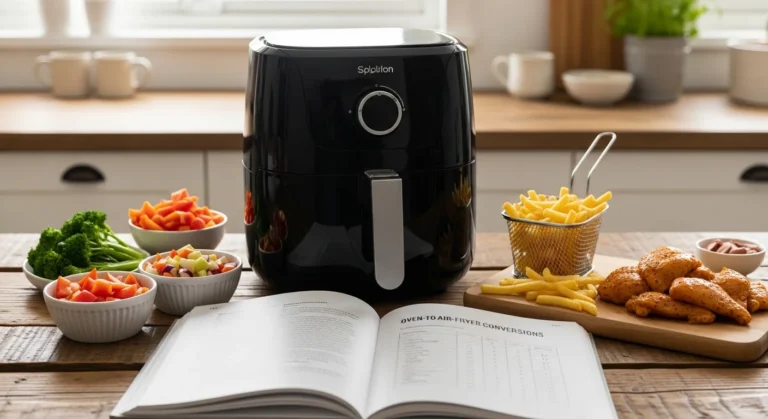
A common starting estimate is to lower the oven temperature by around 25°F and check the food earlier—sometimes after roughly 20% less time. This is not a fixed conversion rule: baked goods, dense foods, and raw meats can behave differently. Our oven-to-air-fryer conversion chart explains what to adjust.
Should I turn up the temperature if food is taking too long?
Not automatically. First check basket crowding, food thickness, and the center temperature. Raising the heat may burn the outside before the inside is ready.
Can cooking in batches save time?
Cooking in batches may take longer overall, but the food can cook more evenly because air can circulate around it. For crowded foods, two smaller batches often produce better texture than one overloaded basket.
The Bottom Line
If your air fryer cooking times seem wrong, start with the basket load, preheating, food thickness, and airflow. Check near the recipe’s suggested finish time and add only the time the food needs.
For raw meat and poultry, use a food thermometer to confirm safe doneness. And if the appliance isn’t heating normally, troubleshoot the machine instead of continuing to increase the timer.