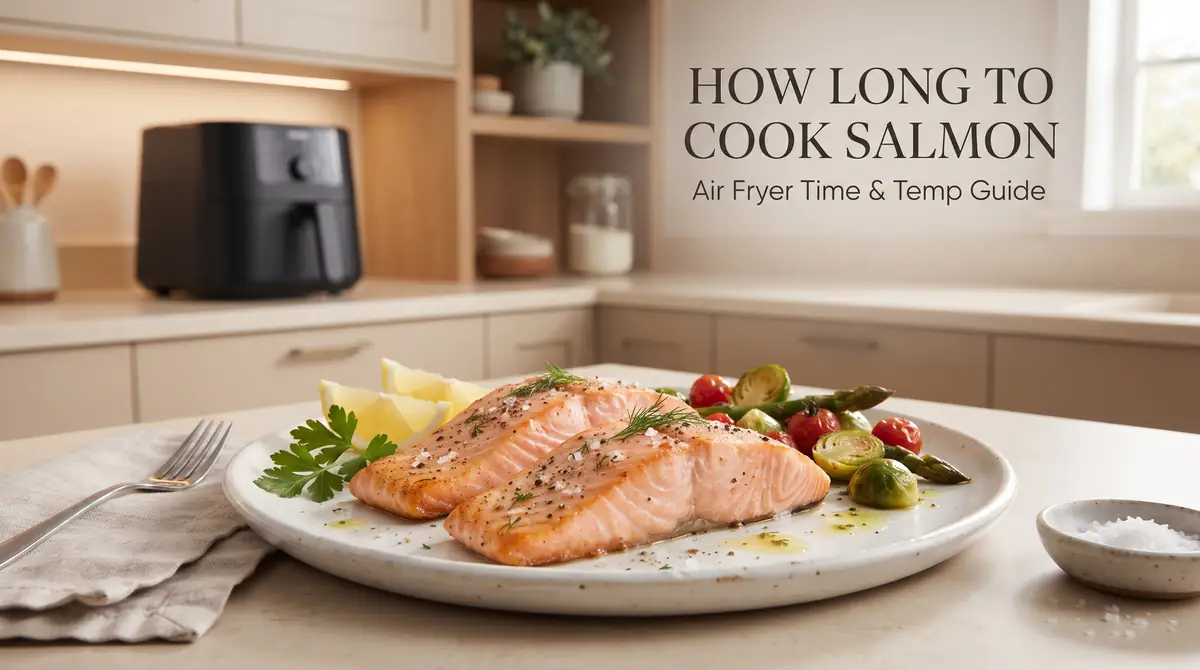
How Long to Cook Salmon in Air Fryer: Time & Temp Guide

If you’re wondering how long to cook salmon in air fryer, a good starting point is 400°F for 8 to 12 minutes for fresh salmon fillets. Thinner pieces can finish sooner, while thick fillets may need additional time. The most reliable way to know salmon is safely cooked is to check the thickest part with a food thermometer and make sure it reaches 145°F.
Air fryer salmon cooks quickly because hot air circulates directly around the fish. That makes it convenient for weeknight dinners, but it also means salmon can go from perfectly tender to dry if you simply follow the timer without considering thickness.
This guide breaks down salmon cooking times by thickness and temperature, explains how frozen salmon changes the timing, and shows you how to get flaky salmon without overcooking it.
How Long to Cook Salmon in Air Fryer
Cook fresh salmon fillets at 400°F for about 8 to 12 minutes, depending mainly on thickness. Start checking around 8 minutes for a standard fillet and continue in short intervals until the thickest part reaches 145°F.
Current air fryer salmon recipes commonly use 400°F and an 8 to 12 minute cooking window, with thicker pieces requiring additional time.
The exact cooking time can vary between air fryers, so use the timer as a starting point rather than an absolute rule.
Air Fryer Salmon Cooking Time Chart
| Salmon Type | Temperature | Approximate Time |
|---|---|---|
| Thin fresh fillet | 400°F | 6 to 8 minutes |
| Standard 1-inch fillet | 400°F | 8 to 10 minutes |
| Thick fresh fillet | 400°F | 10 to 12 minutes |
| Very thick fillet | 375°F to 400°F | 11 to 14 minutes |
| Frozen salmon fillet | 400°F | About 12 to 16 minutes |
| Salmon bites | 400°F | About 5 to 8 minutes |
These are starting ranges rather than guarantees. Fillet thickness, starting temperature, basket design, air fryer power, and whether the basket was preheated can all affect the final cooking time.
For the safest result, check the thickest part with a food thermometer.
Why Does Salmon Cooking Time Vary?
The biggest factor is thickness.
A thin salmon fillet has less distance for heat to travel before reaching the center. A thick center cut takes longer even if both pieces weigh about the same.
Other factors include:
- Whether the salmon is fresh or frozen
- Skin-on or skinless
- Starting refrigerator temperature
- Thickness and shape
- Air fryer model
- Basket size
- Whether the basket is crowded
- Whether the air fryer was preheated
This is why two salmon fillets can need different cooking times even when cooked at the same temperature.
How Long to Cook Salmon in Air Fryer at 400°F?
At 400°F, a standard fresh salmon fillet usually takes about 8 to 10 minutes.
Thicker fillets can need around 10 to 12 minutes, while very thin pieces may finish in as little as 6 to 8 minutes.
For a standard fillet, start checking around the 8 minute mark. If the center has not reached 145°F, continue cooking in short intervals.
Several current recipes use 400°F for approximately 8 to 12 minutes and recommend checking the internal temperature rather than relying only on the timer.
How Long to Cook Salmon in Air Fryer at 375°F?
At 375°F, salmon generally takes a little longer than it does at 400°F.
A standard fillet may need around 9 to 13 minutes, depending on thickness.
The lower temperature can be useful when you want a gentler cooking approach, especially with thicker pieces.
Whatever temperature you choose, the center should reach 145°F for the USDA recommended safe minimum temperature for fish.
How to Cook Salmon in the Air Fryer
For a simple fresh salmon fillet:
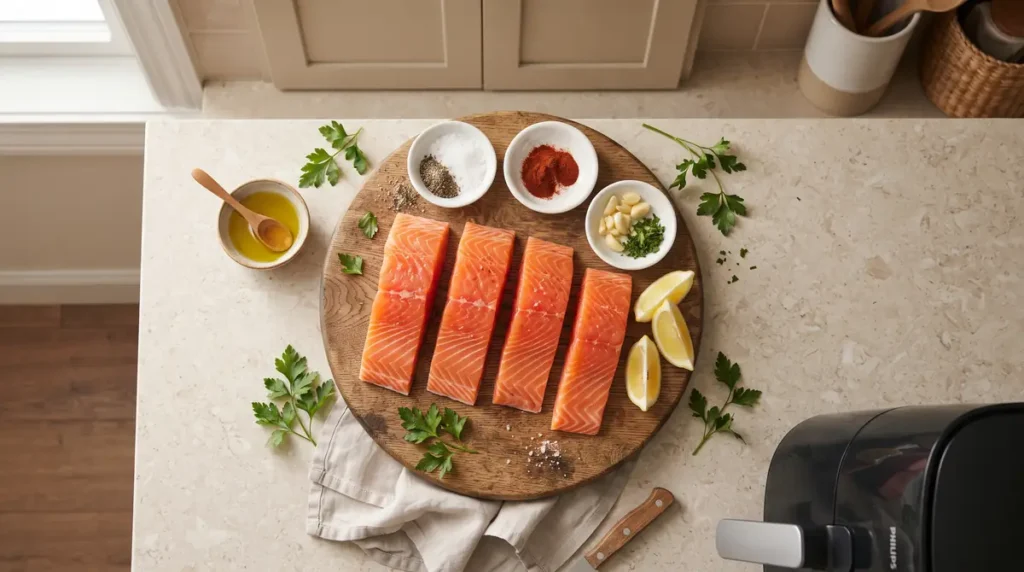
- Pat the salmon dry with paper towels.
- Lightly brush the surface with oil if desired.
- Season with salt, pepper, garlic, paprika, lemon, or your preferred seasoning.
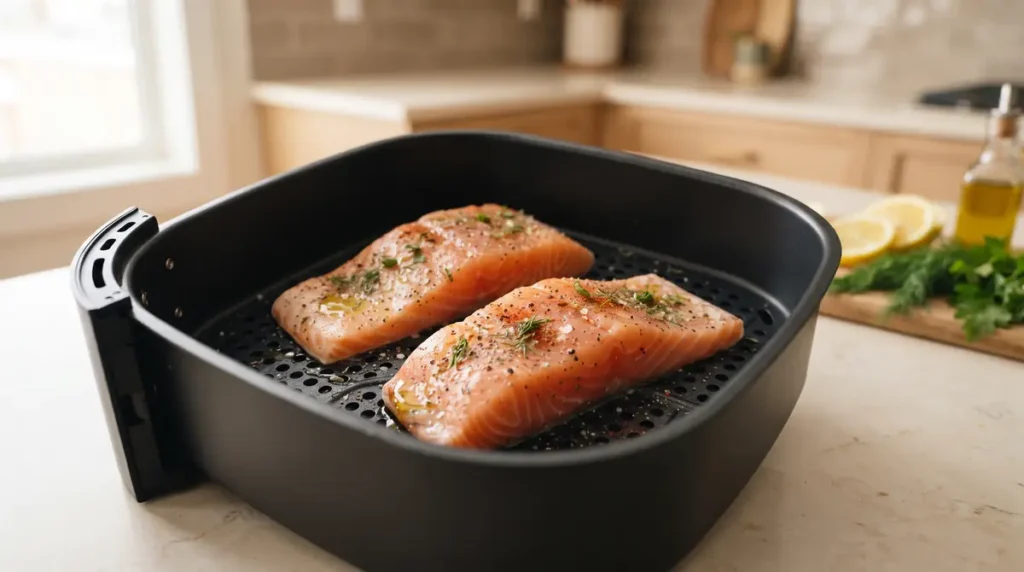
- Place the salmon in the air fryer basket in a single layer.
- For skin-on salmon, place it skin-side down.
- Air fry at 400°F.
- Start checking around 8 minutes.
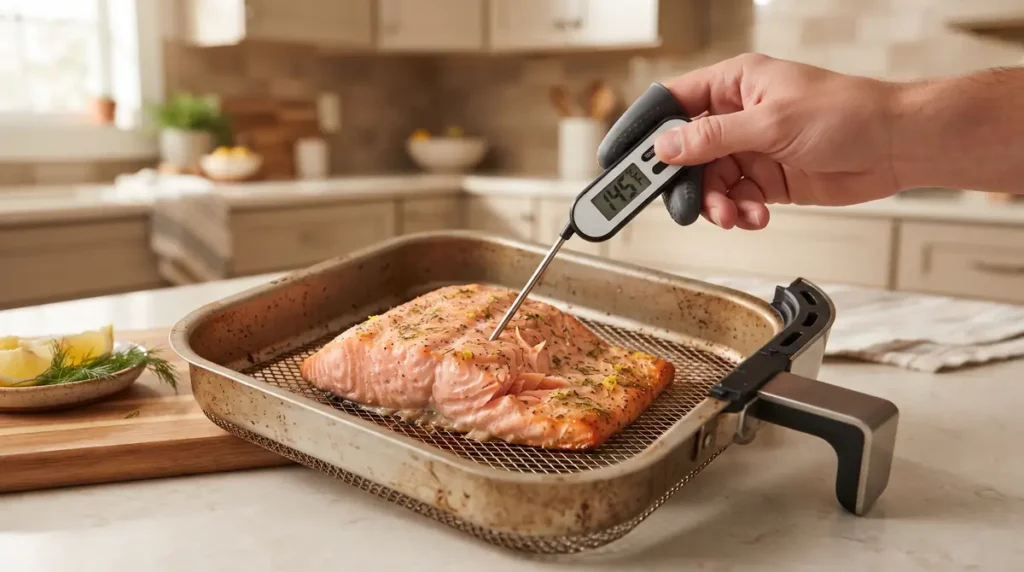
- Check the thickest part with a food thermometer.
- Continue cooking in short intervals if necessary.
- Remove the salmon when the thickest part reaches 145°F.
A thermometer is particularly helpful with thick center-cut salmon because appearance alone does not give you a precise temperature reading.
USDA guidance recommends using a food thermometer and checking the thickest portion or center of fish.
Fresh vs Frozen Salmon in the Air Fryer
Frozen salmon takes longer than fresh or thawed salmon.
A useful starting point for frozen fillets is 400°F for about 12 to 16 minutes, depending on thickness.
However, frozen salmon varies considerably by size and packaging. If the package provides air fryer directions, follow those instructions.
For fresh salmon, the shorter 8 to 12 minute range is usually the better starting point.
Do not automatically use the same timing for a thin frozen fillet and a thick frozen center cut.
Skin-On vs Skinless Salmon
Both skin-on and skinless salmon work in an air fryer.
Skin-On Salmon
Place skin-on salmon skin-side down.
The skin can help protect the flesh from direct heat while the circulating air cooks the fish.
It can also become pleasantly crisp when the surface is kept relatively dry.
Skinless Salmon
Skinless salmon can cook just as well, but it has less protection from the heat.
Pat the surface dry and avoid cooking it longer than necessary.
For either type, thickness matters more than the presence of skin when estimating the overall cooking time.
Do You Need to Flip Salmon in the Air Fryer?
No, you usually do not need to flip salmon.
For a typical fillet placed skin-side down, the circulating hot air cooks the fish without requiring a flip.
Flipping a delicate salmon fillet can also cause it to break apart.
Instead, leave it undisturbed and check the internal temperature near the end of the cooking time.
If your particular air fryer produces noticeably uneven browning, you can carefully turn the salmon, but it is not generally necessary.
Do You Need to Preheat the Air Fryer for Salmon?
Preheating can make cooking times more predictable, but it is not required for every air fryer.
If your model recommends preheating, follow the manufacturer’s instructions.
A preheated basket also means the salmon starts cooking immediately when it is placed inside.
If you regularly find that recipes finish several minutes later than the stated time, your air fryer may simply have different heating characteristics.
Our air fryer cooking times guide explains why cooking times can vary between air fryer models.
How Do You Know When Salmon Is Done?
The most reliable method is a food thermometer.
Salmon should reach 145°F in the thickest part for the USDA recommended safe minimum temperature for fish.
The flesh should also become opaque and separate easily with a fork.
However, appearance and texture are secondary checks. A thermometer gives you a much more precise measurement.
Insert the thermometer into the thickest part of the fillet, avoiding the basket underneath.
If the salmon is below 145°F, return it to the air fryer and cook for another minute or two before checking again.
How to Keep Air Fryer Salmon From Drying Out
Salmon does not need a long cooking time.
The easiest way to prevent dry salmon is to start checking earlier than you think you need to.
A few practical tips help:
- Choose fillets with similar thickness.
- Pat the salmon dry before seasoning.
- Avoid overcrowding the basket.
- Start checking thin fillets early.
- Do not keep cooking just to make the surface darker.
- Use a thermometer to determine when it is done.
- Remove thinner pieces before thicker ones if they finish first.
The air fryer is excellent for quick salmon, but it does not remove the need to pay attention to thickness.
How to Get Better Browning on Air Fryer Salmon
For better surface browning, start with dry salmon.
Excess surface moisture can interfere with browning.
A light coating of oil also helps seasoning adhere and encourages a more attractive exterior.
Keep the fillets separated instead of placing them directly against one another.
If you enjoy bite-sized salmon with a more developed browned exterior, try our air fryer bang bang salmon bites.
Common Air Fryer Salmon Mistakes
Cooking Every Fillet for Exactly the Same Time
Not every fillet is the same thickness.
A thin piece may finish several minutes before a thick center cut.
Overcrowding the Basket
Too much food can interfere with airflow.
Leave space around the salmon whenever possible.
Cooking Until the Salmon Looks Very Dark
More browning does not necessarily mean better salmon.
Once the fish reaches the proper internal temperature, additional cooking can make the flesh drier.
Cutting the Salmon Open Repeatedly
Checking the salmon with a knife can release juices and make it harder to judge the cooking stage.
Use a thermometer when possible.
Ignoring the Starting Temperature
Cold salmon straight from the refrigerator and frozen salmon will not cook at exactly the same rate.
Always consider whether you are starting with fresh, chilled, thawed, or frozen fish.
What to Serve With Air Fryer Salmon
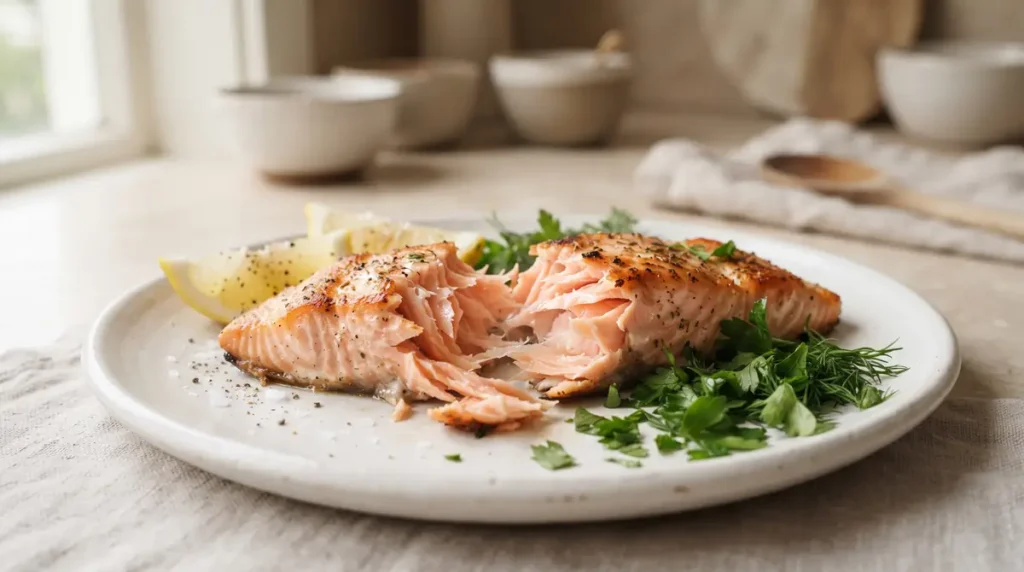
Air fryer salmon works well with simple sides that can cook while the fish is in the basket.
Try it with:
- Air fryer vegetables
- Roasted potatoes
- Rice
- Quinoa
- Green beans
- Asparagus
- A simple salad
- Lemon and fresh herbs
For vegetable timing ideas, see our air fryer vegetables guide.
How Long to Reheat Salmon in the Air Fryer
Reheat cooked salmon gently because fish can dry out quickly.
A useful starting point is 325°F to 350°F for a few minutes, checking frequently.
Place the salmon in a single layer and stop heating as soon as it is warmed through.
For leftovers, USDA guidance recommends refrigerating perishable cooked foods promptly and using safe reheating practices.
Frequently Asked Questions
How long does salmon take in an air fryer?
Fresh salmon fillets usually take about 8 to 12 minutes at 400°F, depending mainly on thickness. A standard 1-inch fillet often falls around 8 to 10 minutes, while thicker pieces can take 10 to 12 minutes. Start checking early and use a food thermometer to confirm that the thickest part reaches 145°F.
What temperature should I cook salmon in an air fryer?
400°F is a useful starting temperature for fresh salmon fillets. Most standard fillets take roughly 8 to 12 minutes at this temperature, depending on thickness. You can also use 375°F for a slightly gentler cooking approach, but the salmon will generally need additional time. Always check the center with a thermometer.
How long does salmon take at 400°F in an air fryer?
A standard fresh salmon fillet usually takes about 8 to 10 minutes at 400°F. Thin fillets can finish sooner, while thick center-cut pieces may need 10 to 12 minutes or longer. Begin checking around 8 minutes and continue cooking in short intervals until the thickest part reaches 145°F.
Can you cook frozen salmon in an air fryer?
Yes, frozen salmon can be cooked in an air fryer. A useful starting point is 400°F for about 12 to 16 minutes, depending on thickness. Because frozen fillets vary considerably in size, check the thickest part with a food thermometer and follow package instructions when available.
Do you flip salmon in the air fryer?
You usually do not need to flip salmon. Place a skin-on fillet skin-side down and let the circulating hot air cook it. Flipping can cause a delicate fillet to break apart. Instead, leave it undisturbed and check the internal temperature near the end of the cooking time.
How do you know when air fryer salmon is done?
Air fryer salmon is safely cooked when the thickest part reaches 145°F. The flesh should also appear opaque and separate easily with a fork. A food thermometer is the most reliable way to check because salmon thickness varies and visual appearance alone cannot give you an exact internal temperature.
Why is my air fryer salmon dry?
Dry salmon is usually the result of cooking it longer than necessary. Salmon cooks quickly, especially when the fillet is thin. Start checking early, avoid adding extra time simply for browning, and remove the fish when the thickest part reaches the recommended safe temperature.
More Relevant Fryer Bites Posts
These related recipes, reviews, and guides may also help: