Air Fryer Liners: Parchment vs Silicone, Safety, and Best Uses

Air fryer liners can make cleanup easier, but they are not always the best choice for every food. The main tradeoff is simple. A liner can reduce sticking and catch grease, but it can also change airflow and affect crispness if you use the wrong type or size.
If you are trying to decide between paper, parchment, and silicone air fryer liners, this guide will help you choose the right one, use it safely, and know when it is better to skip a liner completely.
If cleanup is your main issue, you may also want these air fryer cleaning tips after you finish here.
Are Air Fryer Liners Worth Using?
Air fryer liners are worth using when you want easier cleanup, need help with sticky foods, or want to reduce baked-on grease in the basket. They are less useful when maximum crispness matters most.
In other words, liners are helpful, but they are not a must-have. Many foods cook best directly on the basket or tray because direct airflow under the food helps the bottom brown better.
Liners help most when you are cooking:
- sticky glazed foods
- marinated proteins
- cheesy foods that drip or melt
- messy leftovers
- delicate foods that tend to stick
Liners are less helpful when you are cooking:
- fries
- tater tots
- breaded frozen foods
- foods that need strong bottom crisping
- anything already prone to steaming instead of browning
For better texture, pair this guide with our tips for crispy results in the air fryer.
Which Air Fryer Liner Should You Use?
The best liner depends on what you cook most often and what your air fryer manufacturer allows for your specific model.
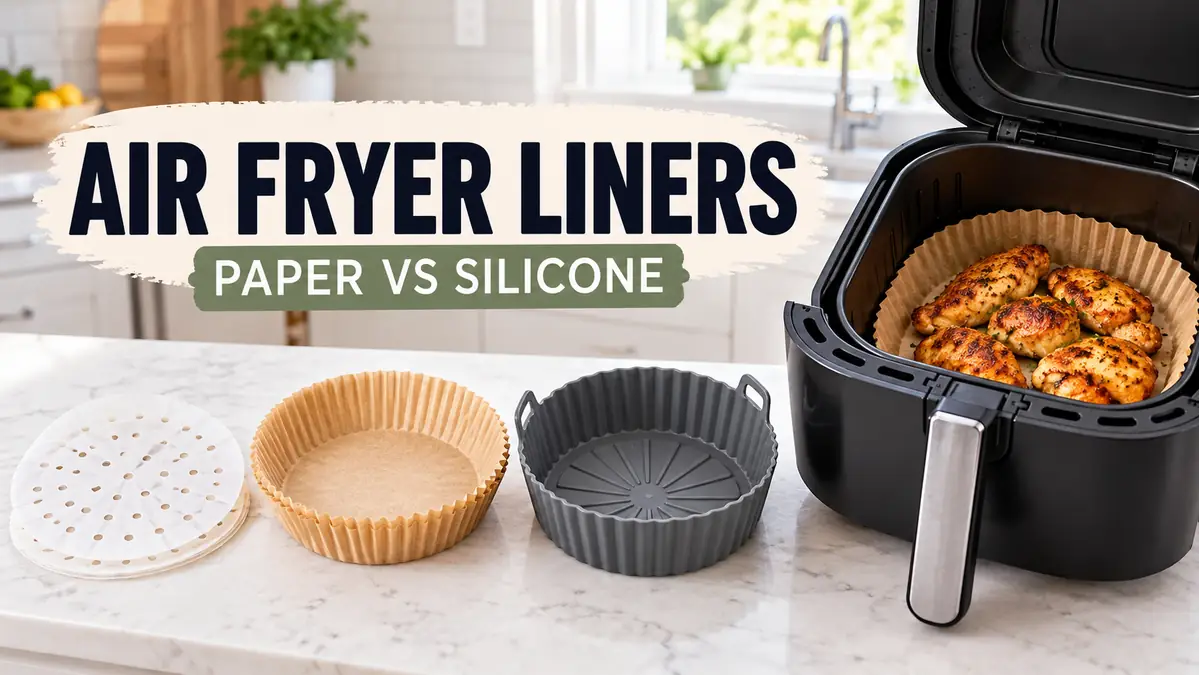
Perforated parchment liners
These are thin disposable sheets with holes. They allow more airflow than solid paper liners and are usually the best choice when you want easier cleanup without giving up too much crispness.
Best for:
- chicken pieces
- vegetables
- lightly marinated foods
- foods that release moderate grease
Solid paper bowl liners
These are the disposable bowl-shaped liners many people use for quick cleanup. They catch grease well, but they block more airflow than perforated liners.
Best for:
- messy leftovers
- saucy foods
- greasy foods
- quick cleanup jobs
Not ideal for:
- fries
- breaded foods
- foods that need air exposure underneath
Reusable silicone liners
Silicone liners are more economical if you use your air fryer often. They are sturdy, washable, and good for messy foods. The downside is that they can reduce browning more than a thinner perforated paper liner.
Best for:
- daily use
- sticky foods
- meal prep
- anyone trying to avoid disposable liners
Reusable mesh liners
Mesh-style reusable liners allow better airflow than solid silicone. They are less common but useful if you want a reusable option without fully blocking the basket.
Best for:
- vegetables
- proteins
- foods where airflow still matters
Air Fryer Liner Comparison
| Type | Cleanup | Airflow | Crispness | Best for |
|---|---|---|---|---|
| Perforated parchment | Very easy | Good | Good | General cooking |
| Solid paper liner | Very easy | Fair | Fair | Messy foods |
| Silicone liner | Easy | Fair | Fair | Frequent use |
| Mesh liner | Easy | Better | Better | Reusable with airflow |
| No liner | Harder | Best | Best | Maximum crispness |
Are Air Fryer Liners Safe?
Air fryer liners can be safe when the liner and the appliance instructions both allow their use. The important details are material, fit, temperature rating, airflow, and keeping lightweight paper away from the heating element.
This is where people often get into trouble. The words “air fryer safe” on a package do not replace your model instructions. Some air fryer brands are more cautious than others, especially about loose parchment, blocked vents, or liners placed in the machine before food holds them down.
Follow these safety rules:
- Check your air fryer manual first.
- Never let a paper liner sit loose inside the air fryer while preheating unless the manufacturer specifically allows it.
- Keep lightweight paper fully weighed down with food.
- Do not let a liner curl or lift toward the heating element.
- Stay within the liner’s stated temperature rating. Some purpose-made parchment liners are rated to 400°F, but ratings vary.
- Do not cover vents or block airflow your appliance needs.
If you are unsure about how airflow affects your model, our basket vs oven-style air fryer guide can help.
What About Oven-Style Air Fryers?
Do not assume a liner made for a round or square basket is suitable for a toaster-oven-style air fryer. The heating elements, racks, and airflow pattern are different. Use only liners or parchment methods that your appliance manual specifically permits for that style.
Do Air Fryer Liners Need Holes?
Not always, but holes usually help.
Perforated liners are often better because they let more hot air reach the bottom of the food. That usually means better browning and less trapped moisture. Solid liners still work, but they are more likely to soften the underside of foods.
If crispness matters, choose perforated paper or skip the liner entirely.
Do Air Fryer Liners Make Food Less Crispy?
They can.
A liner creates a barrier between the food and the basket. When the bottom airflow is reduced, moisture can collect more easily, which makes the bottom of the food less crisp.
You will notice this most with:
- fries
- breaded foods
- frozen snacks
- foods with wet coatings
You may not notice it much with:
- chicken thighs
- salmon
- vegetables with oil
- reheated foods
How to Choose the Right Air Fryer Liner Size
The liner should fit inside the basket or tray without curling up into the sides or covering vents you should leave open.
Quick measuring method
- Measure the flat bottom of the basket, not the top opening.
- For square baskets, measure width and depth.
- For round baskets, measure the usable center diameter.
- Leave a small margin so the liner sits flat instead of buckling.
Avoid improvising with oversized liners. Use a size that fits the flat cooking area without curling up toward the heating element or covering vents your manual says must stay open.
How to Use a Paper Air Fryer Liner Correctly
- Preheat only if your air fryer and liner instructions allow it.
- Add the liner only when you are ready to cook.
- Place food on top so the liner cannot blow around.
- Arrange food in a single layer whenever possible.
- Check during cooking if you are working with lightweight foods.
If you still struggle with doneness after adding liners, our air fryer cooking times guide can help you adjust.
When You Should Skip an Air Fryer Liner
Skip the liner when the goal is maximum browning and airflow.
You will usually get better results without a liner for:
- French fries
- roasted potatoes
- frozen nuggets
- mozzarella sticks
- breaded chicken cutlets
- foods that need a crisp bottom
If you mostly cook frozen snacks, start with our best frozen foods to cook in the air fryer guide instead of lining the basket by default.
Paper vs Silicone Air Fryer Liners
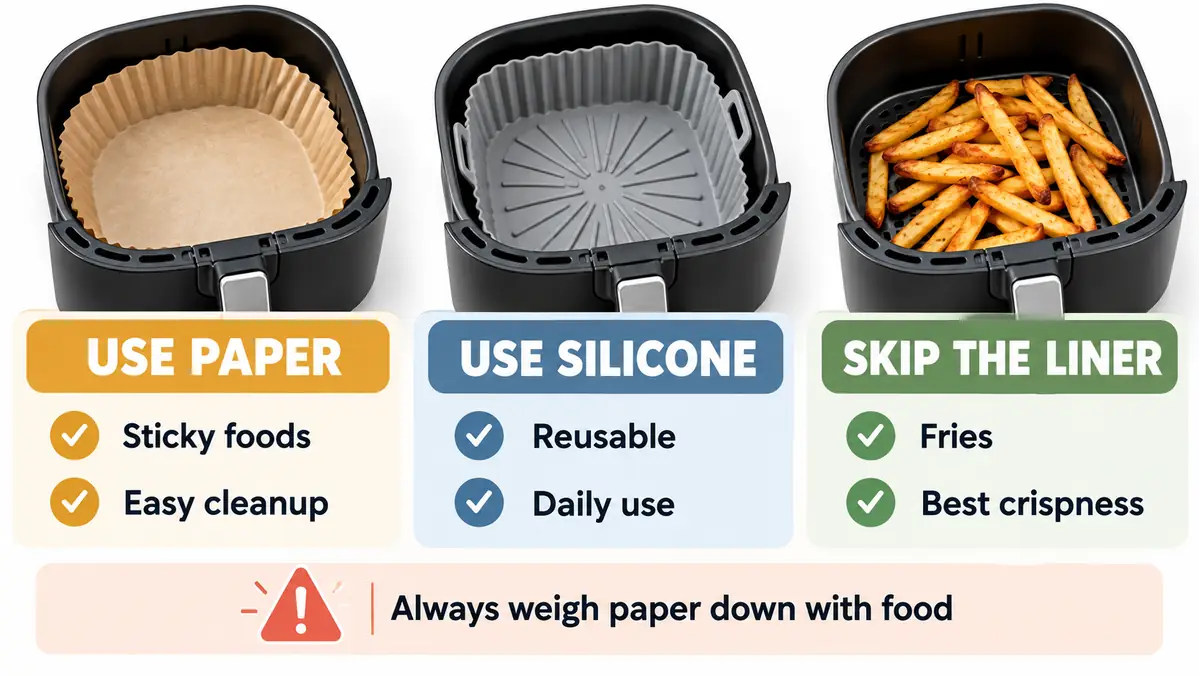
If you want the shortest answer, use paper when convenience matters most and silicone when you want a reusable option.
Choose paper if you want:
- easy cleanup with no washing
- a liner for sticky or greasy meals
- something lightweight and inexpensive
Choose silicone if you want:
- a reusable option
- less household waste
- a sturdier liner for frequent use
Choose neither if you want:
- the crispiest possible results
- maximum airflow
- the best browning on the bottom of the food
Air Fryer Liner Products Worth Considering
You do not need to buy the most expensive liner to get good results. The useful features are fit, material, airflow, and temperature rating. Start with the type that matches the foods you cook most often.
| Product type | Best for | What to check before buying |
|---|---|---|
| Perforated parchment liners | General cooking with better airflow | Basket dimensions, hole pattern, and temperature rating |
| Disposable paper bowl liners | Sticky, greasy, or saucy foods | Base size, wall height, and whether the liner fits without covering needed vents |
| Reusable silicone basket liners | Frequent cooking and easier cleanup | Food-grade material, basket fit, raised channels, and temperature rating |
| Reusable mesh liners or mats | Foods that still need strong airflow | Mesh size, nonstick surface, fit, and cleaning instructions |
What matters more than the brand name?
- Correct size: measure the flat cooking area of your basket before ordering.
- Temperature rating: make sure the liner is rated for the temperatures you normally use.
- Airflow: choose perforated or mesh options when crispness matters.
- Material: use products intended for cooking and follow the manufacturer instructions.
- Easy cleaning: reusable silicone or mesh options should be simple to wash without trapping grease in deep grooves.
If you are comparing liners with other basket-covering options, our guide to using foil in an air fryer explains where foil fits and where it can cause airflow problems.
Final Takeaway
Air fryer liners are useful tools, not all-purpose upgrades. They work best when you use them for the right foods and understand the tradeoff between cleanup and crispness.
If you cook sticky or messy foods often, liners can save time. If you care more about crunch and browning, cooking directly on the basket will usually give you the better result.
Frequently Asked Questions
Are air fryer liners safe to use?
Yes, if they are designed for the air fryer or approved for the temperatures you use, and if they are kept weighed down by food and away from the heating element.
Do air fryer liners need holes?
Not always, but perforated liners usually work better because they let more air circulate and help food crisp more evenly.
Are silicone or paper air fryer liners better?
Paper liners are usually better for quick cleanup. Silicone liners are better if you want a reusable option and do not mind washing it after use.
Can I use regular parchment paper in an air fryer?
Only if both your air fryer instructions and the parchment manufacturer allow it. A purpose-made air fryer parchment liner that fits correctly is the safer default than improvising with loose paper.
Can you preheat an air fryer with a paper liner inside?
Do not preheat with loose paper inside. If your recipe needs preheating, preheat first, then add the liner with food on top unless your specific appliance and liner instructions say otherwise.
Do air fryer liners affect cooking time or crispiness?
They can reduce bottom crispness slightly because they block some airflow. In some cases, you may also need a little extra cooking time.
Can I make my own air fryer liner?
You can sometimes trim suitable parchment to fit, but the safest choice is a liner designed for air fryer use and sized correctly for your basket.