How does an air fryer work?

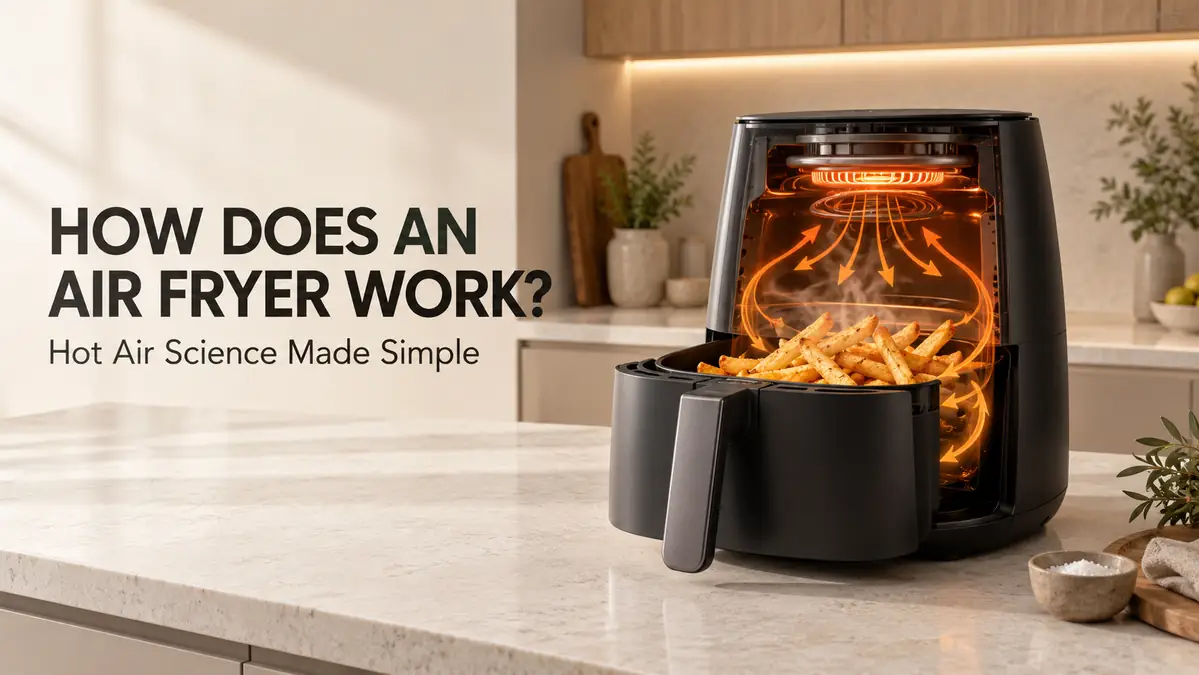
How does an air fryer work? An air fryer heats air with an electric heating element, then uses a powerful fan to circulate that hot air rapidly around food sitting in a perforated basket or tray. The moving heat cooks the food while drying and browning its surface, which is why fries, chicken, vegetables, and other foods can become crisp without being submerged in oil.
Despite the name, an air fryer does not actually deep fry food. It works much more like a compact convection oven. The important difference is how a small cooking chamber, strong airflow, and an open basket work together around the food.
Understanding that process makes an air fryer much easier to use. Once you know why airflow matters, it becomes obvious why overcrowded fries turn soft, why a little oil can improve browning, and why cooking times can vary between air fryer models.
This post contains affiliate links.
Ninja DZ201 Foodi 8-Quart Dual Basket Air Fryer
- Two independent baskets: cook a main and a side at once
- Fits a family-size meal in one go
- Easy-clean, dishwasher-safe baskets
As an Amazon Associate I earn from qualifying purchases.
What Is an Air Fryer?
An air fryer is a countertop cooking appliance that uses rapidly circulating hot air to cook, brown, roast, and crisp food.
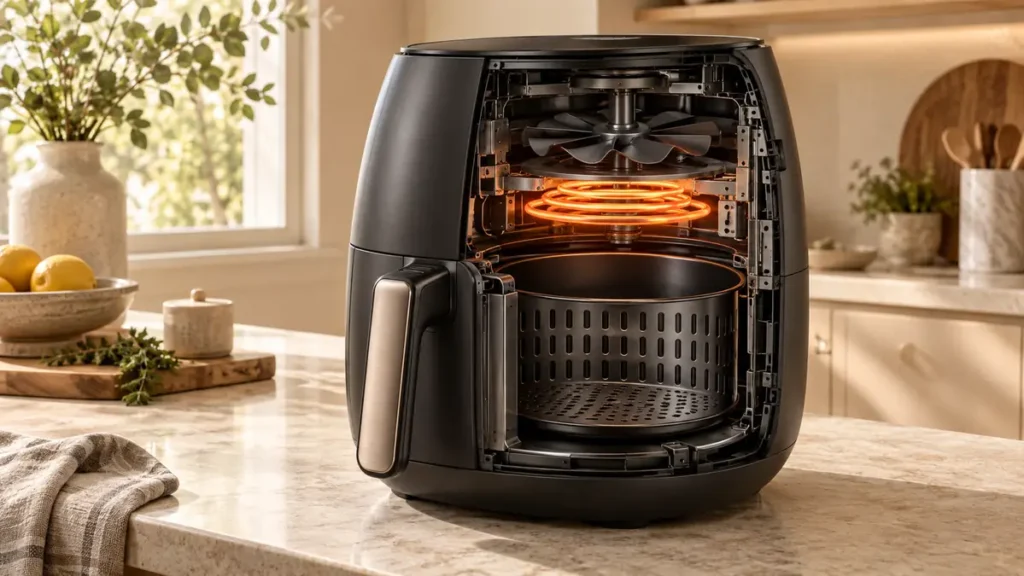
Most basket-style air fryers have three important parts:
- An electric heating element
- A fan
- A perforated basket or crisper plate
Those parts work together inside a relatively small enclosed chamber.
The principle is similar to convection cooking in an oven, but the compact chamber and close position of the food to the heat source can make the airflow feel much more concentrated.
Why Does the Air Fryer Design Matter?
The air fryer works because heat is not simply sitting around the food. It is being actively moved across the surface.
Imagine putting a tray of fries into a large conventional oven. Heat surrounds them, but much of the air inside the oven moves relatively slowly.
In an air fryer, a fan continuously pushes hot air through a much smaller space.
The basket also has openings underneath and around the food. This gives the hot air more opportunities to reach the bottom and sides rather than only the top.
That is why basket design matters. You can see the same effect when comparing an air fryer basket vs oven-style air fryer. Both use moving hot air, but chamber shape and food placement can affect the final texture.
How Does an Air Fryer Work Step by Step?
An air fryer turns electrical energy into heat, circulates that heat around the food, removes surface moisture, and continues cooking until the exterior browns and the inside reaches the desired doneness.
- The heating element gets hot. Electricity heats the element near the cooking chamber.
- The fan starts moving air. The fan pushes heated air rapidly through the chamber.
- Hot air flows around the food. Openings in the basket or crisper plate allow air to reach more than just the top surface.
- Surface moisture begins evaporating. The moving hot air helps dry the exterior of the food.
- The surface begins to brown. With enough heat and a relatively dry exterior, browning reactions develop color and flavor.
- Heat moves toward the center. The outside receives heat first, then that heat conducts inward until the food is cooked through.
This all happens continuously while the fan and heating system cycle according to the appliance’s temperature controls.
What Does the Heating Element Do?
The heating element supplies the heat that makes air frying possible.
In many basket air fryers, the element sits near the top of the cooking chamber. Air passes around or near that hot element and is then circulated by the fan.
The exact placement varies between appliances. Some newer models also include additional heating elements underneath the food.
This is one reason two air fryers set to the same temperature can still cook differently.
What Does the Air Fryer Fan Do?
The fan is what turns ordinary hot air into forced convection.
Instead of allowing heat to remain relatively still, the fan keeps moving heated air across the food.
This helps transfer heat efficiently and carries moisture away from the food surface.
The result is especially useful for foods where you want a dry, browned exterior, such as:
- French fries
- Chicken wings
- Potato wedges
- Roasted vegetables
- Breaded chicken
- Frozen snacks
Fan strength is also one reason cooking results vary between appliances. Different air fryers have different motors, chamber shapes, heating systems, and airflow patterns.
If your recipe times seem consistently wrong, our guide to air fryer cooking times explains why the same food can finish earlier or later in different machines.
Why Is the Air Fryer Basket Perforated?
The holes in the basket are not just there for grease to drain.
They allow circulating hot air to reach underneath the food.
If you placed the same food in a solid, deep pan, the bottom would receive much less direct airflow.
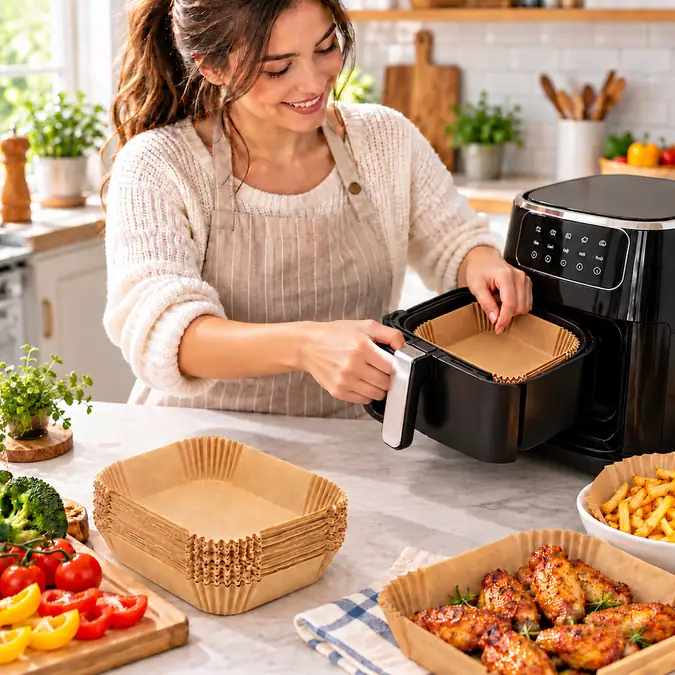
That is why blocking the entire basket floor with the wrong liner or piling food too deeply can change cooking performance.
The basket and crisper plate are part of the air frying system, not simply containers that hold the food.
How Does an Air Fryer Make Food Crispy?
An air fryer makes food crispy by using hot moving air to remove moisture from the surface while heat creates browning.
Food naturally contains moisture. As the exterior gets hot, some of that moisture evaporates.
The fan continuously moves relatively drier hot air across the surface, helping that moisture escape.
Once the exterior becomes dry enough and hot enough, browning reactions can develop.
One of those is the Maillard reaction, which occurs when naturally occurring amino acids and sugars react under heat. It contributes to the browned color and savory flavor found on foods such as roasted chicken, toasted bread, potatoes, and cooked meat.
This does not mean every food automatically becomes crispy.
If too much moisture is trapped in the basket, the food can steam instead.
That is why spacing and surface dryness matter so much. Our guide to getting crispy results in the air fryer covers those variables in more detail.
How Does an Air Fryer Work Without Oil?
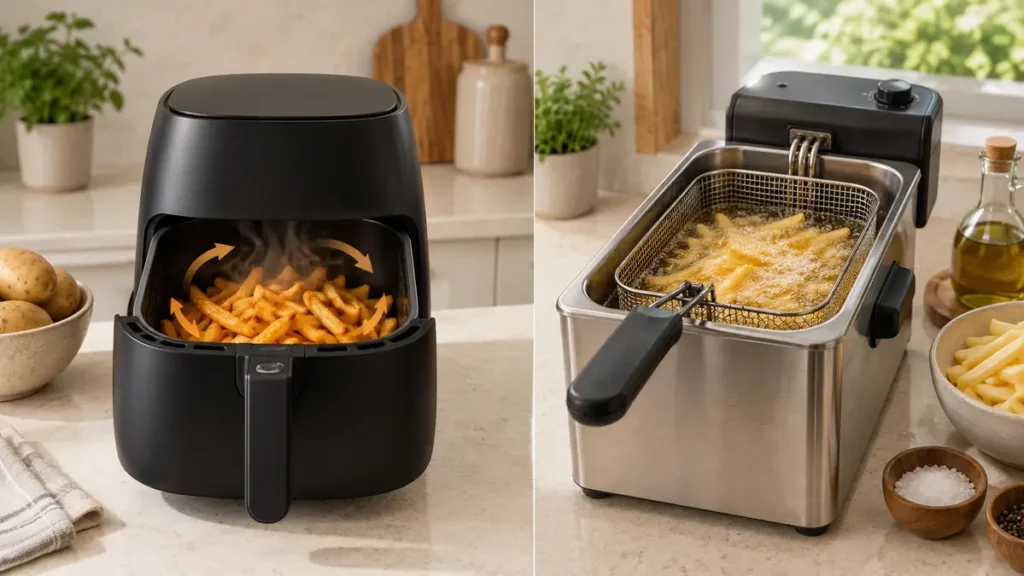
An air fryer does not need a deep container of oil because hot air is the main heat-transfer medium.
A deep fryer surrounds food with hot oil.
An air fryer surrounds food with rapidly moving hot air.
That is why it can cook without submerging food in fat.
However, that does not mean oil is always useless.
A light coating of oil can help:
- Seasonings stick
- Promote more even browning
- Improve crisp texture
- Reduce sticking on some foods
Frozen fries and breaded frozen foods may already contain oil, so adding more is often unnecessary.
Does an Air Fryer Actually Fry Food?
No, not in the traditional culinary meaning of frying.
Deep frying cooks food by immersing it in hot oil. Pan frying also relies on direct contact with a significant amount of hot fat.
An air fryer cooks primarily with hot moving air.
The name refers more to the type of browned, crisp result it attempts to reproduce than to the actual cooking process.
Is an Air Fryer Just a Convection Oven?
An air fryer and a convection oven use the same basic idea of circulating heated air, but their size, chamber shape, food position, and airflow can produce different results.
| Feature | Basket Air Fryer | Convection Oven |
|---|---|---|
| Heating method | Circulating hot air | Circulating hot air |
| Cooking chamber | Small | Much larger |
| Food surface | Usually perforated basket | Usually tray or oven rack |
| Best use | Smaller portions and crisping | Larger meals, baking and roasting |
| Preheating | Often short | Usually longer because of larger cavity |
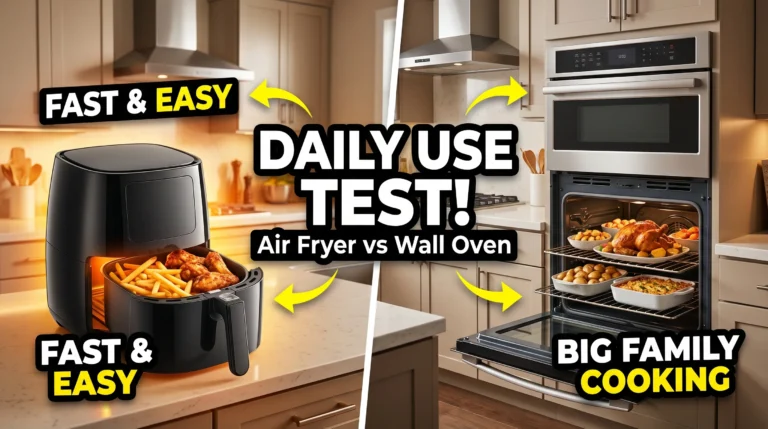
A full-size convection oven can produce similar results, particularly when food is placed on a perforated tray.
The air fryer’s advantage is mainly its compact design and concentrated airflow around relatively small amounts of food.
How Is an Air Fryer Different From a Deep Fryer?
The biggest difference is what transfers heat to the food.
A deep fryer uses hot oil. An air fryer uses hot moving air.
| Feature | Air Fryer | Deep Fryer |
|---|---|---|
| Main cooking medium | Hot air | Hot oil |
| Food submerged in oil | No | Yes |
| Texture | Crisp and roasted | Classic fried crust |
| Cleanup | Basket and cooking chamber | Oil plus fryer components |
If you want a deeper comparison of the two methods, see our air fryer vs deep fryer guide.
Why Do Air Fryers Often Cook Small Portions Quickly?
The main reason is the compact cooking chamber.
A full-size oven has to heat a much larger space.
An air fryer has less air and less interior mass to bring up to temperature, so many models can reach cooking temperature relatively quickly.
The strong airflow also transfers heat efficiently to exposed food surfaces.
That does not mean every air fryer recipe is automatically faster than every oven recipe.
Large portions, crowded baskets, thick foods, low-powered appliances, and multiple batches can erase some of that advantage.
Tips for Getting Better Results From the Air Fryer
- Leave room for air to circulate around foods that need to crisp.
- Shake fries, vegetables, and small foods when appropriate.
- Flip larger foods when a recipe or appliance design benefits from it.
- Pat wet ingredients dry before seasoning.
- Use only a light amount of oil when extra browning is needed.
- Check food earlier than you would in a full-size oven.
- Use an instant read thermometer for foods where internal temperature determines safe doneness.
- Follow your manufacturer’s instructions for preheating and accessories.
Common Air Fryer Mistakes That Block the Cooking Process
Overcrowding the Basket
When food is piled together, moving air cannot reach every surface efficiently.
Moisture also becomes trapped between pieces, which encourages steaming instead of crisping.
Using Too Much Oil
Air frying does not require deep fryer quantities of oil.
Too much oil can collect underneath the food, create smoke, or leave the exterior greasy.
Blocking the Airflow
Covering too much of a perforated basket can interfere with the very airflow that makes an air fryer work.
Expecting Every Food to Behave Like Deep-Fried Food
An air fryer can create excellent browning and crispness, but it does not reproduce the exact heat transfer or texture of oil immersion.
Using One Cooking Time for Every Air Fryer
Air fryer design varies significantly.
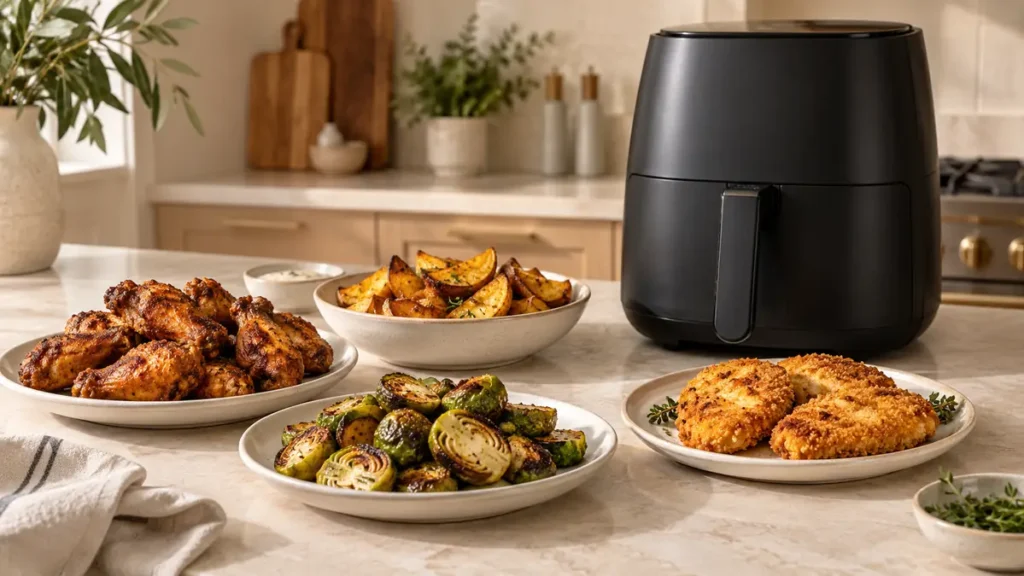
Basket dimensions, fan strength, heating element placement, wattage, food quantity, and starting temperature can all change the finishing time.
Why Is My Food Not Getting Crispy?
If your food stays soft, the first thing to check is airflow.
Try these fixes:
- Cook a smaller amount.
- Spread food into a looser layer.
- Pat wet food dry.
- Shake or turn the food during cooking.
- Add a very light coating of oil when appropriate.
- Cook a little longer if the center is already safely cooked but the exterior needs more browning.
- Make sure the basket or liner is not blocking too much airflow.
The goal is not simply more heat. The goal is getting hot moving air into contact with the food surface.
Frequently Asked Questions
How does an air fryer work in simple terms?
An air fryer heats air with an electric heating element and uses a fan to circulate that hot air rapidly around food. The food sits in a perforated basket or on a crisper tray so air can reach more of its surface. This cooks the inside while drying and browning the exterior.
How does an air fryer work without oil?
An air fryer uses rapidly circulating hot air as the main way to transfer heat instead of submerging food in oil. Many foods can therefore cook without added oil. A small amount of oil can still improve browning, help seasoning stick, and reduce sticking, but it is very different from deep frying.
Does an air fryer actually fry food?
No. An air fryer does not technically fry food in the same way as a deep fryer. Deep frying immerses food in hot oil, while an air fryer cooks primarily with circulating hot air. The word fry refers more to the crispy, browned result the appliance is designed to produce.
Is an air fryer the same as a convection oven?
They use the same basic principle of circulating heated air, but they are not identical appliances. A basket air fryer usually has a much smaller chamber and a perforated cooking surface that places food directly in concentrated airflow. A convection oven has a larger cooking cavity and is often better suited to larger meals and baking.
Why does food get crispy in an air fryer?
Fast-moving hot air removes moisture from the food surface while heat creates browning. Once the exterior becomes sufficiently dry and hot, browning reactions develop color, flavor, and a firmer texture. Food may stay soft if the basket is overcrowded or if too much moisture is trapped around it.
Does an air fryer cook food from the inside out?
No. An air fryer heats the exterior of food first. Heat then moves inward until the center cooks. This is why thick pieces of meat can look browned outside before they are fully cooked inside. Use an instant read thermometer when internal temperature is important for safe doneness.
Do you have to preheat an air fryer?
Not always. Some recipes and air fryer models benefit from a short preheat, especially when immediate high heat helps browning. Other foods can start in a cold basket without a major problem. Check your appliance instructions and recipe rather than assuming every air fryer needs the same preheating routine.
Final Thoughts: How Does an Air Fryer Work?
How does an air fryer work? It uses an electric heating element, a fan, and a perforated cooking surface to surround food with rapidly moving hot air. That concentrated airflow cooks the food while drying and browning its exterior.
Once you understand that airflow is the key, better air frying becomes much simpler. Give food enough room, control surface moisture, use oil only when it helps, and adjust cooking time to your particular appliance rather than treating every air fryer as identical.
Despite the name, an air fryer does not actually deep fry food. It works much more like a compact convection oven. The important difference is how a small cooking chamber, strong airflow, and an open basket work together around the food.
Understanding that process makes an air fryer much easier to use. Once you know why airflow matters, it becomes obvious why overcrowded fries turn soft, why a little oil can improve browning, and why cooking times can vary between air fryer models.
What Is an Air Fryer?
An air fryer is a countertop cooking appliance that uses rapidly circulating hot air to cook, brown, roast, and crisp food.
Most basket-style air fryers have three important parts:
- An electric heating element
- A fan
- A perforated basket or crisper plate
Those parts work together inside a relatively small enclosed chamber.
The principle is similar to convection cooking in an oven, but the compact chamber and close position of the food to the heat source can make the airflow feel much more concentrated.
Why Does the Air Fryer Design Matter?
The air fryer works because heat is not simply sitting around the food. It is being actively moved across the surface.
Imagine putting a tray of fries into a large conventional oven. Heat surrounds them, but much of the air inside the oven moves relatively slowly.
In an air fryer, a fan continuously pushes hot air through a much smaller space.
The basket also has openings underneath and around the food. This gives the hot air more opportunities to reach the bottom and sides rather than only the top.
That is why basket design matters. You can see the same effect when comparing an air fryer basket vs oven-style air fryer. Both use moving hot air, but chamber shape and food placement can affect the final texture.
How Does an Air Fryer Work Step by Step?
An air fryer turns electrical energy into heat, circulates that heat around the food, removes surface moisture, and continues cooking until the exterior browns and the inside reaches the desired doneness.
- The heating element gets hot. Electricity heats the element near the cooking chamber.
- The fan starts moving air. The fan pushes heated air rapidly through the chamber.
- Hot air flows around the food. Openings in the basket or crisper plate allow air to reach more than just the top surface.
- Surface moisture begins evaporating. The moving hot air helps dry the exterior of the food.
- The surface begins to brown. With enough heat and a relatively dry exterior, browning reactions develop color and flavor.
- Heat moves toward the center. The outside receives heat first, then that heat conducts inward until the food is cooked through.
This all happens continuously while the fan and heating system cycle according to the appliance’s temperature controls.
What Does the Heating Element Do?
The heating element supplies the heat that makes air frying possible.
In many basket air fryers, the element sits near the top of the cooking chamber. Air passes around or near that hot element and is then circulated by the fan.
The exact placement varies between appliances. Some newer models also include additional heating elements underneath the food.
This is one reason two air fryers set to the same temperature can still cook differently.
What Does the Air Fryer Fan Do?
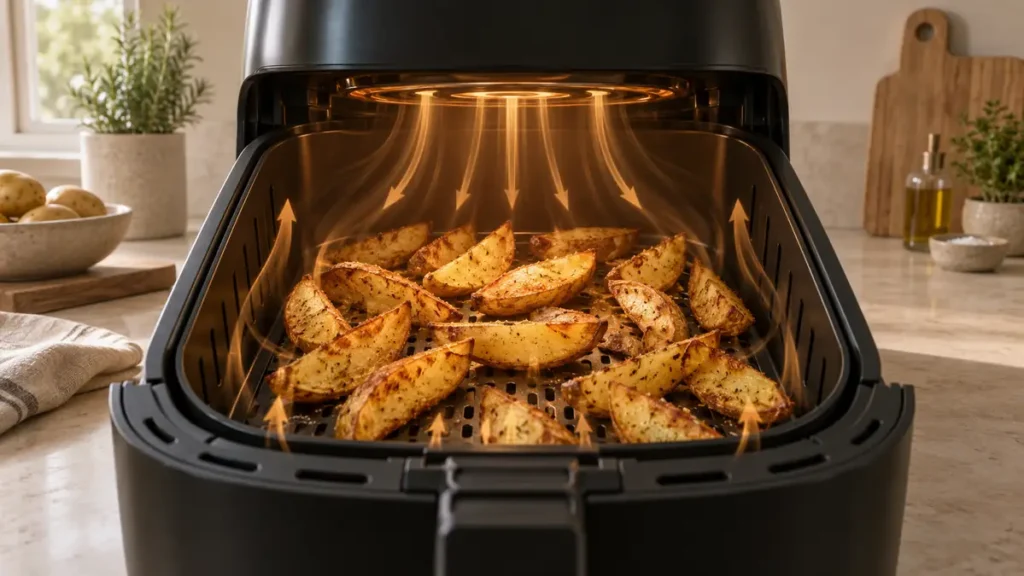
The fan is what turns ordinary hot air into forced convection.
Instead of allowing heat to remain relatively still, the fan keeps moving heated air across the food.
This helps transfer heat efficiently and carries moisture away from the food surface.
The result is especially useful for foods where you want a dry, browned exterior, such as:
- French fries
- Chicken wings
- Potato wedges
- Roasted vegetables
- Breaded chicken
- Frozen snacks
Fan strength is also one reason cooking results vary between appliances. Different air fryers have different motors, chamber shapes, heating systems, and airflow patterns.
If your recipe times seem consistently wrong, our guide to air fryer cooking times explains why the same food can finish earlier or later in different machines.
Why Is the Air Fryer Basket Perforated?
The holes in the basket are not just there for grease to drain.
They allow circulating hot air to reach underneath the food.
If you placed the same food in a solid, deep pan, the bottom would receive much less direct airflow.
That is why blocking the entire basket floor with the wrong liner or piling food too deeply can change cooking performance.
The basket and crisper plate are part of the air frying system, not simply containers that hold the food.
How Does an Air Fryer Make Food Crispy?
An air fryer makes food crispy by using hot moving air to remove moisture from the surface while heat creates browning.
Food naturally contains moisture. As the exterior gets hot, some of that moisture evaporates.
The fan continuously moves relatively drier hot air across the surface, helping that moisture escape.
Once the exterior becomes dry enough and hot enough, browning reactions can develop.
One of those is the Maillard reaction, which occurs when naturally occurring amino acids and sugars react under heat. It contributes to the browned color and savory flavor found on foods such as roasted chicken, toasted bread, potatoes, and cooked meat.
This does not mean every food automatically becomes crispy.
If too much moisture is trapped in the basket, the food can steam instead.
That is why spacing and surface dryness matter so much. Our guide to getting crispy results in the air fryer covers those variables in more detail.
How Does an Air Fryer Work Without Oil?
An air fryer does not need a deep container of oil because hot air is the main heat-transfer medium.
A deep fryer surrounds food with hot oil.
An air fryer surrounds food with rapidly moving hot air.
That is why it can cook without submerging food in fat.
However, that does not mean oil is always useless.
A light coating of oil can help:
- Seasonings stick
- Promote more even browning
- Improve crisp texture
- Reduce sticking on some foods
Frozen fries and breaded frozen foods may already contain oil, so adding more is often unnecessary.
Does an Air Fryer Actually Fry Food?
No, not in the traditional culinary meaning of frying.
Deep frying cooks food by immersing it in hot oil. Pan frying also relies on direct contact with a significant amount of hot fat.
An air fryer cooks primarily with hot moving air.
The name refers more to the type of browned, crisp result it attempts to reproduce than to the actual cooking process.
Is an Air Fryer Just a Convection Oven?
An air fryer and a convection oven use the same basic idea of circulating heated air, but their size, chamber shape, food position, and airflow can produce different results.
| Feature | Basket Air Fryer | Convection Oven |
|---|---|---|
| Heating method | Circulating hot air | Circulating hot air |
| Cooking chamber | Small | Much larger |
| Food surface | Usually perforated basket | Usually tray or oven rack |
| Best use | Smaller portions and crisping | Larger meals, baking and roasting |
| Preheating | Often short | Usually longer because of larger cavity |
A full-size convection oven can produce similar results, particularly when food is placed on a perforated tray.
The air fryer’s advantage is mainly its compact design and concentrated airflow around relatively small amounts of food.
How Is an Air Fryer Different From a Deep Fryer?
The biggest difference is what transfers heat to the food.
A deep fryer uses hot oil. An air fryer uses hot moving air.
| Feature | Air Fryer | Deep Fryer |
|---|---|---|
| Main cooking medium | Hot air | Hot oil |
| Food submerged in oil | No | Yes |
| Texture | Crisp and roasted | Classic fried crust |
| Cleanup | Basket and cooking chamber | Oil plus fryer components |
If you want a deeper comparison of the two methods, see our air fryer vs deep fryer guide.
Why Do Air Fryers Often Cook Small Portions Quickly?
The main reason is the compact cooking chamber.
A full-size oven has to heat a much larger space.
An air fryer has less air and less interior mass to bring up to temperature, so many models can reach cooking temperature relatively quickly.
The strong airflow also transfers heat efficiently to exposed food surfaces.
That does not mean every air fryer recipe is automatically faster than every oven recipe.
Large portions, crowded baskets, thick foods, low-powered appliances, and multiple batches can erase some of that advantage.
Tips for Getting Better Results From the Air Fryer
- Leave room for air to circulate around foods that need to crisp.
- Shake fries, vegetables, and small foods when appropriate.
- Flip larger foods when a recipe or appliance design benefits from it.
- Pat wet ingredients dry before seasoning.
- Use only a light amount of oil when extra browning is needed.
- Check food earlier than you would in a full-size oven.
- Use an instant read thermometer for foods where internal temperature determines safe doneness.
- Follow your manufacturer’s instructions for preheating and accessories.
Common Air Fryer Mistakes That Block the Cooking Process
Overcrowding the Basket
When food is piled together, moving air cannot reach every surface efficiently.
Moisture also becomes trapped between pieces, which encourages steaming instead of crisping.
Using Too Much Oil
Air frying does not require deep fryer quantities of oil.
Too much oil can collect underneath the food, create smoke, or leave the exterior greasy.
Blocking the Airflow
Covering too much of a perforated basket can interfere with the very airflow that makes an air fryer work.
Expecting Every Food to Behave Like Deep-Fried Food
An air fryer can create excellent browning and crispness, but it does not reproduce the exact heat transfer or texture of oil immersion.
Using One Cooking Time for Every Air Fryer
Air fryer design varies significantly.
Basket dimensions, fan strength, heating element placement, wattage, food quantity, and starting temperature can all change the finishing time.
Why Is My Food Not Getting Crispy?
If your food stays soft, the first thing to check is airflow.
Try these fixes:
- Cook a smaller amount.
- Spread food into a looser layer.
- Pat wet food dry.
- Shake or turn the food during cooking.
- Add a very light coating of oil when appropriate.
- Cook a little longer if the center is already safely cooked but the exterior needs more browning.
- Make sure the basket or liner is not blocking too much airflow.
The goal is not simply more heat. The goal is getting hot moving air into contact with the food surface.
Frequently Asked Questions
How does an air fryer work in simple terms?
An air fryer heats air with an electric heating element and uses a fan to circulate that hot air rapidly around food. The food sits in a perforated basket or on a crisper tray so air can reach more of its surface. This cooks the inside while drying and browning the exterior.
How does an air fryer work without oil?
An air fryer uses rapidly circulating hot air as the main way to transfer heat instead of submerging food in oil. Many foods can therefore cook without added oil. A small amount of oil can still improve browning, help seasoning stick, and reduce sticking, but it is very different from deep frying.
Does an air fryer actually fry food?
No. An air fryer does not technically fry food in the same way as a deep fryer. Deep frying immerses food in hot oil, while an air fryer cooks primarily with circulating hot air. The word fry refers more to the crispy, browned result the appliance is designed to produce.
Is an air fryer the same as a convection oven?
They use the same basic principle of circulating heated air, but they are not identical appliances. A basket air fryer usually has a much smaller chamber and a perforated cooking surface that places food directly in concentrated airflow. A convection oven has a larger cooking cavity and is often better suited to larger meals and baking.
Why does food get crispy in an air fryer?
Fast-moving hot air removes moisture from the food surface while heat creates browning. Once the exterior becomes sufficiently dry and hot, browning reactions develop color, flavor, and a firmer texture. Food may stay soft if the basket is overcrowded or if too much moisture is trapped around it.
Does an air fryer cook food from the inside out?
No. An air fryer heats the exterior of food first. Heat then moves inward until the center cooks. This is why thick pieces of meat can look browned outside before they are fully cooked inside. Use an instant read thermometer when internal temperature is important for safe doneness.
Do you have to preheat an air fryer?
Not always. Some recipes and air fryer models benefit from a short preheat, especially when immediate high heat helps browning. Other foods can start in a cold basket without a major problem. Check your appliance instructions and recipe rather than assuming every air fryer needs the same preheating routine.
Final Thoughts: How Does an Air Fryer Work?
How does an air fryer work? It uses an electric heating element, a fan, and a perforated cooking surface to surround food with rapidly moving hot air. That concentrated airflow cooks the food while drying and browning its exterior.
Once you understand that airflow is the key, better air frying becomes much simpler. Give food enough room, control surface moisture, use oil only when it helps, and adjust cooking time to your particular appliance rather than treating every air fryer as identical.
Related Air Fryer Guide
For a practical look at wattage, cooking time, and estimated running cost, read our guide to How Much Electricity Does an Air Fryer Use?.
More Relevant Fryer Bites Posts
These related recipes, reviews, and guides may also help: