Family Dinners Made Easy: Quick ,Healthy, Budget-Friendly Meals

Family dinners aren’t just about putting food on the table, they’re about connection, balance, and keeping life a little easier in the middle of chaos. The challenge is that busy schedules, picky eaters, and rising grocery costs make it tough to cook meals that are quick, healthy, and budget-friendly. The good news is, with the right recipes and a little planning, dinner doesn’t have to feel like a daily battle.
1. Why Family Dinners Matter
Family dinners do more than fill plates. They create space to slow down, connect, and share time without distractions. Research shows kids who eat with their families at least five times a week are 25 percent more likely to choose healthier foods. Shared meals are also tied to lower stress, stronger bonds, and big savings compared to takeout.
Key reasons they matter:
- Kids eat more fruits and vegetables
- Families spend less money than dining out
- Conversations build emotional connection
- Mealtime offers a healthy pause in busy days
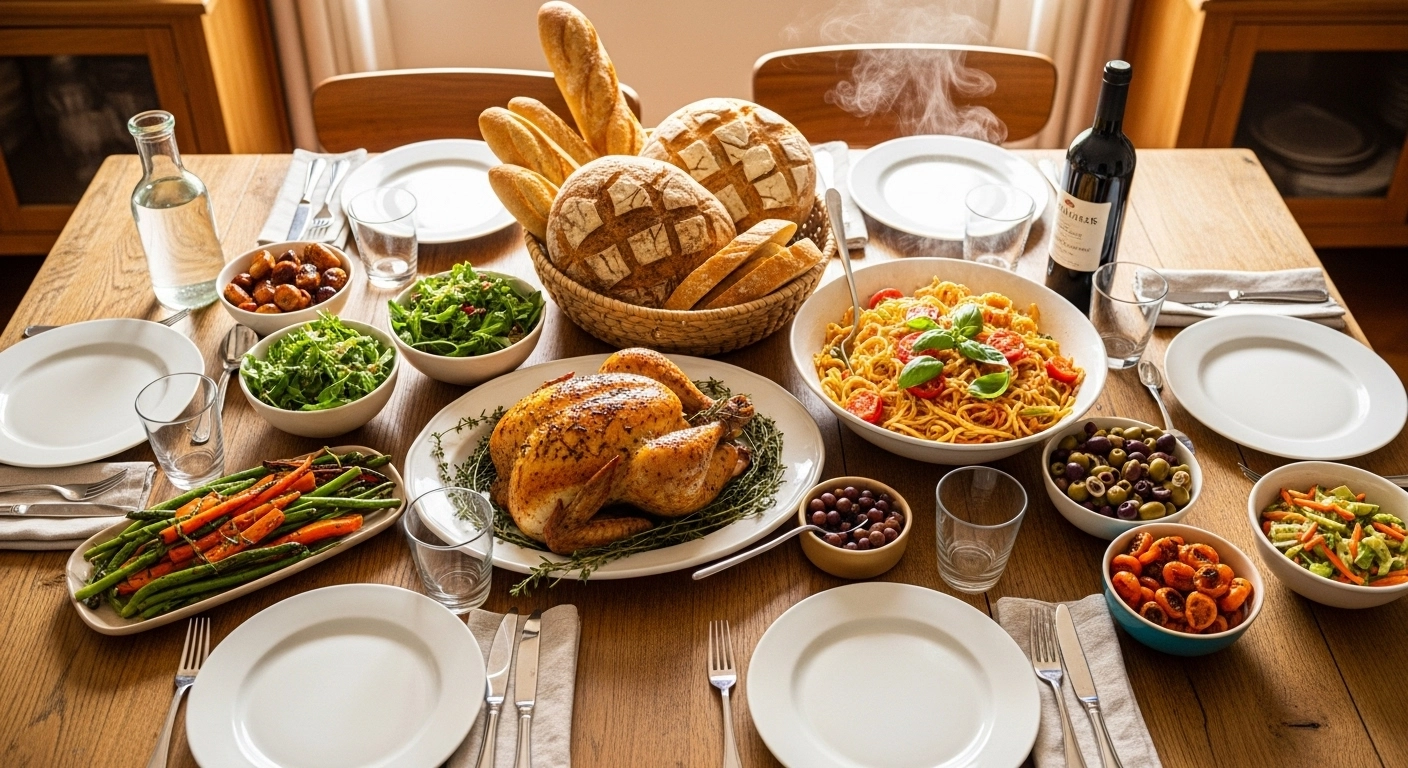
The food itself doesn’t need to be fancy. Even a quick pasta or roasted chicken can anchor the habit. Start with one or two nights a week, and the impact on health, wallet, and family connection will last far beyond dinner.

2. Family Dinners — Fast, Healthy, and Budget-Smart
An ideal family dinner doesn’t need hours of prep or expensive ingredients. The sweet spot is a meal that comes together in 30 to 45 minutes, uses whole and familiar foods, and stays within a realistic cost per serving. Most families aim for around 2 to 4 dollars per person, which is less than half of what a restaurant meal would cost.
1. Building Nutritional Balance
A balanced dinner keeps everyone full and energized while sneaking in the nutrients kids often resist. Think in simple building blocks:
- Protein for muscle repair and satiety (chicken, beans, eggs, fish)
- Vegetables for vitamins and fiber (fresh, frozen, or roasted)
- Whole grains to keep energy steady (brown rice, whole-wheat pasta, quinoa)
- Healthy fats for flavor and brain health (olive oil, avocado, nuts)
Mixing and matching from these groups makes it easier to cover the nutritional bases without stressing over every calorie.
2. Keeping Costs in Check
Good meals do not have to drain the grocery budget. A few smart shopping strategies make a big difference:
- Buy produce in season when prices are lowest and flavors are best
- Stock up on staples like rice, pasta, and beans in bulk for lower cost per pound
- Use frozen vegetables and proteins, which are often cheaper and last longer without losing nutrition
- Plan meals around sales and store coupons to stretch each dollar
When dinners are quick, nourishing, and affordable, they stop feeling like a daily chore and start becoming a rhythm that supports the whole family. Even one or two smartly planned meals a week can lighten stress and free up extra room in the budget.
3. Choosing Recipes That Actually Work
Finding recipes that truly fit into family life means focusing on meals that deliver flavor without eating up your whole evening. The best picks are flexible, affordable, and designed for real households that need dinner fast.
1. Weeknight Winners
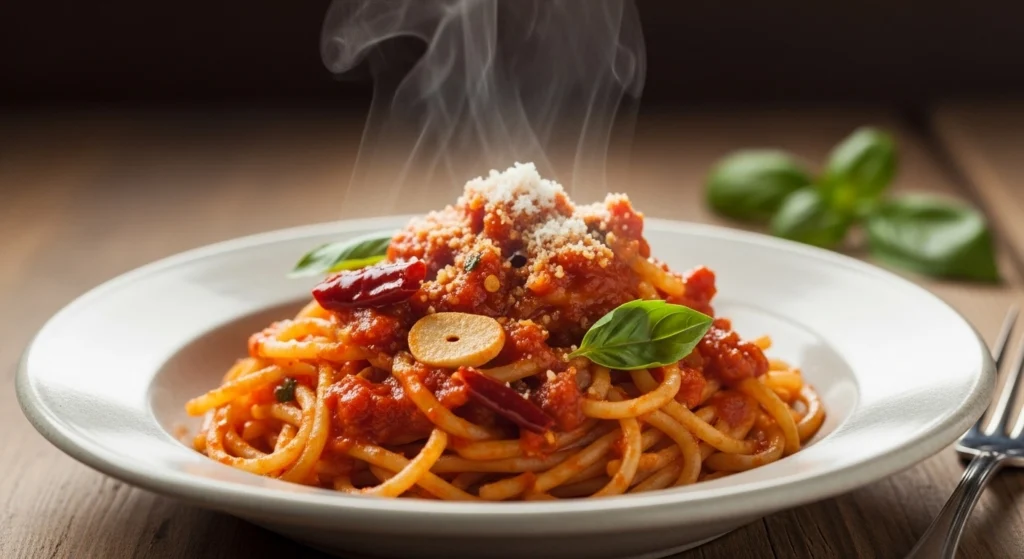
Think one-pot pastas, sheet-pan chicken, or skillet stir-fries. These meals keep prep under 15 minutes and still taste like you put in way more effort.
2. Slow Cooker & Instant Pot Solutions
Set it in the morning, forget about it all day, and come back to a warm dinner. Soups, roasts, and hearty stews make the most of hands-off cooking.
3. Make-Ahead & Freezer-Friendly Meals
Batch-cook casseroles, marinated chicken, or freezer burritos. Having a stash of ready-to-go meals makes weeknights less stressful.
4. Family Dinner Recipes for Big Households
Cooking for five, six, or more? Scale recipes with larger cuts of meat, double batches, or bulk side dishes. Leftovers store well in airtight containers for easy lunches.
4. Making Meals That Picky Eaters Will Eat
Every family has at least one picky eater, and it can feel like a constant tug-of-war at the dinner table. A few simple tweaks can make meals more appealing without cooking separate dishes.
- Flavor tricks: Keep seasonings mild, then let people add extras like hot sauce, herbs, or spice blends at the table.
- Sneaky veggies: Blend spinach into pasta sauce, mix carrots into meatballs, or swap cauliflower for part of the mashed potatoes so kids don’t even notice.
- Kid involvement: Let children help choose a recipe or assemble their own plates. When they take part, they’re far more likely to eat it.
5. Cheap & Easy Ideas: Stretching the Dollar Without Sacrificing Taste
Feeding a family doesn’t have to break the bank. With a little strategy, you can serve dinners that cost under five dollars per serving while still tasting great. The trick is focusing on versatile ingredients, smart shopping habits, and planning ahead so nothing goes to waste.
- Budget benchmarks: Aim for meals that stay under $5 per serving by using beans, rice, chicken thighs, and seasonal vegetables.
- Shopping hacks: Buy in bulk, look for store-brand staples, and keep frozen produce on hand for quick sides.
- Leftover planning: Cook once, eat twice. A roast chicken on Monday can turn into tacos on Tuesday or soup later in the week.
6. Dinner On the Go & Low-Effort Options
Some nights call for shortcuts, and that’s completely fine. Between late practices, overtime, or just plain tired evenings, having low-effort options ready can save the day without sacrificing quality.
- Grab-and-go meals: Think wraps, sandwiches, or pre-portioned salads you can assemble in minutes and take along.
- Smart shortcuts: A store-bought rotisserie chicken or deli-prepared sides can become the base for a wholesome dinner once you add a few fresh touches at home.
- Pantry builds: Keep go-to staples like pasta, canned beans, and frozen veggies stocked, so you can whip up a quick, filling meal without a second trip to the store.
7. Tools & Kitchen Setup That Make a Difference
Having the right setup can make family dinners faster, smoother, and a lot less stressful. A few smart tools and a little organization often cut your prep time in half.
- Must-have tools: An Instant Pot or slow cooker takes the pressure off busy nights, sturdy sheet pans handle everything from veggies to proteins, and a sharp set of knives makes chopping safer and quicker.
- Workspace organization: Setting up a small meal-prep zone with cutting boards, utensils, and spices within reach keeps dinner moving. Practicing a bit of mise en place, or prepping ingredients ahead, helps meals come together without last-minute chaos.
- Pantry and freezer layout: Grouping pantry staples by category (grains, canned goods, snacks) and keeping freezer items labeled and stacked means you’ll always know what’s on hand and what needs to be restocked.
8. Sample Weekly Meal Plan & Recipe Swaps
A meal plan takes the guesswork out of dinnertime, especially when you’re cooking for a family of 4 to 6. Below is a simple framework you can adapt week after week:
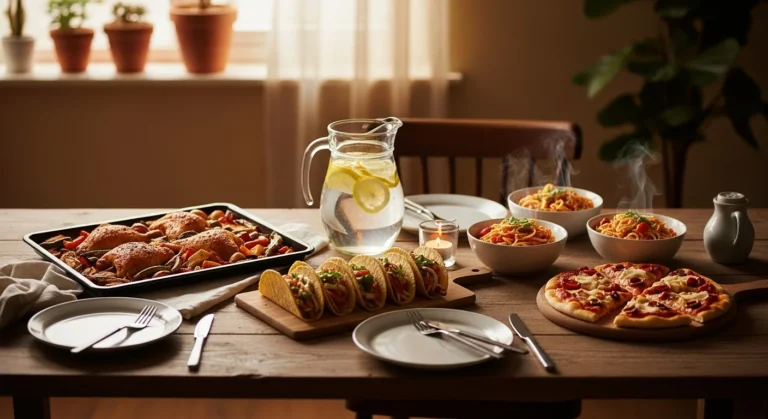
- 5–7 day plan: Mix quick weeknight winners (like sheet-pan chicken and veggies) with one slow-cooker meal, one freezer-friendly option, and one fun night (like tacos or DIY pizzas).
- Dietary swaps: Trade pasta for gluten-free noodles, use beans or tofu instead of meat for vegetarian nights, and adjust sides to fit common allergies without changing the main recipe.
- Printable version: A checklist-style plan makes shopping easier, keeps food waste low, and saves money by mapping out exactly what you need.
9. Evidence & Authority Supports
Sharing dinner isn’t just about food, it’s linked to better health and stronger connections. Studies show kids who eat with their families are 24 percent more likely to eat vegetables regularly, and families who plan meals at home save an average of $1,200 per year compared to eating out.
- Expert insights: Nutritionists often recommend family-style meals to model healthy eating habits, while chefs highlight how simple cooking methods can still deliver flavor and balance.
- Cost and nutrition: Breaking down a sample dinner, such as chicken, rice, and roasted broccoli, shows it can cost under $3 per serving and stay under 500 calories while meeting protein and fiber needs.
10. Troubleshooting Common Meal Night Challenges
Even with the best planning, family dinners don’t always go smoothly. The good news is most hurdles have simple fixes once you know where to look.
- No time to cook: Lean on fast options like scrambled eggs with toast, veggie quesadillas, or a quick stir-fry using frozen vegetables and pre-cooked protein.
- Recipe rut: Rotate themes such as “Meatless Monday” or “Taco Tuesday,” and try remixing old favorites with new seasonings or side dishes.
- Picky eaters or refusal: Offer at least one familiar food at every meal, and give kids small choices, like which vegetable or sauce goes on the plate, so they feel involved without dictating the menu.
Printable / Downloadable Sheet Ideas for Family Dinners
- Weekly Meal Planner Sheet
- 7-day grid with spaces for dinner ideas, notes, and grocery list add-ons.
- Columns for prep time and who’s cooking that night.
- Pantry & Freezer Inventory Sheet
- Quick checklist to track staples (grains, canned goods, frozen proteins).
- Helps avoid duplicates and wasted food.
- Budget Dinner Tracker
- Space to log meal costs per serving.
- Totals at the bottom to see weekly spend vs. goal (like under $100 for 5 nights).
- Picky Eater Swap Sheet
- Common kid “no’s” (broccoli, fish, spicy food).
- Easy swaps listed next to them (peas, chicken, mild seasoning).
- Family Dinner Conversation Starter Cards
- Cut-out prompts you can keep at the table.
- Fun, light, and gets everyone talking.
Quick Fixes at a Glance
| Common Challenge | Simple Solution | Time Needed |
|---|---|---|
| No time to cook | Use frozen veggies, pre-cooked proteins, or build quick meals like wraps and quesadillas | 10–15 minutes |
| Recipe rut | Introduce theme nights, swap seasonings, or add a new side to familiar mains | Adds 5 minutes prep |
| Picky eaters | Include one “safe” food each meal and let kids pick small elements (sauce, veggie, toppings) | 5 minutes extra at the table |