Air Fryer vs. Deep Fryer: A Comparison Guide

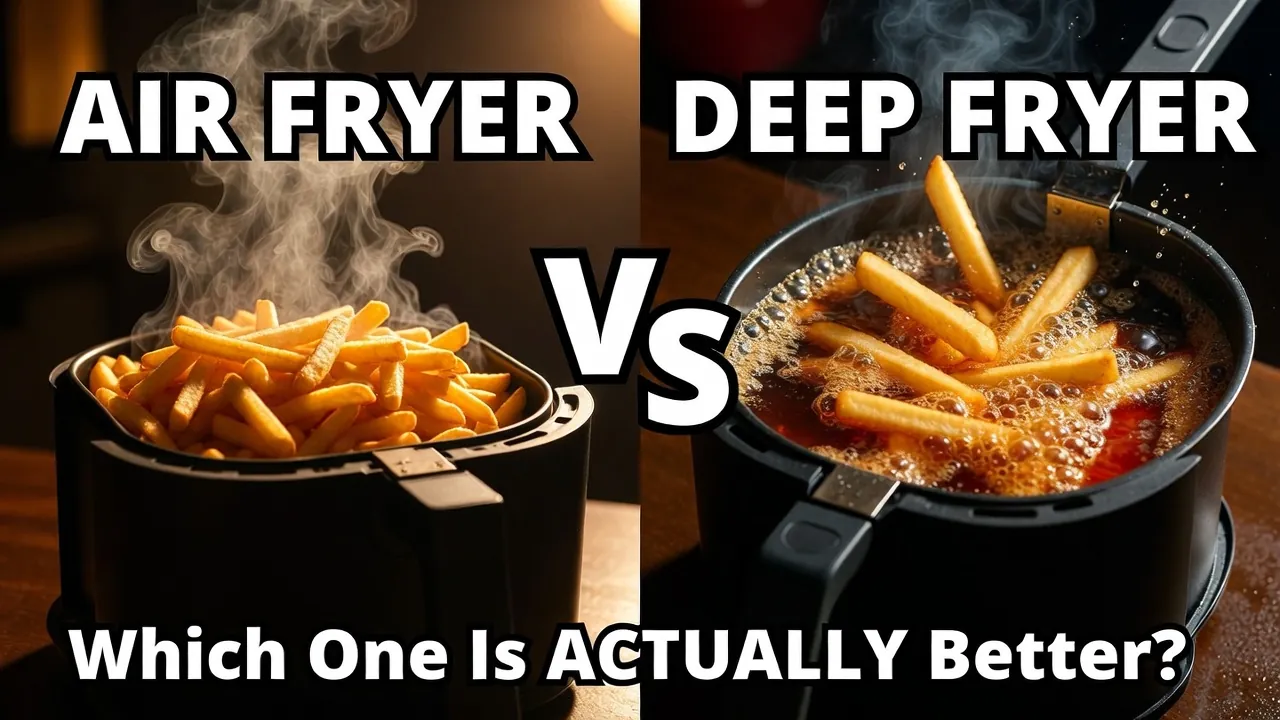
Air fryers and deep fryers both produce crispy results, but they differ in method, health impact, and practicality. Air fryers circulate hot air with minimal oil, while deep fryers submerge food in hot oil.
For tips on cooking quick family meals with an air fryer, check out our easy air fryer recipes. This guide compares key aspects based on common usage factors.
Key Differences at a Glance
| Aspect | Air Fryer | Deep Fryer |
|---|---|---|
| Cooking Method | Hot air circulation (like a mini convection oven) | Submersion in hot oil |
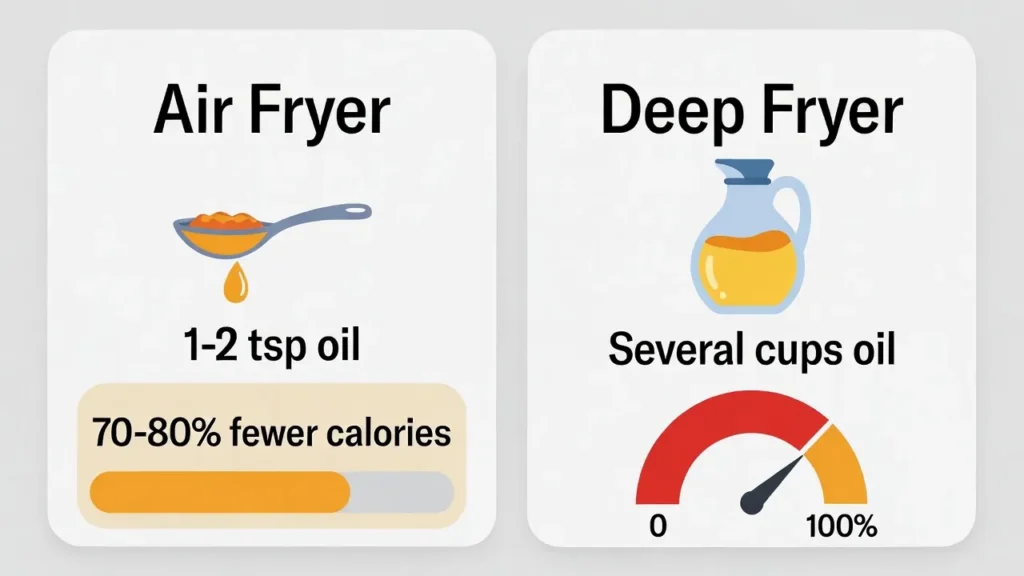
| Oil Usage | 1-2 tablespoons per batch (70-80% less than deep) | Full pot of oil (several cups) |
| Health Impact | Lower fat and calories; reduces oil absorption | Higher fat and calories from oil uptake |
| Safety | Lower burn risk; no oil splatters | Higher risk of burns, fires from hot oil |
| Cost | Lower ongoing costs (less oil, energy-efficient) | Higher (oil replacement, more electricity) |
| Efficiency | Quick preheat (3-5 min); faster overall process | Slower preheat (10-20 min); longer cleanup |
| Cooking Time | Similar per item, but batches may extend total | Faster per batch, but prep/cleanup adds time |
| Cleanup | Wipe-down basket; minimal residue | Drain/dispose oil; scrub pot |
Health Comparison
Air fryers promote healthier cooking by using far less oil, which cuts down on added fats and calories. Foods cooked in an air fryer absorb up to 80% less oil than deep-fried versions. Deep fryers, while delivering a familiar fried texture, increase fat intake since oil penetrates the food during submersion. For balanced diets, air fryers suit frequent use, but deep fryers can fit occasional indulgences.
Safety Considerations
Air fryers reduce hazards associated with hot oil, such as splatters or spills that can cause burns. They also lower fire risks due to enclosed heating elements. Deep fryers require careful handling of boiling oil, which can ignite if overheated or contaminated with water. Always use both on stable surfaces away from edges.
Cost Breakdown
Initial purchase: Air fryers range from $50-150; deep fryers $30-100. Ongoing costs favor air fryers—less oil means savings of $10-20 monthly for regular users, plus energy efficiency from shorter run times. Deep fryers consume more electricity for heating large oil volumes and require frequent oil changes.
Efficiency and Cooking Time
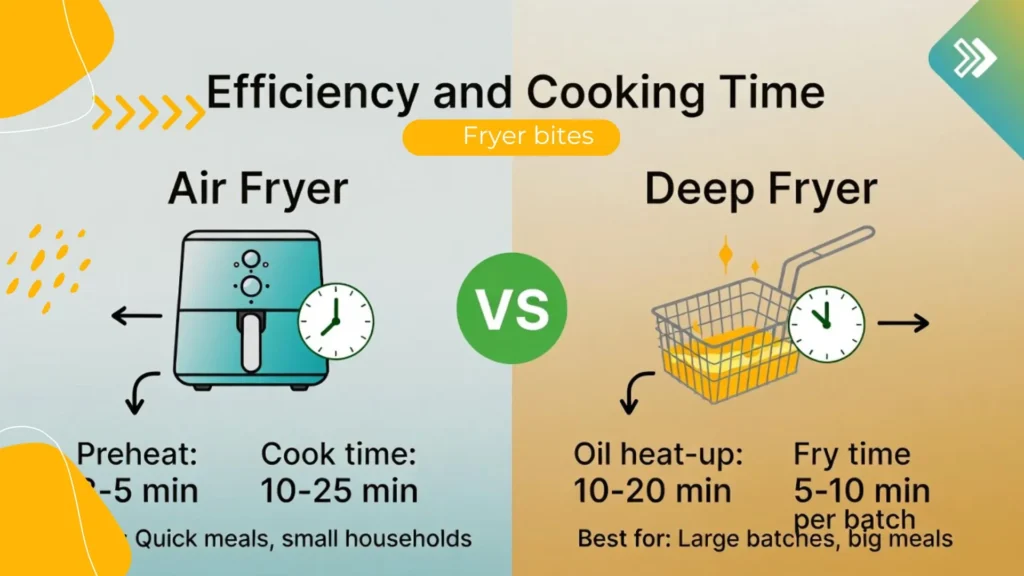
Air fryers preheat in 3-5 minutes and cook most items in 10-25 minutes, often faster than ovens but comparable to deep fryers per piece. Deep fryers heat oil in 10-20 minutes and fry quickly (5-10 minutes per batch), but total time increases with oil management. Air fryers excel in small households for quick meals; deep fryers handle larger volumes better.
Pros and Cons
Air Fryer
- Pros: Versatile for baking/roasting; easy to store; healthier options.
- Cons: Smaller capacity limits batch size; may not replicate exact deep-fried crunch.
Deep Fryer
- Pros: Authentic crispy exterior; efficient for big batches like parties.
- Cons: Messy residue; higher maintenance for oil filtering.
Practical Tips for Choosing and Using
- Select Based on Needs: Choose air fryer for daily health-focused cooking; deep fryer for special fried treats.
- Hybrid Approach: Use air fryer for most meals, deep fryer sparingly to balance enjoyment and health.
- Maintenance: For air fryers, clean baskets after each use. For deep fryers, filter oil after cooling to extend usability.
- Recipe Adjustments: In air fryers, add a light oil spray for crispiness; in deep fryers, maintain oil at 350-375°F for best results.
Air Fryer vs Deep Fryer: Calorie Comparison
Air fryers reduce calorie intake primarily by limiting oil use, typically 1-2 teaspoons per batch versus several cups in deep frying. This can cut calories by 70-80% for many fried foods, as less oil is absorbed during cooking. The exact savings depend on the food type, portion size, and preparation method, but studies and tests show consistent reductions across common items.
Calorie Comparison Table
The table below compares approximate calories per serving for select foods, based on standard recipes. Servings vary (e.g., 100g for fries, 4-6 pieces for wings). Always check labels or use a nutrition app for precise values.
| Food Item | Air Fryer Calories (per serving) | Deep Fryer Calories (per serving) | Calorie Savings (%) |
|---|---|---|---|
| French Fries | 176 | 471 | 63% |
| Chicken Wings | 270 (4-6 wings) | 531 (4-6 wings) | 49% |
| Onion Rings | 172 (4-6 rings) | 275 (4-6 rings) | 37% |
| Chicken Nuggets | 200 (6-8 pieces) | 320 (6-8 pieces) | 38% |
| Chicken Breast | 163 (4 oz) | 247 (4 oz) | 34% |
| Mozzarella Sticks | 48 (2 sticks) | 315 (2 sticks) | 85% |
| Jalapeño Poppers | 104 (4 poppers) | 355 (4 poppers) | 71% |
*Data adapted from comparative tests; percentages calculated as reduction from deep fryer baseline.
Factors Affecting Calorie Counts
- Oil Amount: Deep frying submerges food in oil at 350-375°F, leading to higher absorption (up to 10-20% of the food’s weight in oil). Air frying mists oil for crispiness without saturation.
- Food Density: Battered or breaded items like onion rings absorb more oil in deep frying, amplifying differences.
- Portion Control: Larger batches in deep fryers may use more oil overall, but air fryers encourage smaller, even loads.
Practical Tips for Lower Calories
- Use zero-calorie sprays (like olive oil in a mister) or skip oil entirely for baked-style results.
- Pat foods dry before cooking to minimize added moisture that can lead to steaming and oil retention.
- Opt for lean proteins or veggies to maximize savings, air-fried zucchini sticks save over 200 calories versus deep-fried.
- Track with apps like MyFitnessPal, inputting “air fried” to adjust for reduced fat.
Air Fryer vs Deep Fryer: Health Comparison
Air fryers and deep fryers both enable crispy textures, but they differ in nutritional impact, fat content, and potential health risks. Air frying circulates hot air with minimal oil, while deep frying submerges food in oil, leading to higher absorption of fats and compounds.
Overall, air frying is considered a healthier option for reducing calorie and fat intake, though both methods have considerations for long-term health.
Key Health Differences
| Aspect | Air Fryer | Deep Fryer |
|---|---|---|
| Fat and Calorie Content | Uses 1-2 tsp oil per batch; reduces fat by 70-80% and calories accordingly. | Requires several cups of oil; food absorbs 10-20% of its weight in oil, increasing fat and calories. |
| Nutrient Retention | Preserves more vitamins due to shorter cook times and lower oil exposure. | Can degrade heat-sensitive nutrients; added fats may offset benefits. |
| Heart Health | Lower saturated fat intake; less likely to contribute to artery damage. | Higher risk of elevated cholesterol and cardiovascular issues from oil uptake. |
| General Risks | Minimal oil splatter reduces burn hazards; versatile for baking/roasting. | Potential for trans fats if oil is reused; higher fire risk from hot oil. |
Practical Tips for Healthier Use
- In air fryers, pat food dry and use a light oil spray to enhance crispiness without excess fat.
- For deep fryers, choose healthier oils like avocado or peanut, and filter/replace after 3-5 uses to minimize oxidation.
- Balance both with portion control and varied cooking methods like steaming or grilling.
Air Fryer vs Deep Fryer: Cancer Risk
Cancer concerns with frying methods center on acrylamide a chemical formed in starchy foods cooked at high temperatures (above 248°F) classified as a probable human carcinogen by the International Agency for Research on Cancer.
Both appliances can produce it, but levels vary by food type, temperature, and duration. Evidence is mixed, with some studies showing air frying reduces acrylamide compared to deep frying, while others indicate higher levels in specific cases like potatoes.
Acrylamide Levels Comparison
| Food Type | Air Fryer Acrylamide (μg/kg) | Deep Fryer Acrylamide (μg/kg) | Notes |
|---|---|---|---|
| Potatoes/Fries | 12-290 (varies by method) | 9-290 | Air frying may produce more in some tests but up to 90% less overall. |
| Chicken | Lower than deep frying | Higher | Reduced PAHs (another carcinogen) in air-fried samples. |
Key Findings on Cancer Risk
- Air frying often results in 75-90% less acrylamide than deep frying for many foods, due to drier conditions and less oil.
- However, one study found higher acrylamide in air-fried potatoes (12 μg/kg) versus deep-fried (9 μg/kg), possibly from higher surface temperatures.
- Deep frying links to broader risks like polycyclic aromatic hydrocarbons (PAHs) and oxidized fats, potentially increasing cancer odds.
- Neither appliance directly causes cancer; risks stem from compounds formed during high-heat cooking, not the devices.
National Cancer Institute (NCI) Fact Sheet: Provides an overview of acrylamide exposure sources, health effects, and research on cancer risk. Acrylamide and Cancer Risk
Tips to Minimize Cancer Risks
- Cook at lower temperatures (under 350°F) and for shorter times.
- Avoid over-browning; soak starchy foods in water pre-cook to reduce sugars.
- Choose fresh ingredients over processed; vary methods to limit exposure.
Comprehensive toxicological profile including carcinogenicity data. Draft Toxicological Profile for Acrylamide (PDF)
Air Fryer vs Deep Fryer: Taste Comparison
Taste differences between air fryers and deep fryers are subjective and depend on the food, preparation, and personal preference. Deep frying typically infuses a richer, oil-based flavor due to submersion, creating a more indulgent profile, while air frying delivers a lighter, crispier result that highlights the food’s natural flavors without heavy greasiness.
Many users find air-fried items closer to oven-baked with added crunch, though it rarely fully replicates the deep-fried experience.
Taste Comparison Table
This table summarizes expert and user opinions on common foods, based on side-by-side tests. Ratings are aggregated from reviews (out of 5 for “fried-like” taste).
| Food Item | Air Fryer Taste Notes | Deep Fryer Taste Notes | Overall Preference |
|---|---|---|---|
| French Fries | Crisp exterior, potato-forward flavor; less oily | Golden, savory oil infusion; classic “fried” taste | Deep (4.2/5) |
| Chicken Wings | Juicy inside, dry-rub shines; subtle crisp | Crispy skin with rich, fatty mouthfeel | Deep (4.5/5) |
| Onion Rings | Light crunch, onion taste prominent | Caramelized, oil-soaked sweetness | Deep (4.3/5) |
| Chicken Tenders | Tender, seasoning stands out; not overly greasy | Bready, indulgent coating absorbs flavors | Split (3.8/5) |
| Mozzarella Sticks | Melty cheese with light breading | Gooey, fried cheese pull with bold crust | Deep (4.6/5) |
*Preferences from user reviews and tests; air fryers score higher for “cleaner” taste in some cases.
Factors Influencing Taste
- Oil Role: Deep frying allows oil to carry spices and create Maillard reactions for depth, but it can overpower subtle flavors. Air frying relies on sprays or coatings for similar effects without saturation.
- Texture’s Impact: Crunchier air-fried exteriors enhance perceived flavor, while deep-fried sogginess from oil can mute tastes over time.
- Customization: Adding oil glazes or marinades to air-fried food bridges the gap, making it “tastier than baked but less than deep-fried.”
Practical Tips for Better Air Fryer Taste
- Mist with oil (1 tsp per batch) and season generously before cooking to mimic oil infusion.
- Use parchment liners or double breading for enhanced crunch and flavor retention.
- Experiment with high-smoke-point oils like avocado for subtle richness without calories.
- Cook at 375-400°F and shake midway to promote even browning and Maillard effects.
Explore More Tips & How-To Guides
Check our collection of practical tips and step-by-step guides designed to make your life easier. Whether you’re looking to master new skills or find clever solutions, we’ve got you covered.
Browse All Tips & How-To Guides