Air Fryer Beignets vs Deep Fried (Comparison)

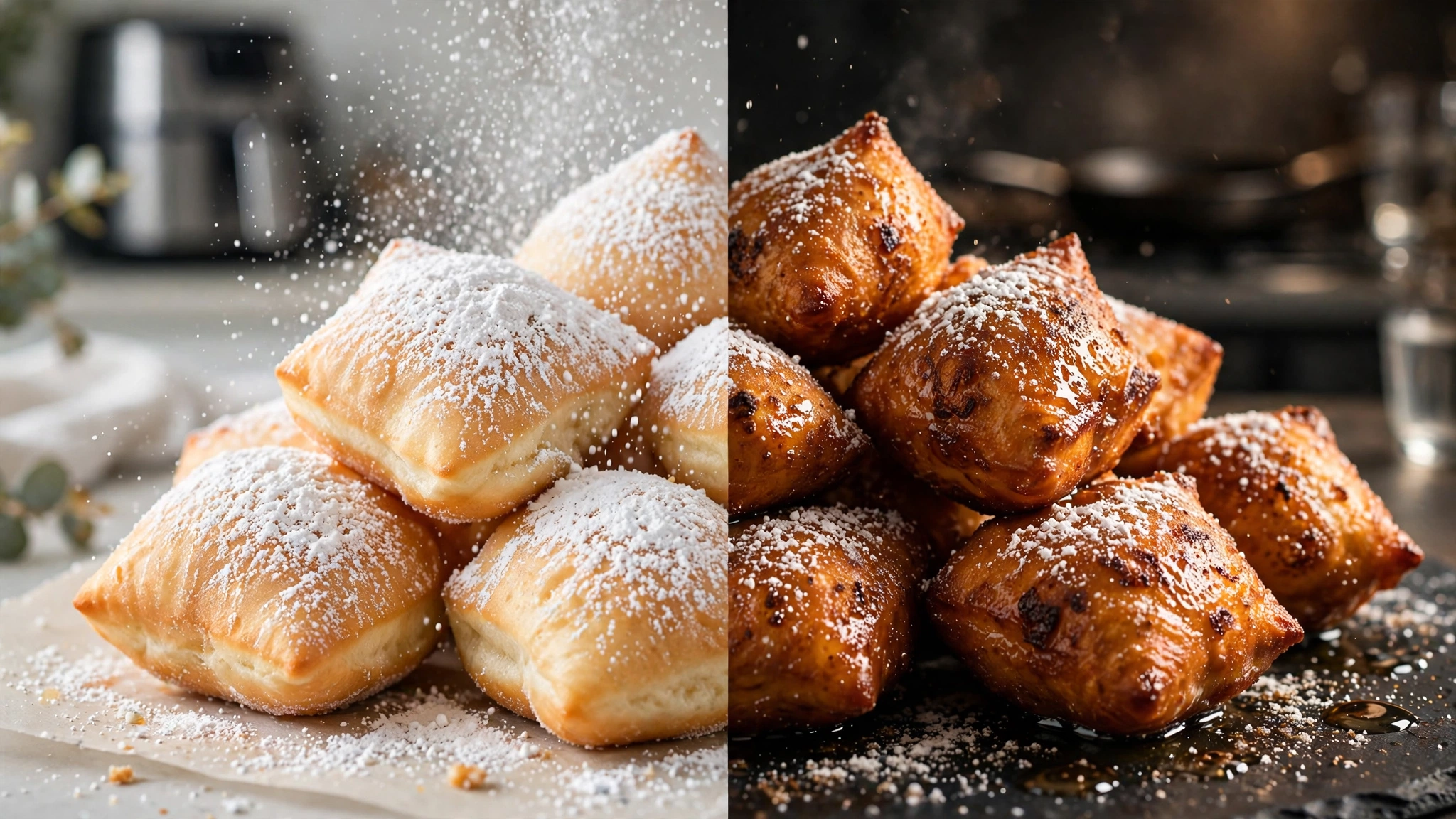
The choice between air frying and deep frying beignets comes down to what you’re optimizing for. Deep frying is still the better option for anyone chasing an authentic, bakery style result and willing to manage hot oil.
Air frying is the practical choice when lower fat, less mess, and simpler cleanup matter more than matching that texture exactly.
Either way, the biggest lever you control is temperature: keep it steady, don’t overcrowd the basket or the pot, and dust with powdered sugar while the beignets are still warm.
Air Fryer or Deep Fried Beignets?
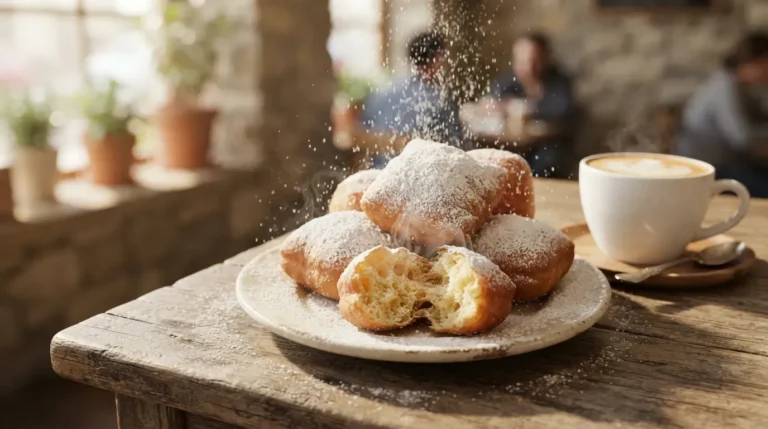
Deep frying produces the most authentic beignet: a crisp, glossy shell and an airy, pillowy interior, but it uses more oil and takes more cleanup.
Air frying uses roughly 60 to 85 percent less added oil and is easier to clean up, but the shell is thinner and the crumb tends to be slightly denser.
If you want bakery style texture, deep fry. If you want lower fat and less mess, air fry.
If you want the fuller picture beyond beignets specifically, our air fryer vs. deep fryer comparison guide breaks down the same tradeoffs across other fried foods.
Air Fryer vs Deep Fried Beignets at a Glance
| Category | Deep Fried | Air Fryer |
|---|---|---|
| Texture | Crisp, glossy shell; light, airy center | Thinner, matte crust; slightly denser center |
| Flavor | Richer, oil carried flavor | Cleaner, milder flavor |
| Added oil | About 10 to 25 percent of finished weight | About 0.5 to 5 percent of finished weight |
| Typical cook time | 1.5 to 3 minutes total | 6 to 10 minutes total |
| Cleanup | Oil disposal, splatter, more equipment | Minimal, mostly the basket or tray |
| Best for | Yeast dough, authentic texture | Drop batter, puff pastry, quick results |
Taste, Texture, Health, and Time: The Detailed Breakdown
Taste
Deep frying gives beignets a richer, more indulgent flavor because the dough is fully surrounded by hot oil, which browns quickly and carries fat soluble flavor into the crust.
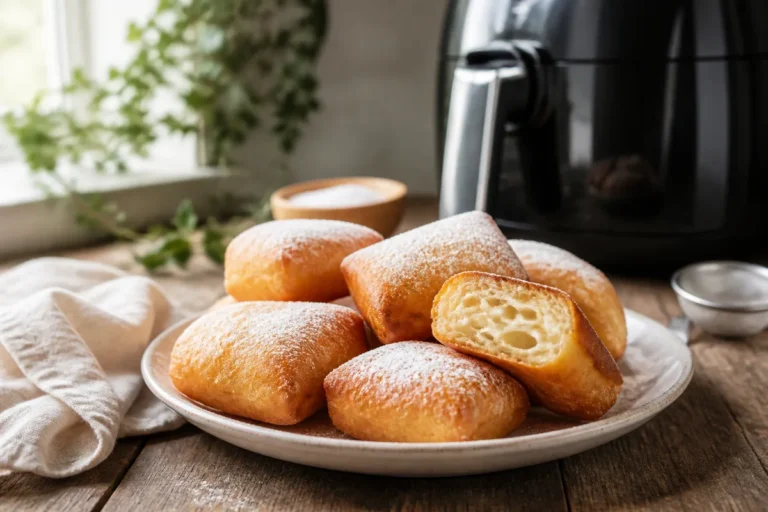
Air-fried beignets taste noticeably cleaner and a bit less rich, since only a light spray or brush of oil touches the surface.
Both still taste sweet and satisfying once dusted with powdered sugar, but if you want that classic fried richness, deep frying wins.
Texture
Deep frying works by fully submerging the dough in oil that’s held at 350 to 375°F (175 to 190°C).
The hot oil seals the surface almost instantly, which traps steam inside and pushes the dough to puff quickly while the crust browns evenly, this is what creates the classic contrast of a crisp shell around an airy center.
If you’re frying from scratch, our guide on how to make beignets at home walks through the dough and technique in more detail.
Air fryers rely on circulating hot air instead of oil contact, so the crust forms more slowly and stays thinner. That slower crust formation means less of the steam-seal effect, so the rise is a little less dramatic and the crumb can end up slightly denser.
A light oil spray and a two-stage cook (a lower temperature first, then a quick blast of higher heat) closes most of the gap.
Health and Calories
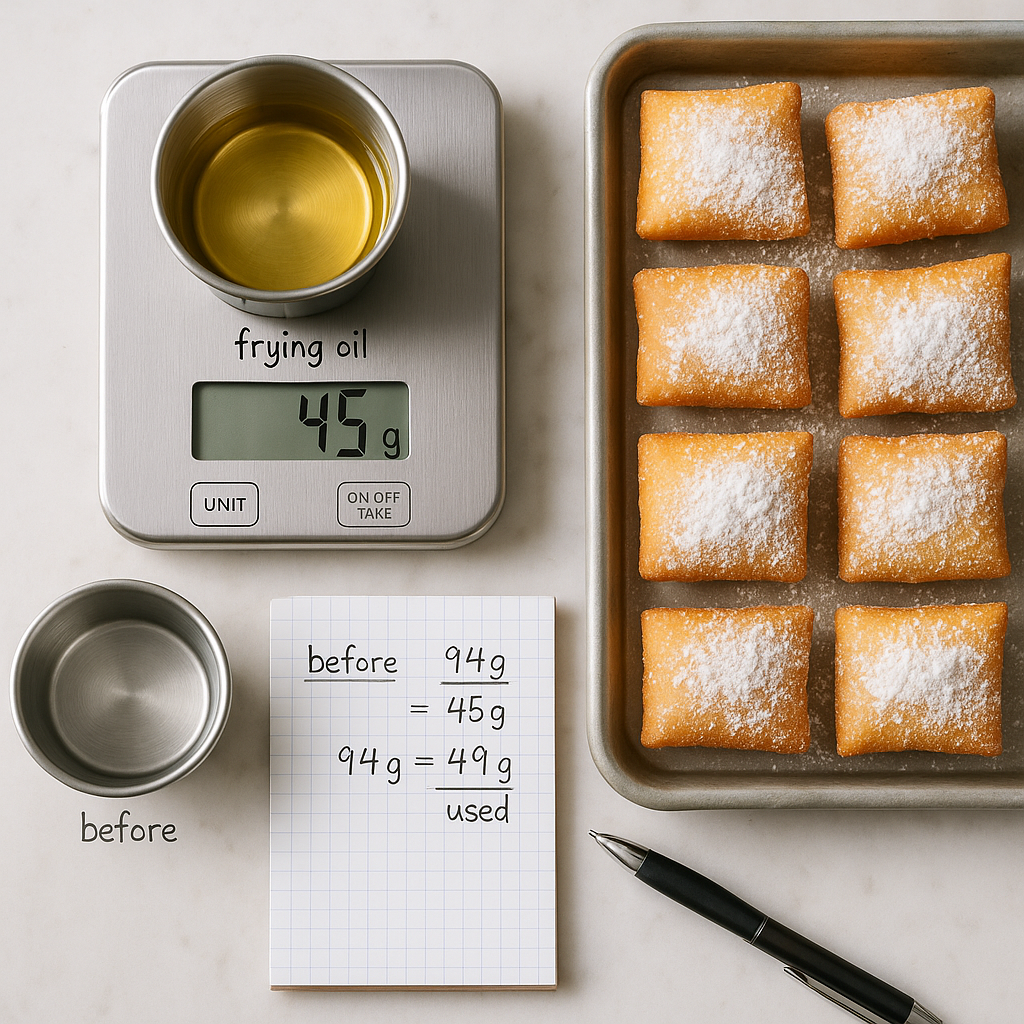
The main measurable difference between the two methods is added oil, not total calories. Deep-fried dough typically absorbs oil equal to about 10 to 25 percent of its finished weight.
Air-fried beignets usually pick up only 0.5 to 5 percent added oil, since you’re applying a light spray rather than submerging the dough. That works out to roughly 60 to 85 percent less added fat with air frying.
Total calories don’t drop nearly as much, though, because most of a beignet’s calories come from the flour and sugar in the dough, not the frying oil.
In home comparisons, switching to an air fryer typically lowers total calories per beignet by somewhere around 5 to 20 percent, useful if you’re watching saturated fat, less useful if your goal is a dramatically lower-calorie treat.
For a version built around minimizing oil from the start, see our healthy air fryer beignets recipe.
Time and Effort
Deep frying is fast once the oil is up to temperature, usually 1.5 to 3 minutes per batch, but heating a full pot of oil, monitoring the temperature, and dealing with disposal and cleanup add real time on both ends.
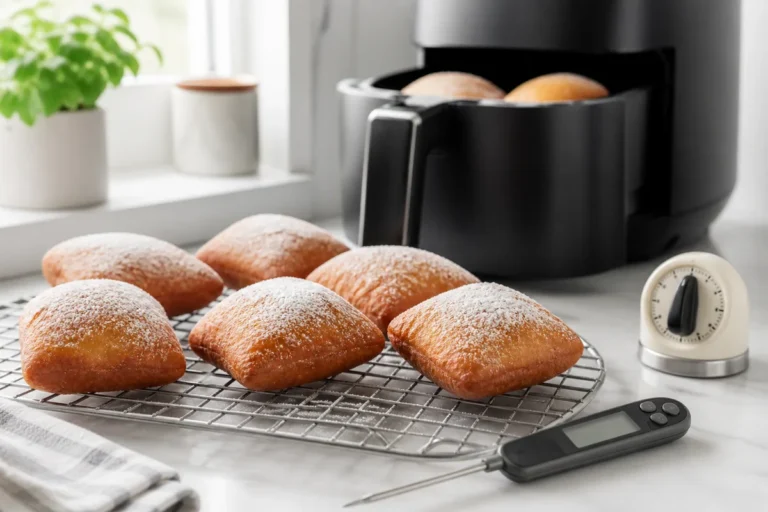
Air frying takes longer per batch (typically 6 to 10 minutes) but needs almost no setup or cleanup beyond wiping the basket. For a single small batch, air frying is often just as fast overall once you factor in oil heat-up and cleanup.
If you’re converting temperatures and times between methods, the air fryer conversion calculator can save you some guesswork.
Who Should Choose Deep Frying
- You want the closest possible match to a bakery style beignet, with a crisp, glossy shell and a pillowy, airy center.
- You’re working with a traditional yeast-raised dough and want maximum rise.
- You don’t mind heating, monitoring, and disposing of frying oil.
- You’re cooking for a crowd and want the fastest per-batch cook time.
Who Should Choose the Air Fryer
- You want a meaningfully lower fat version without giving up the fried flavor entirely.
- You’d rather skip heating a pot of oil and dealing with splatter or disposal.
- You’re making drop-batter beignets, puff pastry beignets, or reheating frozen ones, all of which adapt well to hot air.
- Cleanup time matters as much as texture.
If mornings are tight, you can also prep the dough the night before with our overnight air fryer beignet dough recipe.
Common Mistakes With Either Method
Most soggy or undercooked centers come down to overcrowding, dough that’s too cold, or the wrong temperature.
Give beignets space to cook in a single layer, let dough come to room temperature before cooking, and lower the heat by 10 to 20°F if the outside is browning faster than the inside finishes.
Powdered sugar that won’t stick usually means the beignets are too wet with oil (drain deep-fried ones on a rack) or too dry (brush air-fried ones with a little melted butter or a thin sugar syrup before dusting), and always dust while the beignets are still warm.
Frequently Asked Questions
Can you make beignets in an air fryer?
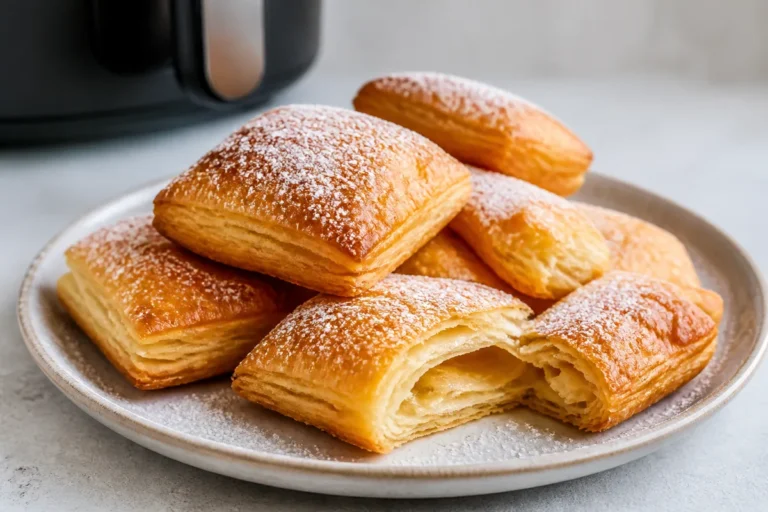
Yes. Air fryers work well for drop-batter beignets, puff pastry beignets, and frozen pre-fried beignets. The results have a golden, crisp exterior with somewhat less oil and a slightly denser interior than deep-fried versions, but they’re a close and much lower-fat alternative.
Is it better to air fry or deep fry beignets for taste and texture?
Deep frying gives the more authentic result, an evenly crisp, glossy exterior and an airy, pillowy interior. Air frying is better if lower oil and easier cleanup matter more to you than matching that exact bakery texture.
Can you air fry frozen Café Du Monde style beignets?
Yes. Cook them from frozen at around 350°F (175°C) for 6 to 9 minutes, shaking or flipping halfway. Expect a slightly different texture than deep frying, but the flavor and shape hold up well, and it’s a fast, low-mess way to prepare them.
What temperature and time should I use for air fryer beignets?
Start around 350°F (175°C) for 6 to 10 minutes depending on size, flipping halfway through. For thicker yeast-raised pieces, cook at a lower temperature first to cook the center, then raise the heat for the last minute or two to crisp the outside.
How do I stop air-fried beignets from turning out soggy?
Avoid overcrowding the basket, preheat the air fryer before adding the dough, apply only a light oil spray, and cook pieces in a single layer with space between them so hot air can circulate evenly on all sides.
How do I get powdered sugar to stick to air-fried beignets?
Dust the beignets while they’re still warm, within about 30 to 60 seconds of coming out. If the surface feels dry, brush on a little melted butter or a thin syrup (equal parts sugar and water, warmed) before adding the sugar so it has something to cling to.
Curious how beignets stack up against other fried dough? Check out our beignets vs. donuts vs. zeppoles vs. bomboloni comparison.