Air Fryer Smells Like Plastic: Is It Safe? How to Get Rid of the Smell

You unpack a brand-new air fryer, switch it on, and a few minutes later your kitchen smells like warm plastic.
That can make you wonder whether something is melting,or whether the food you planned to cook is still safe to eat.
A mild plastic-like or new-appliance smell during the first few uses can occur with some air fryers. Philips explains that plastic housing, the inner drawer, the basket, and other materials can release some odor when they are exposed to high temperatures during early uses.
But a plastic smell should not always be dismissed.
A strong smell that gets worse, visible smoke, melting or warping, sparks, or an odor that resembles burning electrical insulation deserves a very different response.
Here’s how to tell the difference and what to do.
Quick Answer: Why Does My Air Fryer Smell Like Plastic?
If your air fryer is brand new, a mild plastic-like or chemical odor may be associated with the appliance heating for the first few times.
Philips specifically acknowledges that some of the materials in its Airfryers may produce odor during initial uses.
COSORI also describes mild first-use odors as something that can occur with new appliances and recommends washing removable parts and following the appliance’s first-use instructions.
If your air fryer has been used normally for weeks or months and suddenly starts smelling like melting plastic, treat that differently.
Turn it off, unplug it, let it cool, and inspect it before using it again.
Is a Plastic Smell From a New Air Fryer Normal?
It can be.
Air fryers contain a combination of:
- Heat-resistant plastic housing
- Metal components
- Basket or drawer coatings
- Electrical insulation
- Adhesives and manufacturing materials
When a new appliance reaches cooking temperature for the first few times, some materials may produce a noticeable new-appliance odor.
Philips says this may happen during the first uses of certain Airfryer models as components reach temperatures up to about 200°C.
The important word is mild.
A mild smell that gradually decreases is different from:
- Heavy smoke
- Visible melting
- Warped plastic
- Sparks
- A hot electrical smell
- A smell that becomes stronger each time
- Smoke coming from the controls, plug, or cord
Those signs deserve more caution.
Is It Safe to Cook Food While the Air Fryer Smells Like Plastic?
If the air fryer is new and the smell is noticeable, I would complete the manufacturer’s recommended setup and first-use procedure before cooking food.
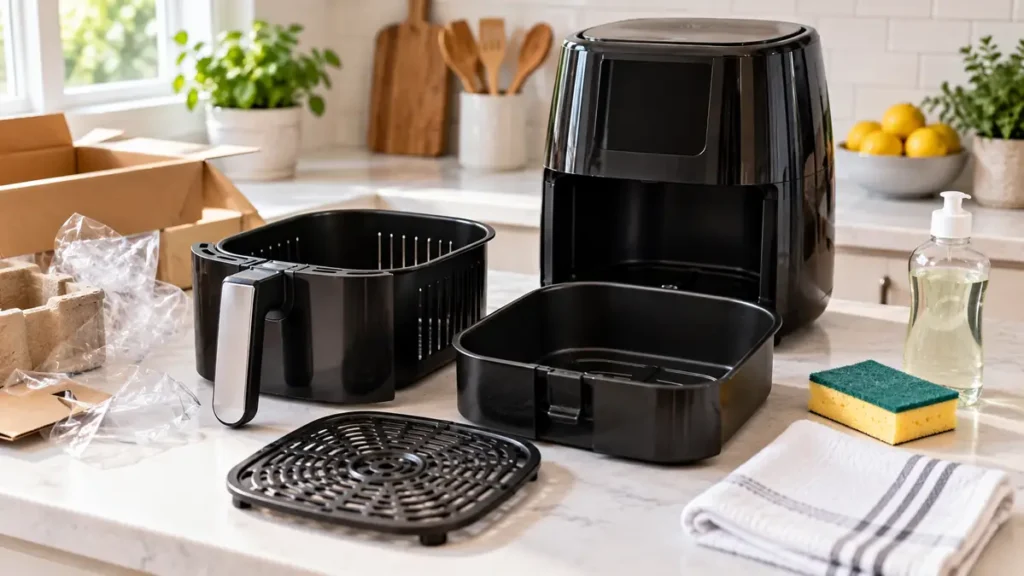
That usually starts with removing all packaging and washing the removable cooking parts.
Philips’ procedure for affected models tells users to cool the appliance, clean the basket and drawer, replace them, and then run the Airfryer empty according to its instructions.
COSORI similarly recommends washing and drying removable parts and following the manufacturer’s empty-cycle instructions when appropriate.
If you see smoke, melting, damaged components, or smell something electrical, don’t cook food until the cause has been identified.
1. The Air Fryer Is Brand New
This is the most obvious possibility.
A new air fryer has never been repeatedly heated and cooled in your kitchen.
Its materials are being exposed to normal cooking temperatures for the first time.
That can produce the familiar “new appliance” smell.
What to Do
Before the first proper cook:
Remove every piece of packaging.
Check the basket, drawer, crisper plate, racks, and accessory compartments.
Wash removable cooking parts according to the manual.
Dry everything thoroughly.
Then follow your model’s first-use instructions.
Some manufacturers recommend an empty heating cycle. Others may specify a different setup.
Your owner’s manual should take priority over generic internet advice.
If you’re still learning how your appliance handles empty heating, see our guide to how to preheat an air fryer.
2. Packaging or Protective Film Is Still Inside
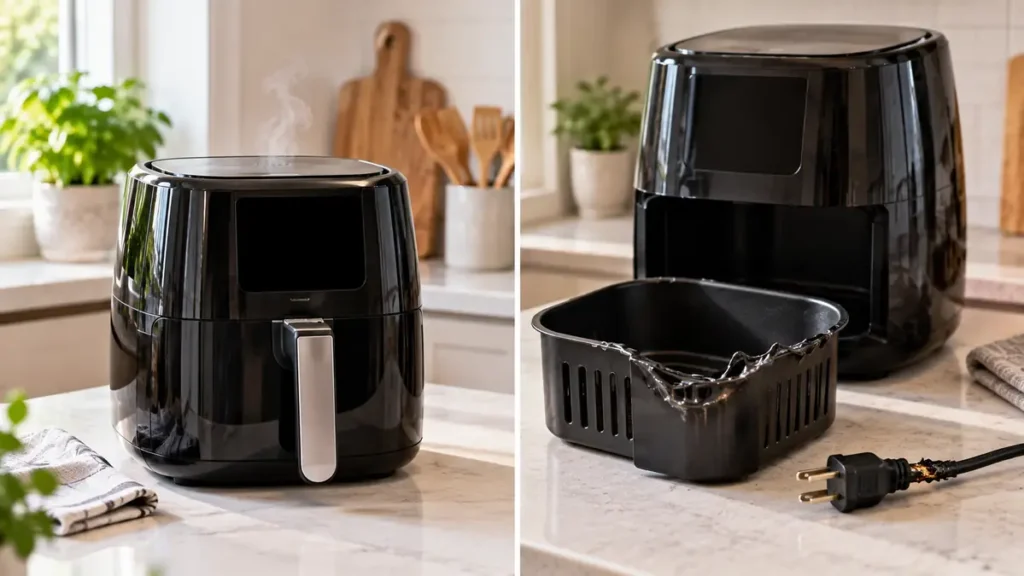
Air fryers can arrive with more packaging than expected.
You may find:
- Plastic film
- Tape
- Foam
- Cardboard
- Paper labels
- Protective inserts
- Packaging beneath accessories
A small piece can easily be missed.
If that material is exposed to heat, the smell may be much stronger than a normal new-appliance odor.
What to Do
Unplug the air fryer and let it cool completely.
Remove the basket, drawer, crisper plate, racks, and any removable accessories.
Inspect all sides carefully.
Pay particular attention to hidden surfaces underneath the crisper plate or inside accessory compartments.
Do not operate the appliance again until you’re sure all packaging has been removed.
3. The Basket and Drawer Weren’t Washed Before First Use
A brand-new basket may look clean while still carrying residue from manufacturing, storage, or packaging.
Washing the removable parts is therefore an important first-use step.
Philips tells users experiencing plastic odor to clean the drawer with water and dishwashing liquid using a non-abrasive cloth or sponge.
How to Clean It
Let the appliance cool.
Remove the basket and other washable components.
Wash them with warm water and mild dish soap if permitted by your manual.
Use a soft sponge or cloth.
Rinse and dry thoroughly.
Avoid aggressive abrasives unless the manufacturer specifically permits them.
If you want a more complete maintenance routine, see our air fryer cleaning tips.
4. Old Food or Grease Is Producing the Smell
Not every “plastic” smell actually comes from plastic.
Grease, burnt crumbs, old marinade, or food residue can produce harsh odors when reheated.
This becomes particularly likely when the air fryer is not new.
Look underneath:
- The crisper plate
- Basket corners
- Drawer edges
- Racks
- Accessible interior surfaces
A small patch of grease repeatedly exposed to high heat can smell surprisingly strong.
What to Do
Unplug and cool the air fryer.
Clean all removable parts thoroughly.
Inspect accessible interior surfaces for baked-on residue.
Do not immerse the main appliance body in water.
And don’t scrub coated baskets aggressively.
Our best non-toxic air fryers guide explains why even ceramic and other coated baskets need gentle cleaning.
5. A Liner or Accessory Is Overheating
Sometimes the air fryer is fine, but an accessory isn’t.
Possible problems include:
- An unsuitable plastic container
- A liner not designed for air-fryer temperatures
- Packaging accidentally left on an accessory
- A utensil or accessory touching a hot area
- Lightweight material moving toward the heating element
If the plastic smell begins only after you add a particular accessory, stop and inspect that item.
What to Do
Use only containers and accessories appropriate for your air fryer and cooking temperature.
Follow the air fryer’s manual regarding liners, racks, pans, and inserts.
Never assume that something is safe merely because it physically fits inside the basket.
6. A Plastic Part Is Overheating or Melting
This is different from mild new-appliance odor.
Look for visible signs such as:
- Warping
- Blistering
- Softened plastic
- Discoloration
- Melted edges
- Parts contacting the heating area
If you find any of those signs, stop using the air fryer.
Don’t try to solve actual melting by running several more high-temperature cycles.
Contact the manufacturer or follow its service procedure.
7. An Electrical Component May Be Overheating
A smell described as “burning plastic” can sometimes actually be overheated electrical insulation.
That possibility deserves caution.
Stop using the appliance if you notice the plastic smell together with:
- Sparks
- Smoke from the control panel
- Smoke near the power cord
- A very hot plug
- Flickering display
- Crackling sounds
- Repeated tripping of the circuit
- Visible cord damage
Switch the unit off and unplug it when safe to do so.
Do not keep restarting the air fryer to see whether the problem disappears.
How to Get the Plastic Smell Out of a New Air Fryer
Start with the manufacturer’s instructions rather than homemade fixes.
Philips recommends a specific procedure for affected models: allow the unit to cool, clean the drawer and basket, reinstall them, and then run the Airfryer empty at the specified setting.
COSORI similarly advises washing and drying removable parts and using an empty cycle when the manual permits it.
A safe general process is:
- Unplug the air fryer.
- Allow it to cool.
- Remove all packaging.
- Wash permitted removable parts.
- Dry everything completely.
- Place the air fryer in a well-ventilated area with the required clearance.
- Follow your model’s first-use or empty-cycle instructions.
- Let the appliance cool again.
- Check whether the smell is becoming weaker.
Do not repeatedly run long, maximum-temperature cycles unless your manufacturer’s instructions allow it.
How Long Does the New-Air-Fryer Plastic Smell Last?
There isn’t one number that applies to every model.
The important trend is whether the smell is getting weaker.
COSORI says mild first-use odor commonly improves after the first few uses, while persistent or worsening odor deserves further investigation.
If you’ve:
removed all packaging,
washed the removable components,
followed the manufacturer’s first-use instructions,
and allowed the appliance to ventilate,
yet the smell remains strong, contact the manufacturer rather than continuing repeated burn-in cycles indefinitely.
What If an Older Air Fryer Suddenly Smells Like Plastic?
This situation is more concerning than a brand-new air fryer producing a mild first-use odor.
If you’ve owned the appliance for months and it has never smelled like plastic before, ask:
What changed?
Possibilities include:
- A new accessory
- A new liner
- Something accidentally dropped into the cooking chamber
- Food or grease near a hot component
- Damage to the basket or housing
- An overheating electrical component
Turn the appliance off.
Unplug it.
Allow it to cool completely.
Then inspect it carefully.
If you cannot clearly identify the source, don’t continue using it merely to test whether the odor returns.
Plastic Smell vs Burnt Food vs Electrical Smell
These aren’t always easy to distinguish, but context helps.
| Smell | Common Clue | Response |
|---|---|---|
| New-appliance/plastic-like | New air fryer; decreases over first uses | Follow first-use instructions |
| Burnt food | Crumbs, grease or overcooked food present | Cool and clean |
| Burnt sugar | Sticky dark glaze or sauce | Clean and adjust recipe |
| Melting plastic | Visible warping or melted accessory | Stop using |
| Electrical/burning wire | Smoke, hot plug, sparks or control issues | Unplug and stop using |
If you’re unsure whether what you’re seeing is smoke rather than just odor, our troubleshooting article Why Is My Air Fryer Smoking? is a natural next read once that page is live.
Should You Use Vinegar or Lemon to Remove the Plastic Smell?
You’ll find plenty of internet advice recommending vinegar, lemon, baking soda, or other deodorizing tricks.
I would not make those your first solution.
They may mask an odor without addressing its actual source.
For a brand-new appliance, first:
remove packaging,
wash the parts,
follow the manufacturer’s first-use procedure,
and check whether the odor fades.
If the smell is caused by something overheating or melting, deodorizing it doesn’t solve the problem.
Can a Nonstick Basket Cause a Smell?
Some air fryer baskets use coated cooking surfaces.
Philips specifically mentions coated basket and pan materials in its explanation of first-use odor for some models.
That does not mean every plastic-like smell comes from the basket coating.
If you’re particularly concerned about basket materials, compare glass, ceramic, and stainless-steel options in our best non-toxic air fryers guide.
Whatever material your basket uses, follow its care instructions.
Scratching or aggressively scrubbing a coated basket is not a good solution to odor problems.
Does Preheating Help Remove the Smell?
A manufacturer-approved empty heating cycle can help with first-use odor on some models.
But that is different from ordinary recipe preheating.
For normal cooking, most air fryers only need a short preheat when the recipe benefits from it.
See our complete air fryer preheating guide for normal cooking times and situations where preheating can be skipped.
Do not assume that running the appliance at maximum temperature for long periods is always appropriate.
Follow the instructions for your particular model.
When Should You Stop Using the Air Fryer?
Stop using it if the smell is accompanied by visible melting, heavy smoke, sparks, damaged electrical components, an unusually hot cord or plug, or obvious warping.
You should also investigate further when an older air fryer suddenly develops a strong plastic smell after previously operating normally.
COSORI’s troubleshooting guidance similarly distinguishes a mild new-appliance odor from warning signs including smoke, melting, visible damage, strong worsening odor, or electrical-burning smells.
If you’ve completed the manufacturer’s cleaning and first-use procedure and the odor remains strong, contact the manufacturer.
Frequently Asked Questions
Why does my new air fryer smell like plastic?
Some new air fryers can produce a plastic-like or new-appliance odor during their first uses as components are exposed to high cooking temperatures. Remove all packaging, wash the removable parts, and follow the manufacturer’s first-use procedure.
Is the plastic smell from a new air fryer normal?
A mild smell that occurs during early uses and gradually becomes weaker can occur with some models. A strong worsening smell, visible melting, smoke, sparks, or an electrical odor should not simply be treated as normal.
How do I get the plastic smell out of my air fryer?
Start by removing all packaging, washing permitted removable parts with mild dish soap, drying them thoroughly, and following your manufacturer’s recommended empty-cycle or first-use instructions.
Can I cook food if my air fryer still smells like plastic?
If the smell is strong, it is better to identify the source first. Complete the manufacturer’s first-use procedure and make sure there is no packaging, melting material, smoke, or electrical problem before cooking.
Why does my old air fryer suddenly smell like burning plastic?
A sudden plastic smell from an older appliance can come from an unsuitable accessory, grease or food residue, an overheated component, or an electrical problem. Turn it off, unplug it, let it cool, and inspect it before using it again.
How many uses does it take for the new-air-fryer smell to disappear?
There is no universal number because models and materials vary. A normal first-use odor should trend weaker rather than stronger. If it remains strong after cleaning and following the manufacturer’s first-use procedure, contact the manufacturer.
Should I use vinegar to remove the plastic smell?
Vinegar may change an odor but does not identify why the appliance smells like plastic. Start with proper cleaning and the manufacturer’s first-use procedure rather than trying to mask the smell.
Final Thoughts
If a new air fryer smells slightly like plastic, don’t immediately assume it’s defective.
Check for packaging, wash the removable parts, ventilate the area, and follow the manufacturer’s first-use procedure.
Then watch what happens.
The smell should move in the right direction—weaker, not stronger.
If an older air fryer suddenly develops a plastic smell, or if you see melting, heavy smoke, sparks, or other signs of an electrical problem, stop using it and investigate.
The key is distinguishing a mild first-use appliance odor from a genuine overheating problem.
More Relevant Fryer Bites Posts
These related recipes, reviews, and troubleshooting guides may also help: