Zeppole vs. Sfingi: What is the Difference?

Zeppole and sfingi may share a holiday and a love of fried dough, but each pastry tells a different regional story.
If you enjoy crisp, airy pastries filled with smooth custard, zeppole are an excellent choice. If rich ricotta cream and soft, fluffy dough sound more appealing, you’ll probably prefer sfingi.
Whichever you choose, both desserts celebrate generations of Italian baking traditions that continue to bring families together every St. Joseph’s Day.
We’ll compare their history, ingredients, texture, fillings, and traditions so you can easily tell them apart.
Zeppole vs. Sfingi: Quick Comparison
| Feature | Zeppole | Sfingi |
|---|---|---|
| Origin | Naples, Campania | Sicily |
| Traditional Holiday | St. Joseph’s Day | St. Joseph’s Day |
| Dough | Choux pastry or fried yeast dough, depending on region | Soft fried dough |
| Filling | Pastry cream or custard | Sweet ricotta or cannoli cream |
| Texture | Light and airy | Soft, fluffy, slightly richer |
| Shape | Ring or round pastry | Round, irregular puff |
| Toppings | Powdered sugar, cherries, pastry cream | Powdered sugar, pistachios, candied orange, chocolate chips |
| Sweetness | Mild and creamy | Rich and creamy |
| Best Known Region | Naples | Sicily |
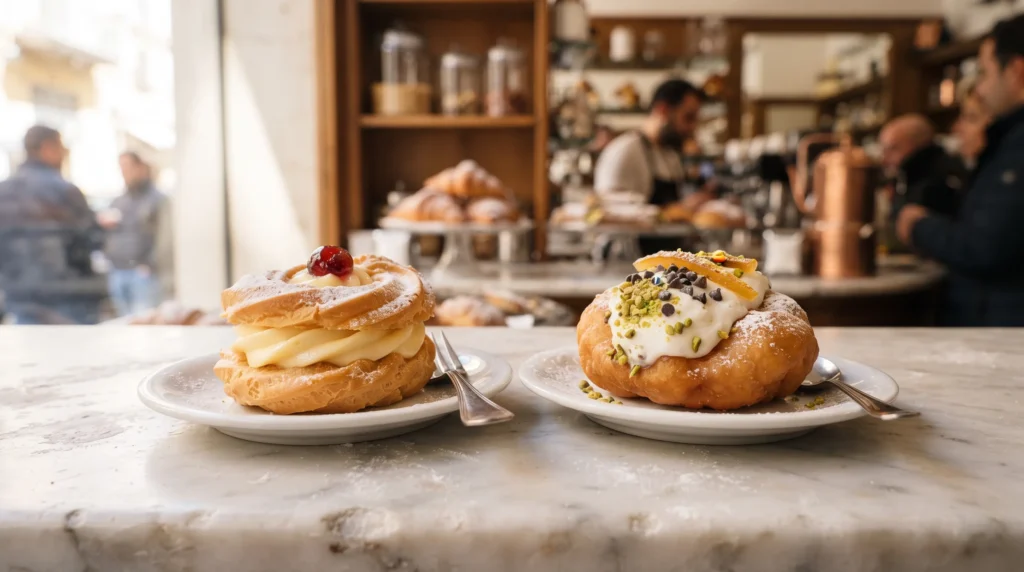
Although both pastries appear around the same holiday, they come from different parts of Italy and reflect local baking traditions that have been passed down for generations.
If you enjoy exploring traditional desserts, you’ll also find plenty of inspiration in our guide to air fryer desserts you’ll make on repeat, where easy homemade sweets take center stage.
What Are Zeppole?
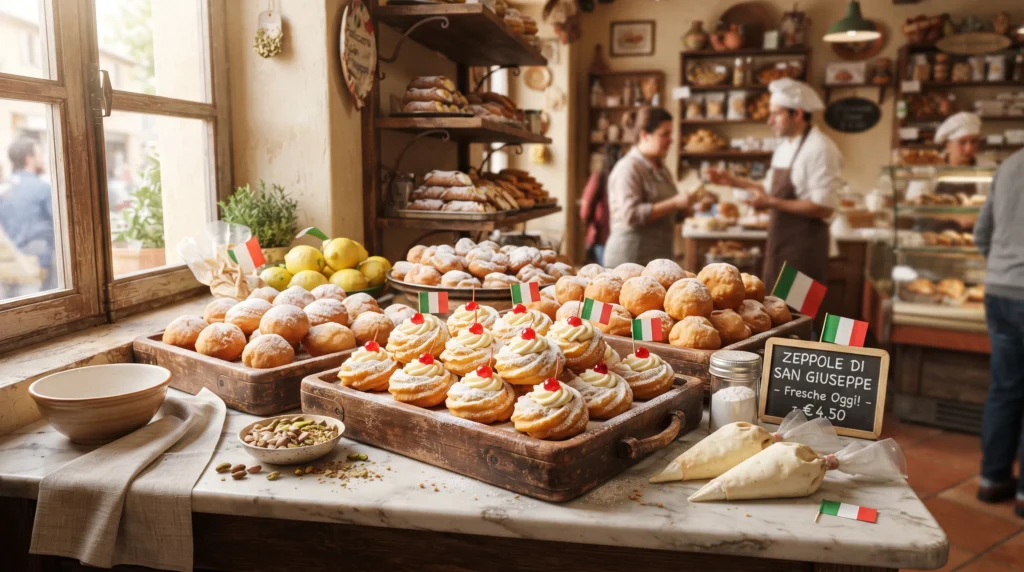
Zeppole are one of Italy’s best-known pastries, especially in the Naples region. While you’ll find many local versions across the country, the classic Zeppole di San Giuseppe is the one most people recognize during St. Joseph’s Day celebrations.
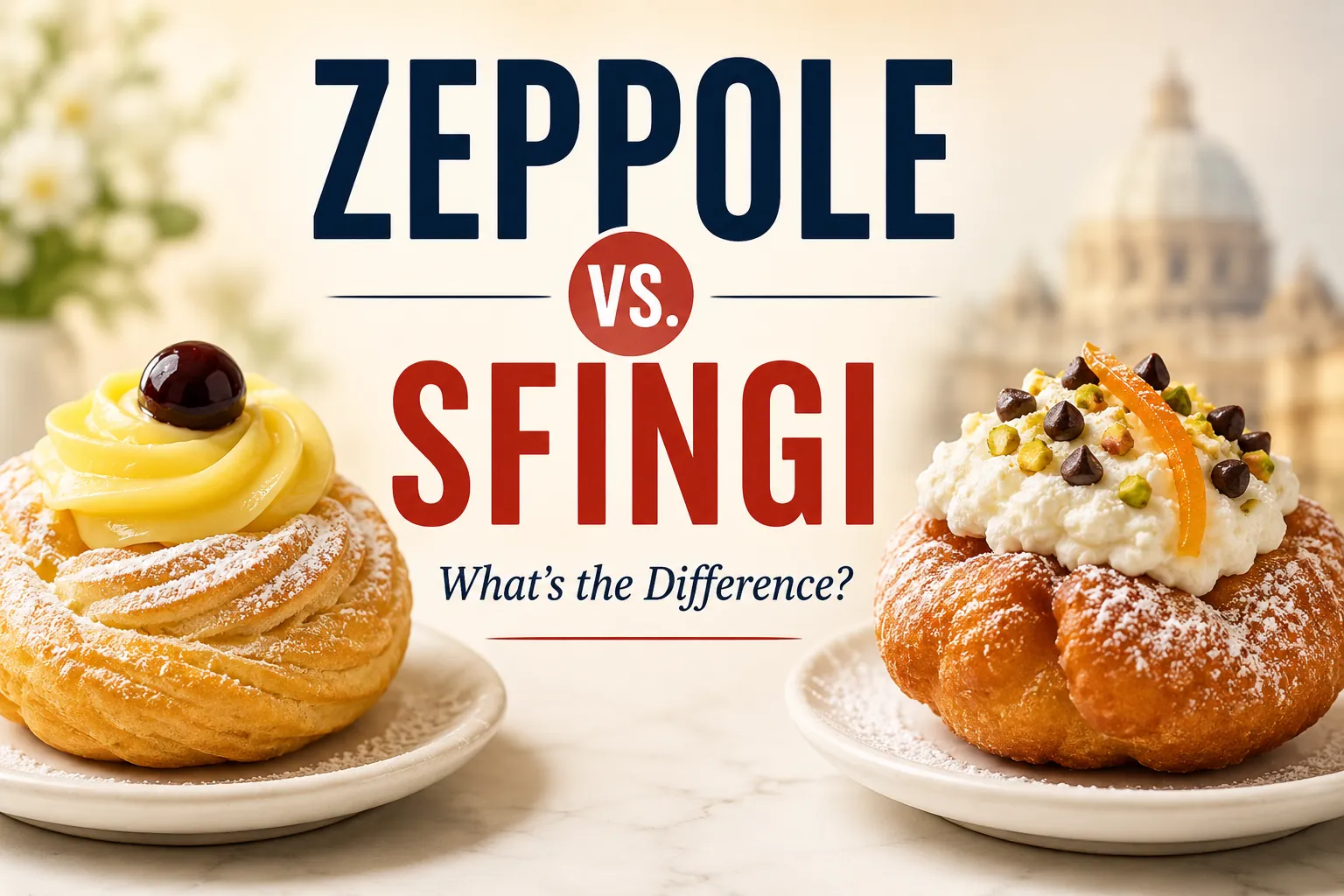
Traditionally, zeppole are made from a light choux-style dough that is either fried or baked until golden. After cooling slightly, they’re filled with silky pastry cream and topped with a dusting of powdered sugar. Many bakeries finish each pastry with a single amarena cherry for a colorful touch.
A Pastry with Deep Italian Roots
Zeppole have been associated with St. Joseph’s Day for centuries. Every March, bakeries throughout southern Italy prepare fresh batches as families celebrate the feast day with special meals and desserts.
Outside Italy, Italian-American communities have helped make zeppole famous at:
- Street festivals
- Church celebrations
- County fairs
- Italian heritage events
- Neighborhood bakeries
Because families brought their own regional recipes when they immigrated, you’ll often find different styles of zeppole depending on where you live.
Traditional Ingredients
Classic zeppole usually include:
- Flour
- Butter
- Eggs
- Water
- Salt
- Pastry cream
- Powdered sugar
- Amarena cherry (optional)
Some regional recipes use a yeast dough instead of choux pastry, creating a texture that’s more like a soft doughnut than a cream puff.
Texture and Flavor
A well-made zeppole has:
- A crisp golden exterior
- A light, airy interior
- Smooth vanilla pastry cream
- Just enough sweetness without becoming heavy
The contrast between the crisp shell and creamy filling is one reason these pastries remain so popular year after year.
What Are Sfingi?
Sfingi (sometimes spelled sfinci) are Sicily’s traditional St. Joseph’s Day pastry. Although they’re often compared to zeppole, Sicilian bakers prepare them differently, giving them their own unmistakable character.
The dough is fried until beautifully puffed, then generously filled with sweet ricotta cream similar to the filling used in cannoli. Many versions are decorated with chopped pistachios, chocolate chips, or pieces of candied orange peel.
The name sfingi comes from the Sicilian dialect and is believed to describe something soft or sponge-like, a fitting description for their delicate texture.
For anyone who loves rich Italian desserts, sfingi offer a completely different experience from custard-filled pastries.
You can also browse more family-friendly dessert inspiration in our collection of must-try air fryer desserts for families.
Sicilian Tradition
Throughout Sicily, sfingi are closely connected to St. Joseph’s Day celebrations. Local bakeries begin preparing them weeks before the holiday, and many families continue making treasured recipes that have been handed down through generations.
Although modern recipes sometimes introduce new flavors, the traditional version remains filled with lightly sweetened ricotta.
Traditional Ingredients
Most sfingi recipes include:
- Flour
- Eggs
- Water
- Butter or lard
- Ricotta cheese
- Sugar
- Vanilla
- Chocolate chips (optional)
- Pistachios
- Candied citrus
Fresh ricotta gives sfingi their signature creamy filling and slightly tangy flavor that balances the sweetness.
Texture and Flavor
Compared to zeppole, sfingi tend to be:
- Softer
- Slightly denser
- Richer because of the ricotta filling
- Creamier with every bite
Rather than focusing on a crisp shell, sfingi highlight the smooth filling and tender dough, creating a dessert that’s especially satisfying for ricotta lovers.
The Main Differences Between Zeppole and Sfingi
Although zeppole and sfingi are both traditional Italian pastries served around St. Joseph’s Day, they’re not the same dessert. Their recipes reflect the culinary traditions of different Italian regions, which is why you’ll notice differences in dough, filling, texture, and presentation.
Here’s a closer look at what sets them apart.
Dough
One of the biggest differences starts with the dough.
Traditional Neapolitan zeppole are often made from choux pastry, the same light dough used for cream puffs. The dough puffs as it cooks, creating a crisp outside with a hollow center that’s perfect for holding pastry cream.
Sfingi use a softer dough that fries into an airy, sponge-like pastry. Instead of forming neat rings, the dough is usually dropped into hot oil, giving each pastry a rustic appearance.
Filling
The filling is often the easiest way to tell these pastries apart.
Zeppole are commonly filled with:
- Vanilla pastry cream
- Custard
- Occasionally whipped cream
Sfingi traditionally contain:
- Sweet ricotta cheese
- Cannoli-style cream
- Chocolate chips (optional)
- Candied citrus
- Chopped pistachios
The creamy ricotta filling gives sfingi a richer flavor, while pastry cream keeps zeppole lighter and more delicate.
Texture
Texture creates a completely different eating experience.
Zeppole usually have:
- Crisp edges
- Light interior
- Airy bite
- Smooth custard center
Sfingi are known for:
- Soft, fluffy dough
- Creamy ricotta filling
- Slightly denser texture
- Rich mouthfeel
Neither is better, they simply appeal to different tastes.
Appearance
Even before taking a bite, you can often tell them apart.
Classic zeppole usually feature:
- A neat circular shape
- Decorative swirl of pastry cream
- Amarena cherry on top
- Powdered sugar
Traditional sfingi often look more rustic with:
- Rounded, uneven shape
- Thick layer of ricotta cream
- Pistachios
- Chocolate chips
- Candied orange peel
Regional Origins
The pastries also represent two proud regional traditions.
| Zeppole | Sfingi |
|---|---|
| Naples (Campania) | Sicily |
| Often linked with Neapolitan pastry shops | Deeply rooted in Sicilian bakeries |
| Custard-based desserts | Ricotta-based desserts |
Regional recipes continue to evolve, so you’ll occasionally find variations outside their home regions.
If you enjoy learning how regional recipes change over time, our guide to family dinners explores how classic comfort foods are adapted for modern kitchens.
Are Zeppole and Sfingi Both Made for St. Joseph’s Day?
Yes. Both pastries are closely connected with St. Joseph’s Day, celebrated each year on March 19.
The holiday honors St. Joseph, the husband of Mary, and has long been associated with charitable meals, community gatherings, and special desserts throughout Italy.
Although both pastries appear during the celebration, different regions developed their own traditions.
In Naples, bakeries proudly display trays of custard-filled zeppole.
In Sicily, families prepare sfingi generously filled with sweet ricotta cream.
For many Italians and Italian-American families, these desserts have become part of annual celebrations passed from one generation to the next.
Because St. Joseph’s Day is also celebrated as Father’s Day in Italy, these pastries have become symbolic treats shared with family and friends.
Why Do Some People Think They’re the Same Pastry?
It’s easy to understand the confusion.
Depending on where someone grew up or where their family came from, the names can mean different things.
Several factors contribute to the mix-up.
Regional Italian Dialects
Italy has a rich variety of regional dialects and local food traditions.
Some areas use different names for pastries that share similar ingredients, while others use the same name for desserts that look completely different.
Italian-American Traditions
When Italian immigrants settled in North America, many family recipes evolved.
Some bakeries simplified recipes.
Others combined traditions from different regions.
As a result, you’ll occasionally see pastries labeled “zeppole” that resemble sfingi, or vice versa.
Modern Recipes
Today, food bloggers and bakeries often create their own interpretations.
Some recipes bake instead of fry.
Others replace ricotta with mascarpone or pastry cream.
These creative variations are delicious, but they also blur the distinction between the two traditional pastries.
Which Pastry Should You Try?
The answer depends on what you enjoy most.
Choose zeppole if you like:
- Light pastries
- Crispy shells
- Vanilla custard
- Delicate sweetness
Choose sfingi if you prefer:
- Creamy ricotta desserts
- Rich fillings
- Soft fried dough
- Cannoli-inspired flavors
If you have the opportunity, trying both is the best way to appreciate the unique traditions behind each pastry.
If homemade desserts are your favorite, you’ll also enjoy our collection of last-minute sweet fixes in your air fryer, featuring quick treats that come together with simple ingredients.
Can You Make Zeppole and Sfingi at Home?
Absolutely. While both pastries take a little time to prepare, they’re well within reach for home bakers with some patience.
The biggest challenge isn’t the ingredients, it’s getting the dough just right and frying at a steady temperature.
Making Zeppole at Home
Traditional zeppole usually involve these steps:
- Prepare a choux pastry dough.
- Pipe the dough into rings on parchment paper.
- Fry or bake until golden.
- Let the pastries cool.
- Fill with pastry cream.
- Finish with powdered sugar and an amarena cherry.
The result is a pastry that’s crisp on the outside with a light, airy center.
Making Sfingi at Home
Sfingi follow a slightly different process.
- Prepare a soft dough.
- Fry spoonfuls until puffed and golden.
- Allow them to cool completely.
- Fill generously with sweetened ricotta.
- Top with pistachios, chocolate chips, or candied orange peel.
Because ricotta contains moisture, sfingi are best enjoyed the same day they’re filled.
If you’re new to homemade desserts, our guide to sweet treats made easy in the air fryer includes beginner-friendly recipes that are much quicker to prepare.
Tips for the Best Results
Whether you’re making zeppole or sfingi, these simple tips can help.
- Use fresh ricotta for the creamiest sfingi filling.
- Let pastry cream cool completely before filling zeppole.
- Keep frying oil at a steady temperature to help the dough cook evenly.
- Avoid overcrowding the pot while frying.
- Dust with powdered sugar just before serving for the freshest appearance.
- Serve both pastries fresh for the best texture.
Frequently Asked Questions
What does sfingi mean in Italian?
The word sfingi comes from the Sicilian dialect and is commonly associated with something soft or sponge-like, reflecting the pastry’s light, airy texture.
Are sfingi and sfinci the same?
Yes. Sfingi and sfinci are different spellings of the same traditional Sicilian pastry. The spelling often depends on regional dialect and family tradition.
What’s another name for zeppole?
The most famous version is Zeppole di San Giuseppe, made especially for St. Joseph’s Day. Some regions also prepare simple fried dough balls that are called zeppole.
What is the difference between zeppole and frittelle?
Although both are fried Italian treats, frittelle are a broader category of fried pastries that may include fruit, raisins, or other ingredients. Zeppole are a specific pastry with regional traditions and, in many cases, a cream filling.
Are sfingi always filled with cannoli cream?
Traditional Sicilian sfingi are usually filled with sweetened ricotta, the same style of filling used for cannoli. Some modern recipes add chocolate chips or citrus zest for extra flavor.
Are zeppole always filled with custard?
No. Some zeppole are served plain with powdered sugar, while others are filled with pastry cream, whipped cream, or custard depending on regional tradition.
Can you bake zeppole or sfingi instead of frying?
Yes. Many home bakers bake zeppole to reduce oil, especially when using choux pastry. Sfingi are traditionally fried, but baked versions have become more common.
Which pastry is more traditional in Sicily?
Sfingi are considered Sicily’s traditional St. Joseph’s Day pastry and remain a favorite in Sicilian bakeries and homes.
More Relevant Fryer Bites Posts
These related recipes and guides may also help: