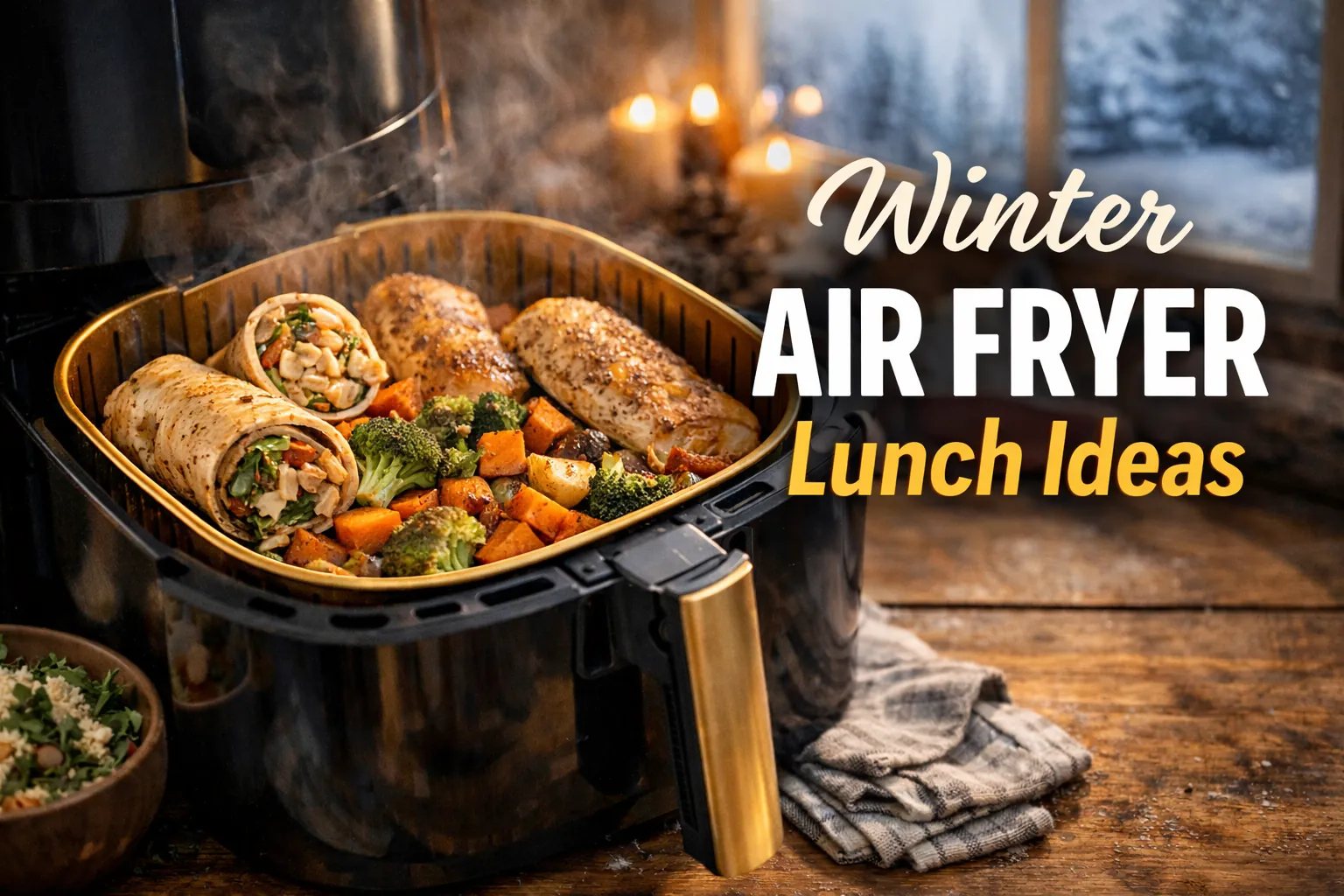
10 Winter Air Fryer Lunch Ideas That Reheat Well

The best winter air fryer lunch ideas are meals with roasted, breaded, toasted, or crisp components that can handle reheating without turning into a soggy mess.
The biggest trick is not reheating everything together. Keep sauces, lettuce, slaw, sour cream, and other cold or wet toppings separate, then use the air fryer for the parts that benefit from dry circulating heat.
If your lunch is mostly soup, sauce, or a creamy casserole, the microwave or stovetop will often make more sense.
Which Winter Lunches Reheat Best in an Air Fryer?
Use this table when you are planning lunches ahead and want to know which ones are worth packing for air fryer reheating.
| Lunch Idea | Air Fryer Reheat Fit | Store Separately | Main Risk |
|---|---|---|---|
| Breaded chicken with potatoes | Excellent | Sauce or dressing | Chicken can dry if reheated too long |
| Chicken tenders with wedges | Excellent | Slaw and dipping sauce | Coating can soften during storage |
| Toasted turkey and cheese sandwich | Good | Lettuce, tomato, dressing | Bread can brown before center heats |
| Chicken or beef quesadilla | Excellent | Salsa, sour cream, guacamole | Tortilla can become too crisp |
| Roasted potato and vegetable bowl | Excellent | Dressing or sauce | Potatoes may dry |
| Steak bites with roasted vegetables | Good | Sauce | Beef can overcook |
| Chicken fajita wrap | Good | Cold toppings | Tortilla can over-crisp |
| Flatbread or personal pizza | Excellent | Fresh toppings | Thin edges can brown quickly |
| Meatballs with potatoes or bread | Good | Extra sauce | Meat can dry while sauce splatters |
| Leftover winter dinner box | Depends on components | Sauces and cold toppings | Mixed textures may reheat unevenly |
The best lunch for the air fryer is usually one where you can separate the crispy or roasted food from the wet ingredients.
10 Winter Air Fryer Lunch Ideas That Reheat Well
1. Breaded Chicken With Roasted Potatoes
Breaded chicken and roasted potatoes make a useful make-ahead lunch because both foods benefit from dry heat when reheated.
Store the chicken and potatoes together if space allows, but keep gravy, dipping sauce, or dressing in a separate container.
When reheating, spread the pieces out rather than stacking them. Check the thickest piece of chicken carefully because the coating can become hot before the center is fully reheated.
For more options, browse these air fryer chicken recipes.
2. Chicken Tenders With Potato Wedges and Slaw
This is a good example of a lunch that should not all go into the air fryer together.
Reheat:
- chicken tenders
- potato wedges
Keep cold:
- slaw
- dipping sauce
- fresh vegetables
The tenders and potatoes can regain some exterior texture in the air fryer, while the slaw stays fresh instead of becoming warm and wilted.
If potatoes are a regular part of your meal prep, these air fryer potato ideas give you more shapes and preparations to work with.
3. Toasted Turkey and Cheese Sandwich
A toasted turkey and cheese sandwich can work well for winter lunch meal prep if you think about the fillings before storing it.
Bread and melted cheese can benefit from reheating in the air fryer, but lettuce, tomato, pickles, and cold dressing are better added afterward.
If the sandwich contains cooked meat, do not assume that toasted bread means the middle is fully reheated.
For a thick sandwich, the outside may brown before the center gets hot enough, so check the center rather than judging only by the crust.
4. Chicken or Beef Quesadilla
Quesadillas are a strong air fryer lunch option because the tortilla can crisp again while the filling heats.
For meal prep, store the quesadilla separately from:
- salsa
- sour cream
- guacamole
- shredded lettuce
- fresh tomato
Reheat only the quesadilla, then add the cold sides when you are ready to eat.
Do not overfill the tortilla if you know it will be stored and reheated later. A very thick filling takes longer to heat through and may cause the tortilla to become too crisp first.
5. Roasted Potato and Vegetable Bowl
A roasted potato and vegetable bowl works well when you want a warm lunch without depending on breaded meat.
Good components include:
- roasted potatoes
- bell peppers
- broccoli
- cauliflower
- green beans
- carrots
- other roasted vegetables
Store dressing, yogurt sauce, or another wet topping separately.
At lunchtime, reheat the roasted portion in a single layer when practical, then add the sauce afterward.
This is also an easy way to use leftover vegetables from dinner without turning them into a completely different meal.
6. Steak Bites With Roasted Vegetables
Small pieces of cooked steak with roasted vegetables can become a simple winter lunch.
The main challenge is avoiding overcooked beef during reheating.
Use a smaller portion, check it early, and avoid leaving the steak in hot circulating air longer than necessary.
If the vegetables need more time than the beef, you can reheat them separately and add the steak toward the end.
Pack sauce separately so the exterior of the steak and vegetables does not sit in moisture overnight.
7. Chicken Fajita Wrap
Chicken and peppers work well for a make-ahead wrap, but the best reheating setup keeps the hot and cold ingredients apart.
Reheat:
- chicken
- peppers
- onions
- tortilla
Add afterward:
- lettuce
- tomato
- sour cream
- salsa
- avocado
You can also reheat the chicken and vegetables first, then assemble the wrap after they are hot.
That approach avoids a dried tortilla and gives you better control over the texture.
8. Flatbread or Personal Pizza
Pizza and flatbread are among the easiest leftover lunches to bring back to life with an air fryer.
The dry heat can help the base and edges regain texture that is often lost in the refrigerator.
Arrange slices without overlapping them.
If you use fresh toppings such as herbs or greens, add those after reheating instead of cooking them twice.
A thick pizza or heavily topped flatbread may heat differently from a thin slice, so check the center before assuming it is ready.
9. Meatballs With Roasted Potatoes or Bread
Meatballs can make a filling winter lunch, especially when paired with roasted potatoes, bread, or vegetables.
If the meal contains a lot of tomato sauce or gravy, consider heating the sauce separately.
This prevents two common problems:
- sauce splattering or drying in the air fryer
- meatballs overcooking while you wait for a thick sauce to become hot
You can reheat the meatballs and dry side in the air fryer, then combine them with the warmed sauce before serving.
10. Leftover Winter Dinner Lunch Box
One of the easiest meal-prep methods is to intentionally turn dinner into tomorrow’s lunch.
A simple lunch box can include:
- one roasted or air-fried protein
- one roasted vegetable
- potatoes, bread, or another sturdy side
- sauce in a separate container
This works especially well with foods such as chicken, beef, potatoes, and roasted vegetables.
If you need dinner ideas that can also create next-day lunches, browse these cozy dinner ideas that can become lunch.
Pack Crispy, Saucy, and Cold Parts Separately
This one habit can make a bigger difference than changing the reheating temperature.
Food stored in sauce or against moist toppings can soften during refrigeration. The air fryer may improve some of that texture later, but separating the components gives you a better starting point.
Foods that usually benefit from air fryer reheating
- breaded chicken
- chicken tenders
- roasted potatoes
- potato wedges
- roasted vegetables
- tortillas
- quesadillas
- pizza
- flatbread
- toasted bread
- small portions of cooked meat
Foods to add after reheating
- lettuce
- slaw
- fresh tomato
- sour cream
- yogurt sauce
- guacamole
- fresh herbs
- cold dressing
- cold salsa, if you prefer it chilled
Sauces depend on the meal
A light amount of sauce may be fine on some foods.
Large amounts of gravy, pasta sauce, curry sauce, or other wet mixtures are usually easier to heat separately.
Think of your lunch as components rather than one container that must all be reheated the same way.
When the Microwave or Stovetop Is Better
An air fryer is useful for texture, but it is not the best reheating tool for every lunch.
Soups and stews
Use a microwave or stovetop.
These foods need even heating through a mostly liquid meal, not dry air around the outside.
Chili
A saucepan or microwave is usually more practical than an air fryer.
Creamy pasta
The air fryer can dry exposed pasta before the middle becomes evenly hot.
A microwave or stovetop method usually gives you better control.
Gravy-heavy meals
Warm the gravy separately and combine it with the reheated solid food.
Deep casserole portions
The top can become dry while the center is still cool.
For dense portions, another method may heat the center more effectively.
Use a hybrid method when needed
Some lunches have a dense center but a crisp exterior.
In that situation, you can warm the food first using a method that heats the center efficiently, then use the air fryer briefly to improve the exterior texture.
The goal is not to use the air fryer for every second of reheating. The goal is to use the method that works best for each part of the lunch.
How to Store Make-Ahead Winter Lunches
Good reheating starts with safe storage.
Refrigerate promptly
Perishable cooked food should generally be refrigerated within 2 hours.
If the surrounding temperature is above 90°F, the window drops to 1 hour.
Use shallow containers
Large amounts of hot food cool more efficiently when divided into smaller, shallow containers.
This is especially useful when meal-prepping a large batch of food.
Use refrigerated leftovers within 3 to 4 days
Most cooked leftovers should be eaten within 3 to 4 days when properly refrigerated.
If you want to keep them longer, freezing is a better option.
Keep wet ingredients separate when possible
Separate containers can help both food safety and texture.
For example:
- chicken in one compartment
- potatoes in another
- sauce in a small container
- slaw or salad kept cold
How to Reheat Winter Lunches Safely
Reheating is about more than making the outside feel hot.
1. Reheat the appropriate components
Use the air fryer for foods that benefit from dry heat.
Use another method for soup, large amounts of sauce, or very moist food.
2. Avoid overcrowding
Spread food out when possible.
Stacking pieces makes it harder for hot air to reach each surface evenly.
3. Check the center
The outside may become hot and browned before the middle reaches a safe reheating temperature.
Check the thickest or coldest part.
4. Reheat leftovers to 165°F
USDA guidance recommends reheating leftovers to 165°F.
A food thermometer is more reliable than judging by steam, browning, or the timer alone.
5. Add cold toppings afterward
Once the hot portion is ready, add lettuce, sauces, herbs, slaw, or other cold components.
For more detailed technique guidance, use our guide on how to reheat leftovers in the air fryer.
Common Reheating Problems and Fixes
| Problem | Likely Cause | What to Try |
|---|---|---|
| Outside hot, center cold | Portion is too thick or dense | Use a smaller portion or warm the center with another method |
| Bread dries before filling heats | Sandwich is too thick | Check earlier or warm the filling separately |
| Crispy coating turns soggy | Food was stored against sauce or moisture | Store sauce separately next time |
| Chicken or beef turns dry | Food stays in hot air too long | Check sooner and remove when fully reheated |
| Potatoes lose texture | Moisture collected during storage | Reheat in a single layer |
| Cold toppings wilt | They were reheated with the main food | Pack them separately |
| Food reheats unevenly | Basket is crowded | Reheat in smaller batches |
| Sauce splatters or dries | Air fryer is not ideal for the amount of liquid | Heat the sauce separately |
Frequently Asked Questions
What lunches reheat best in an air fryer?
Lunches with breaded, roasted, toasted, or crisp components usually make the strongest candidates.
Examples include chicken tenders, potatoes, quesadillas, pizza, toasted sandwiches, and roasted vegetables.
Can I reheat lunch straight from the refrigerator?
Yes.
There is no need to leave perishable leftovers sitting at room temperature before reheating. Reheat them thoroughly and check the center when food safety matters.
Can I reheat frozen leftovers without thawing them first?
Yes. Frozen leftovers can be reheated without thawing first, although they will generally take longer to heat through.
Make sure the center reaches the appropriate safe reheating temperature.
Is an air fryer better than a microwave for leftovers?
Not for every food.
An air fryer is especially useful when exterior texture matters. A microwave is often more convenient for moist, saucy, or liquid foods.
Some meals benefit from using both methods.
What temperature should reheated leftovers reach?
USDA guidance recommends reheating leftovers to an internal temperature of 165°F.
How long can meal-prep lunches stay in the refrigerator?
Most cooked leftovers should generally be used within 3 to 4 days when properly refrigerated.
Can I meal prep lunches for the entire week?
If your plan extends beyond the recommended refrigerator storage period, freezing some portions is a safer option than keeping the entire batch refrigerated all week.
Final Takeaway
The easiest winter lunches to meal prep for air fryer reheating are meals with components that can be handled separately.
Use the air fryer for breaded chicken, potatoes, roasted vegetables, tortillas, sandwiches, pizza, and other foods that benefit from dry circulating heat. Keep wet sauces and cold toppings separate, and use a microwave or stovetop when the meal is mostly liquid or sauce.
With the right lunch choice and storage setup, you spend less time trying to rescue soggy leftovers and more time simply reheating the part of the meal that actually benefits from the air fryer.